How-to
How to repair natural rattan and wicker furniture
Fix indoor rattan and wicker: identify the material, replace broken weavers and spokes with soaked reed, glue loose joints and split poles, and clean it.
Updated
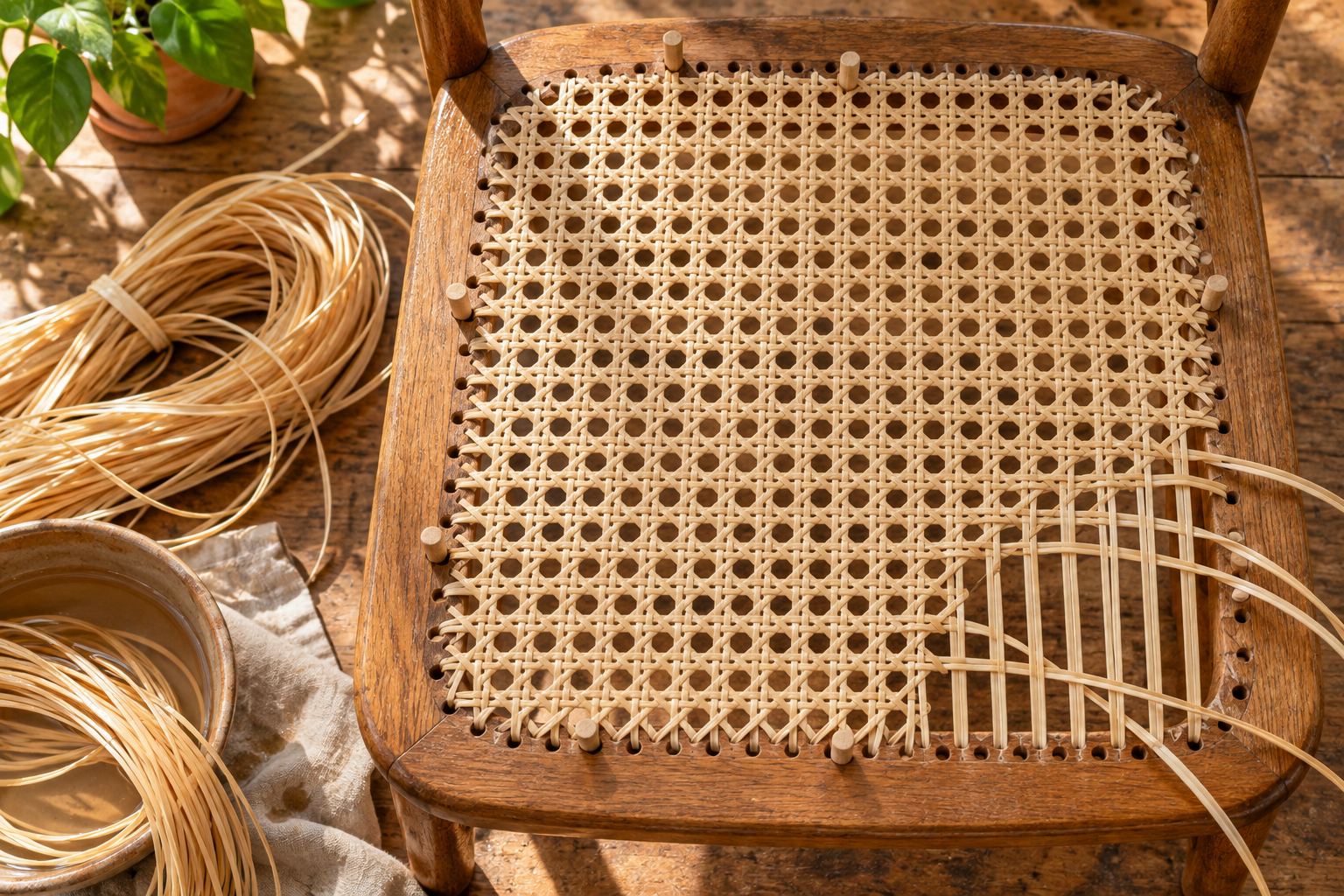
Most indoor rattan and wicker repairs use natural material, soaked first: round reed or rattan core for woven reed, strand cane for cane weaves and binder cane for wrapped joints. Loose joints and split poles are glued with wood glue and clamped. PE wicker strip is only for outdoor resin wicker. Mist the old weave around the repair before you start, so it flexes instead of snapping.
Everything you need is on the repair wicker furniture project page.
What you need
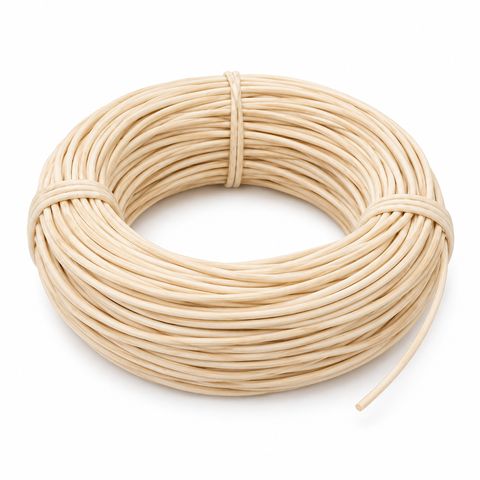
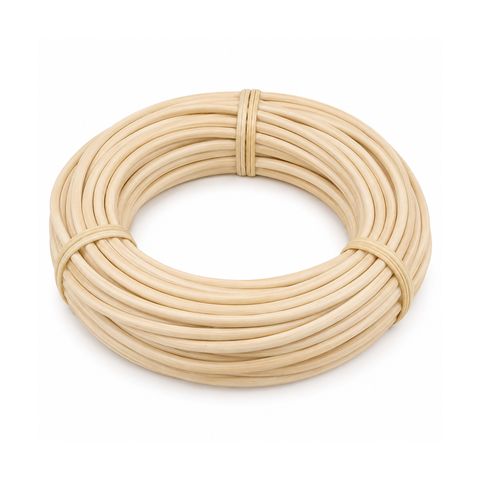
- Round reed, #2 to #6, for woven reed weavers and spokes
- Rattan core, 4 or 5 mm, for heavier spokes
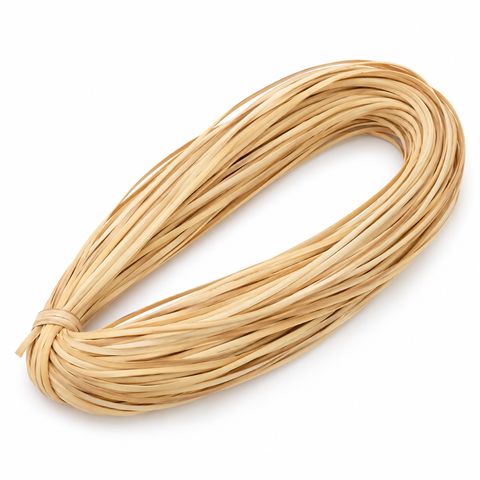
- Strand chair cane, for cane-woven seats and fine cane details
- Binder cane, 4 to 6 mm, for wraps on legs and joints
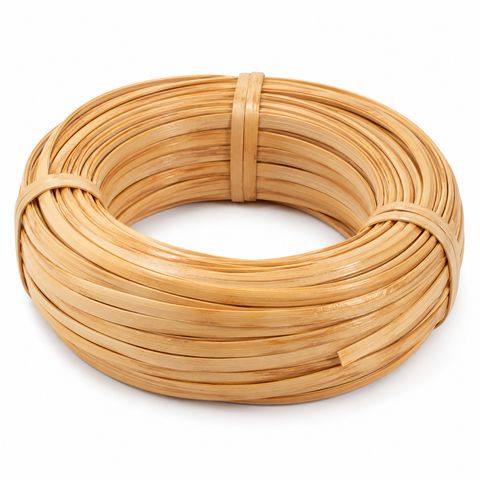
- Flat reed or flat oval reed, for flat weaves, rims and lashing
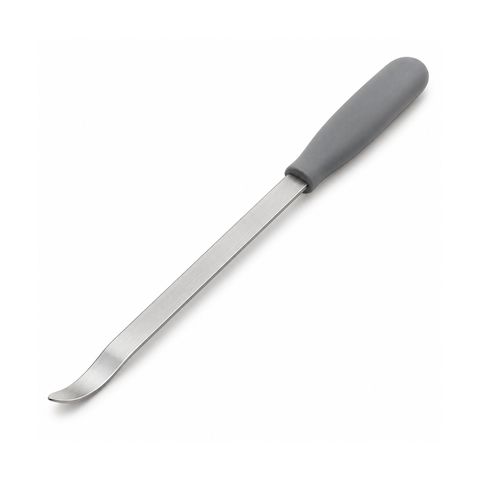
- A wicker weaving tool, to lift tight strands
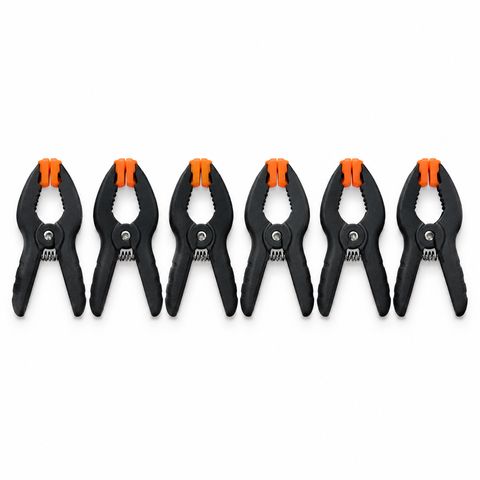
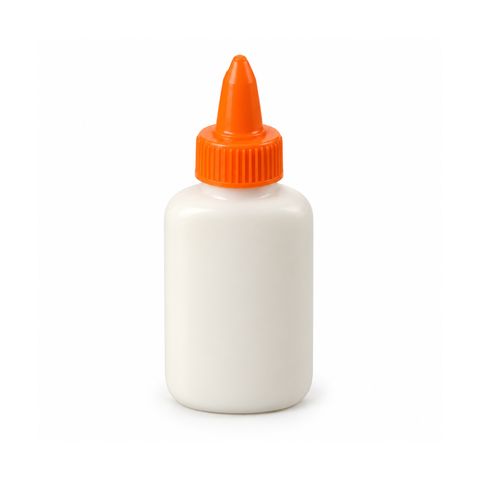
- Wood glue and spring clamps
- Side cutters, needle-nose pliers, a spray bottle, a soft brush, painter’s tape
- Optional: wicker paint for painted pieces
First, find out what it is made of
The right repair depends on the material. Look closely at a broken end.
- Natural reed or rattan: fibrous inside, matte, strands a little uneven. Often painted. This guide is for you.
- Rattan poles with cane: a frame of solid poles with a glossy skin, joints wrapped in strips of cane. This guide, plus how to wrap chair legs with binder cane.
- Paper fiber: looks like tightly twisted paper, usually painted. Keep water off it; it softens and comes apart when wet. Do not repair it with soaked reed.
- PE resin wicker: breaks clean like plastic, the same color all the way through, very even strands over a metal frame. Use PE strip and follow how to repair outdoor resin wicker furniture.
If you are unsure of the words, rattan vs wicker vs cane sorts them out.
Match the size
Measure an unbroken strand with calipers or a ruler marked in mm. Then match:
| Old strand | Use |
|---|---|
| Round, 1.75 to 3.75 mm | Round reed: #2 is 1.75 mm, #3 2.25 mm, #4 2.75 mm, #5 3.25 mm, #6 3.75 mm |
| Round, 4 or 5 mm | Rattan core |
| Flat, matte | Flat reed, 1/4 to 7/8 in |
| Flat on one side, rounded on the other | Flat oval reed, 1/8 to 1/4 in |
| Flat and glossy, 2 to 3.5 mm | Strand cane |
| Wide glossy wrap, 4 to 6 mm | Binder cane |
Match the shape as well as the width. A round strand in a flat weave shows from across the room.
Clean it first
Repairs go better on a clean piece, and dirt hides cracks.
- Vacuum with a brush attachment, or brush the dust out of the weave with a soft paintbrush.
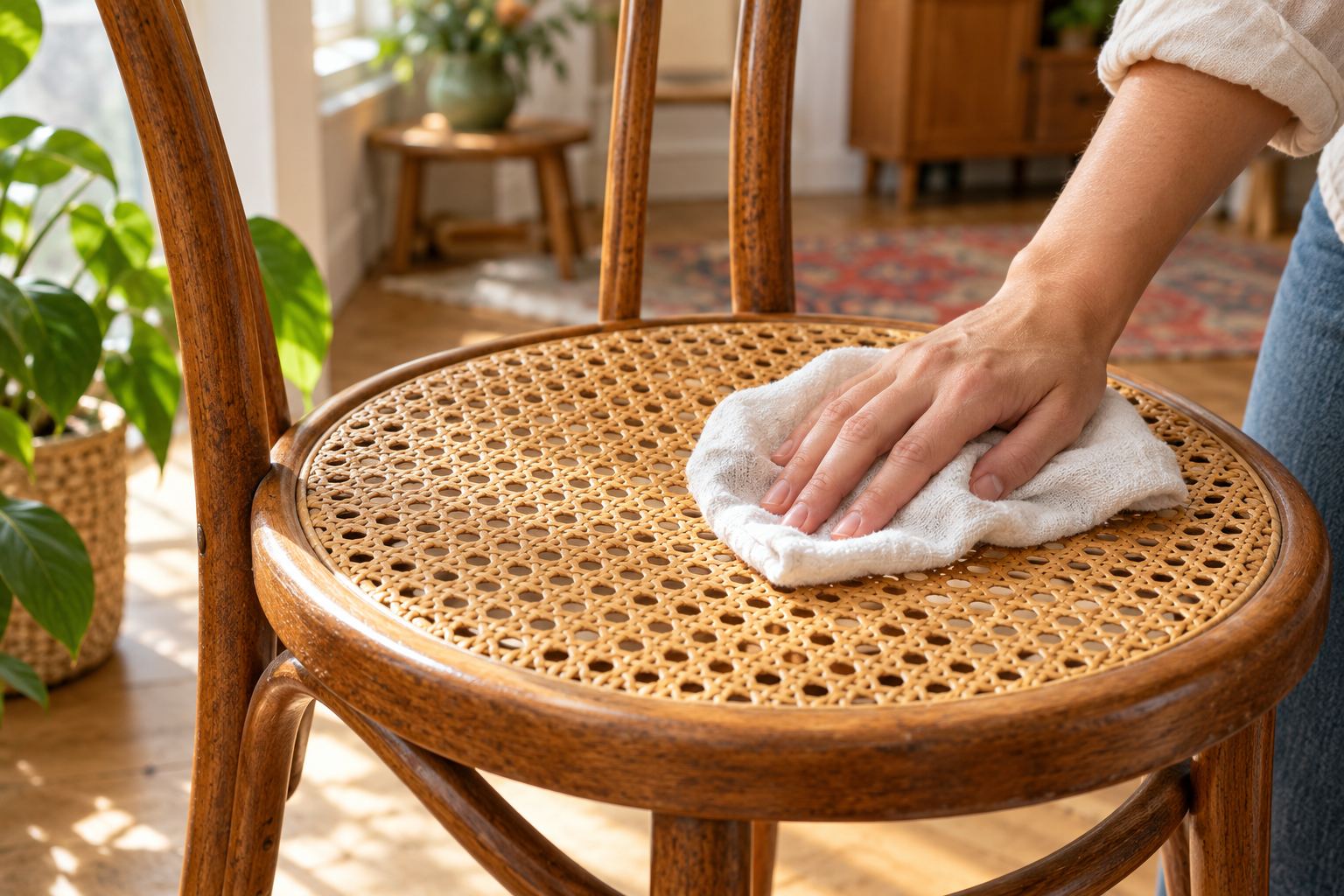
- Wipe with a soft cloth wrung out in warm water with a few drops of mild dish soap. Work along the strands.
- Wipe again with a cloth dampened in clean water.
- Let it dry in moving air, out of direct sun and away from heaters.
Do not hose natural wicker or soak it. Water left in the weave lets it sag and grow mildew, and it can loosen glued joints. On paper fiber wicker, use a barely damp cloth and nothing more.
Broken weavers
Weavers are the strands that run across, over and under the uprights.
- Photograph the pattern around the damage.
- Mist the old weave around the break with a spray bottle so the neighbors flex as you lift them.
- Cut the broken weaver back on each side to a point behind an upright, so the ends will be hidden.
- Soak the new reed in warm water for 5 to 10 minutes, until it bends around a finger without cracking.
- Start the new piece behind the upright where the old end was cut, overlapping the old end a little.
- Weave along the old path, over where it went over and under where it went under. Slide the tip of the weaving tool under tight strands to open a way.
- Finish behind an upright, overlapping the old end again, and cut.
- Put a small dab of wood glue on each overlap, where it sits behind the upright.
Weave the new strand snug, but do not pull it tighter than its neighbors. Natural reed shrinks a little as it dries, and an over-tight strand pulls the uprights out of line. Several broken weavers side by side? Stagger the joins so they do not line up.
Broken spokes
Spokes, or stakes, are the uprights the weavers go around.
- Cut the broken spoke behind the weaving a few rows above and below the break, and pull the piece out.
- Soak a new spoke of the same size, round reed or rattan core.
- Push one end down into the weaving alongside the old stub, bend the new spoke gently and push the other end into the weaving at the top.
- Follow the slant of the spokes around it.
- Glue where the new spoke overlaps the old stubs.
Loose wraps
Arms and legs are wrapped with cane where poles meet, and those wraps loosen first. If the cane is sound and only slack, unwind the loose part, glue its back, rewind it tight and tape it until dry. If it is broken or missing, rewrap with binder cane: the full method is in how to wrap chair legs with binder cane.
Loose joints
Rattan frames are joined with glue and small nails or screws, then wrapped. A joint that rocks will break its wrap again, so fix the joint first.
- Unwrap the joint.
- Work wood glue into the gap with a thin knife or a syringe.
- Reset any nail or screw that has worked loose.
- Clamp with spring clamps, or bind the joint with tape, wipe off the squeeze-out and let the glue dry fully.
- Rewrap.
Split poles
A split along the grain of a pole can be glued. Open it slightly, work glue in with a cotton swab or a thin blade, press it closed and clamp or tape it until the glue dries. A wrap of binder over the repaired split hides it and helps hold it.
A pole that is broken through, crushed or missing a piece carries weight that glue alone cannot. That needs a new section of pole, which is a job for a furniture restorer.
Natural material vs PE strip
| Natural reed, core and cane | PE wicker strip | |
|---|---|---|
| For | Indoor rattan and reed wicker, cane | Outdoor resin wicker |
| Before use | Soak in warm water | Use dry; warm it on a cold day |
| After weaving | Shrinks snug as it dries | Stays as tight as you set it |
| Ends held by | Wood glue and weaving | Tucking under strands; most glues bond poorly |
| Finish | Leave natural, stain or paint | None needed |
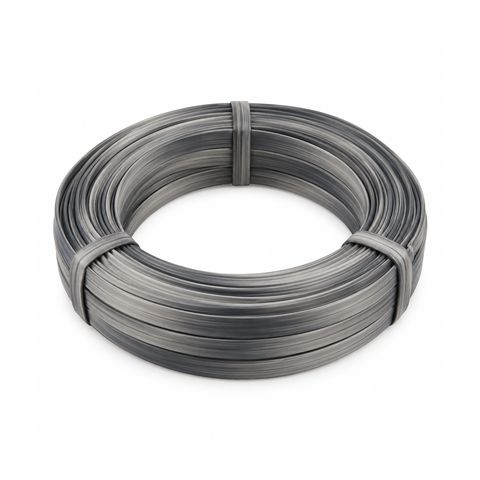
Our PE strip is not for natural rattan or cane, and natural reed will not last on furniture that lives outdoors.
Let it dry and finish
Leave repairs overnight at room temperature before anyone uses the piece. Trim the ends and any raised hairs once everything is dry.
New reed and cane are lighter than old. On a natural piece, a little stain blends the repair; natural cane darkens with age anyway. On a painted piece, paint the repaired area or the whole piece with wicker paint, in several thin coats so the paint does not fill the weave.
Keep the finished piece indoors or on a dry, covered porch, away from heat vents and all-day sun. For cane seats on the same furniture, see cane furniture care and repair and how to tighten a sagging cane seat.
Soak times for every material are in how to soak cane and reed. The reed, binder, tools and glue for these repairs are on the repair wicker furniture project page.
 PE Wicker Repair Strip
 Spring Clamps for Caning and Weaving
 Wood Glue for Caning