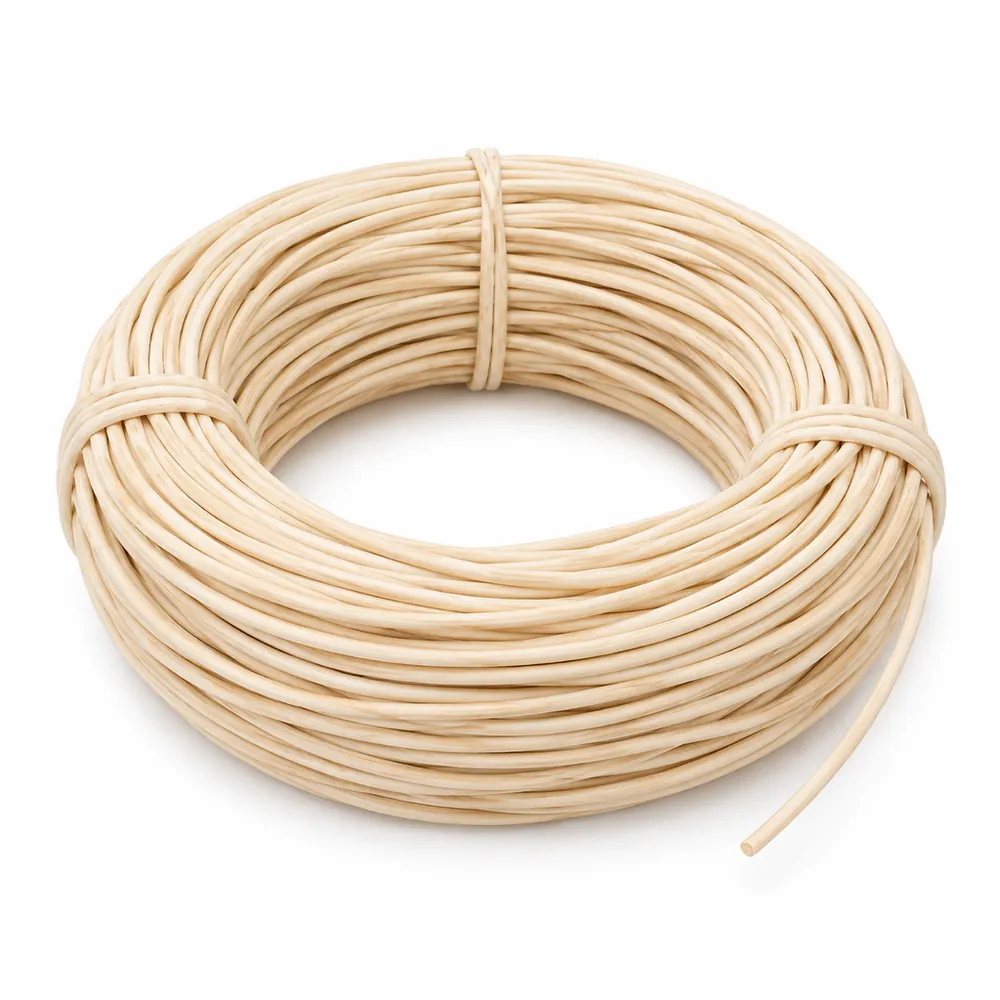
Photos illustrate the product type.
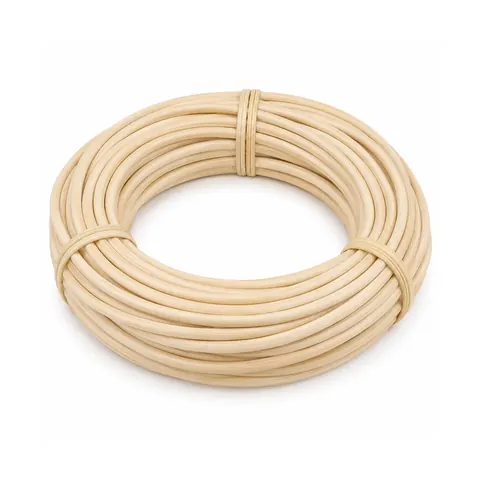
Round Reed for Basket Weaving, 1 lb Coil, #2 to #6
Natural round reed from the rattan core, 1 lb coils in #2 (1.75 mm) to #6 (3.75 mm), for basket stakes and weavers, wicker repair and spokes.
Round reed is the inner core of the rattan cane, pulled into smooth, round strands. Unlike chair cane, which is the glossy outer peel, reed is matte and porous, so it takes dye and stain well. It is the everyday material of basket weaving: stakes and weavers for round and oval baskets, and the strands used to replace broken weavers and spokes on wicker furniture.
Reed is sold by weight, so thinner sizes give more length. A 1 lb coil holds about 1100 ft of #2, 750 ft of #3 and 500 ft of #4; the heavier #5 and #6 run shorter.
Working with round reed:
- Soak it in warm water for 5 to 10 minutes, until it bends without cracking. Thin sizes need the short end of that, heavy sizes the long end.
- Don't leave reed soaking for hours. Over-soaked reed turns soft and fuzzy.
- Pull out only the strands you need, and keep the rest of the coil tied.
- Keep weavers damp while you work, with a spray bottle or a wet towel.
- Pack each row down firmly. Reed shrinks a little as it dries, and loose rows open up.
When the basket is dry, trim off any fine hairs with small, sharp scissors. Let finished work and leftover strands dry completely before you store them, so they do not mildew.
How to choose
Stakes, the upright framework, should be heavier than the weavers that go around them, usually by one or two sizes. #4 or #5 stakes with #2 or #3 weavers is a common pairing for everyday baskets. Use #2 for small baskets, ornaments and fine twining, and #5 or #6 for stakes on larger baskets and for spokes in wicker repair. When your pattern gives a size, follow it.
For wicker repair, take a piece of the old strand and measure its diameter with calipers, then pick the closest size in mm. If it is thicker than #6, look at our 4 mm and 5 mm rattan core.
Questions
How long should I soak round reed?
5 to 10 minutes in warm water, until it bends without cracking. Longer does not help; it makes the reed soft and fuzzy.
What is the difference between reed and cane?
Both come from rattan. Cane is the glossy outer peel, used for caning seats; reed is the matte inner core, used for baskets and wicker. Reed takes dye and stain well, cane does not.
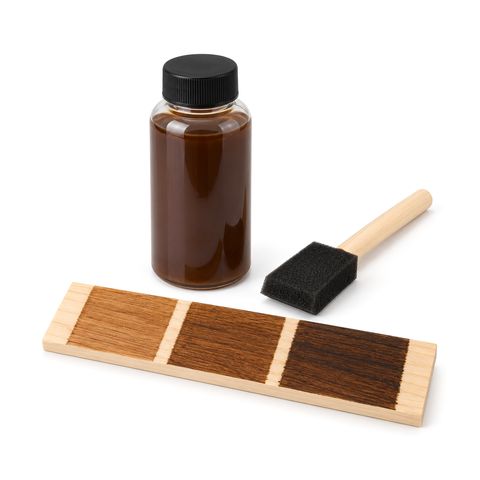 Water-Based Wood Stain for Chair Frames and Cane
Can I dye round reed?
Yes. Reed absorbs dye and wood stain readily. Test on a few strands first, and rinse dyed reed before weaving so the color does not transfer.
Why are there little hairs on my basket?
Fine fibers lift from round reed as it is bent and dries. Once the basket is completely dry, trim them close with small, sharp scissors.
You may also need
-
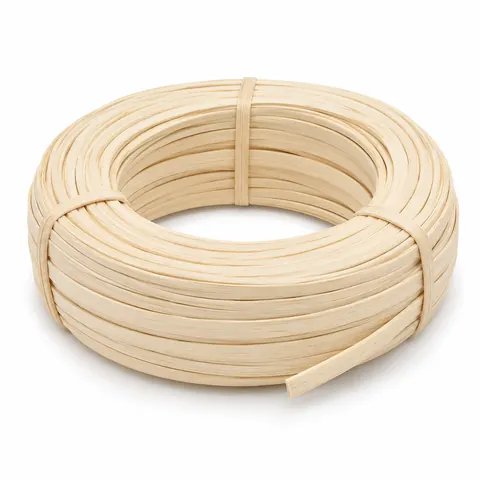
Flat Reed for Basket and Seat Weaving, 1 lb Coil, 1/4 to 7/8 in
Natural flat reed cut from the rattan core, in 1 lb coils from 1/4 to 7/8 in wide, for basket stakes and weavers and for woven chair seats.
$26.99 · 6 options
-
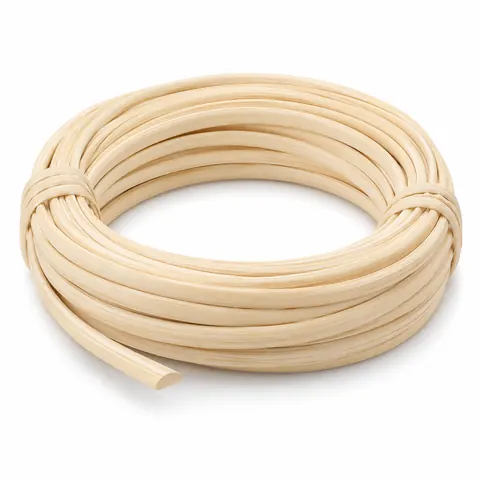
Flat Oval Reed, 1 lb Coil, 1/8, 3/16 or 1/4 in, Natural
Natural flat oval reed, flat on one side and rounded on the other, in 1 lb coils 1/8, 3/16 or 1/4 in wide, for rim lashing, small rims and accent weavers.
$25.99 · 3 options
-
Natural Rattan Core, Round, 4 mm or 5 mm, 1 lb Coil
Thick natural round rattan core in 1 lb coils, 4 or 5 mm across, for basket stakes and frames, wrapping, decorative crafts and diffuser sticks.
$25.99 · 2 options