How-to
How to replace vinyl straps on patio chairs
Re-strap an aluminum patio chair: measure each strap with its wrap, cut it shorter, soften it in hot water, punch the ends and rivet it tight.
Updated
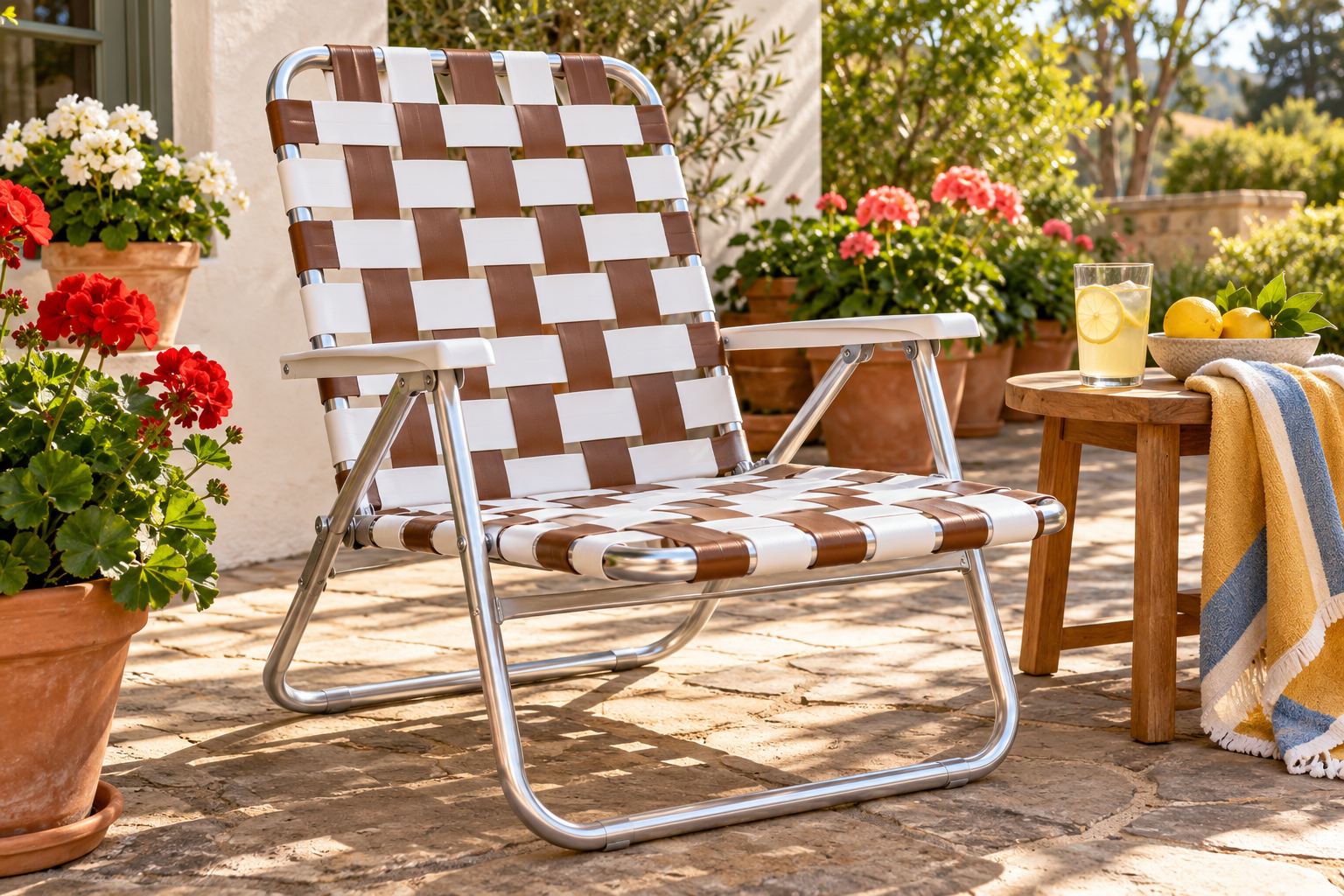
On aluminum patio chairs and chaise lounges with flat vinyl straps, the frame almost always outlasts the straps. Sun dries the vinyl out until it cracks at the wrap or snaps in the middle. New straps bring the chair back.
Re-strapping is a simple job once you know the trick: vinyl stretches when it is hot and shrinks back as it cools. You cut each strap shorter than the space it spans, soften it in hot water, stretch it across the frame and rivet it. As it cools it pulls itself tight.
Is it a strap chair?
This guide is for chairs with flat vinyl straps wrapped around the frame tubes and fastened with rivets in holes in the frame. Other patio chairs need different parts:
- Fabric sling seat held in grooved side rails: the cord in the hem is sling chair spline cord.
- Round or oval vinyl cord wrapped many times around a mid-century frame: use oval vinyl lacing cord.
- Folding zero gravity recliner laced with bungee cord: see zero gravity chair cords.
- Woven resin wicker: follow our guide to repairing outdoor wicker furniture.
What you need
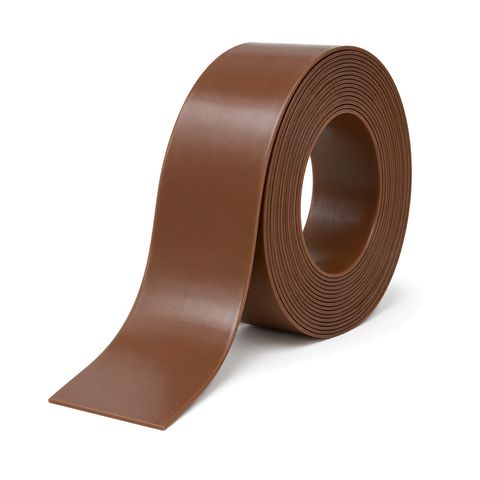
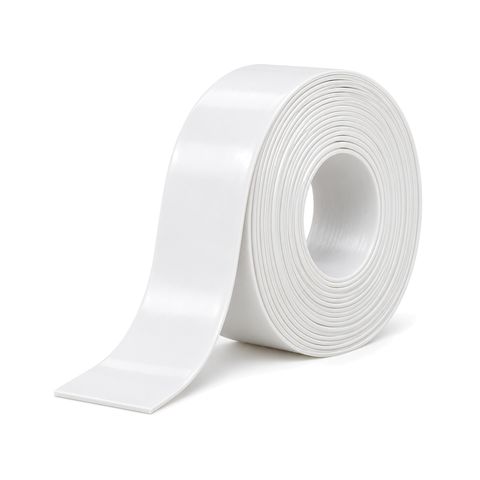
- 2 in or 1.5 in vinyl strap
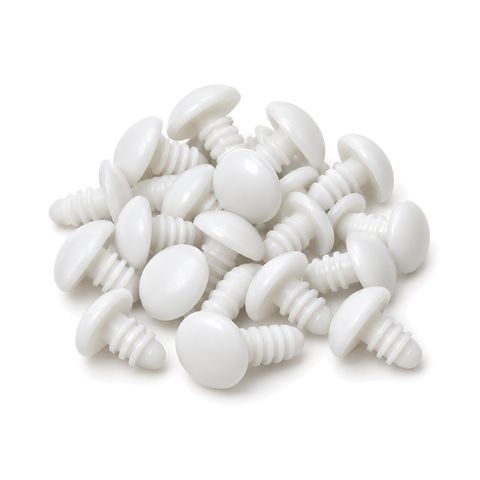
- Patio strap rivets in your frame’s hole size
- A cloth tape measure or a piece of string
- Sharp scissors and a utility knife
- A leather punch or a drill with a 3/16 in bit
- A set of drill bits to gauge the frame holes
- A flat screwdriver or pliers to pop out old rivets
- A large pot of water, tongs, gloves and an old towel
Step 1: Record the old straps
Before you cut anything, photograph the seat and back from above and from underneath. Then note four things.
- The wrap. On a single-wrap chair, each strap goes about halfway around the frame tube and the rivet sits underneath. On a double-wrap chair, the strap goes all the way around the tube and covers the rivet. Copy whatever your chair has.
- How many straps, and which lengths. Seat, back and leg-rest straps often span different distances. Count the straps in each group.
- The width. Measure an old strap across the middle while it is still on the chair. Stretched straps measure narrower than new ones. If it measures about 1 3/4 in, you need 2 in strap. If it measures about 1 1/4 to 1 3/8 in, you need 1.5 in strap.
- The hole size. Find an empty hole, or pull one rivet, and slide drill bits into it shank first. The largest bit that fits is your hole size: 7/32 in or 1/4 in.
Step 2: Measure each strap, wrap included
Use a cloth tape or a string, not a stiff steel tape. Start at the center of the rivet hole on one side. Follow the path the old strap takes: around the frame tube, across the seat, and around the opposite tube, to the center of the hole on the far side. On a double-wrap chair, take the tape all the way around each tube, just as the strap goes.
Measure one strap in each length group. If a strap is missing, measure its neighbor; straps in the same group span the same distance.
Step 3: Work out the cut length
New strap is cut shorter than the measured path, because hot vinyl stretches a long way. Strap makers take off about 10 to 15 percent.
| Measured path | 10 percent shorter | 15 percent shorter |
|---|---|---|
| 20 in | 18 in | 17 in |
| 24 in | 21 5/8 in | 20 3/8 in |
| 30 in | 27 in | 25 1/2 in |
Start near the middle of that range and cut one test strap for each length group. Fit it (steps 5 to 7), let it cool and sit on it. If it sags, cut the rest a little shorter. If it was very hard to pull across to the far hole, cut the rest a little longer. A strap that is far too short can bend a light frame.
To work out how much to buy, multiply the number of straps by the cut length and add a spare strap or two. For example, 14 straps at 21 in come to 294 in, or about 25 ft, so a 50 ft roll covers the chair with room for tests. A 20 ft roll gives eleven 21 in straps.
Step 4: Strip the old straps
Cut the old straps with a utility knife or shears and pop the old rivets out with a screwdriver or pliers. Use new rivets rather than the old plastic ones. With the frame bare, wash it, and touch up any paint before the new straps cover it.
Step 5: Cut and punch the ends
- Cut each strap square to length with sharp scissors.
- Snip the two corners off each end at a slight angle so they do not catch or curl.
- Punch a hole centered across the width, 1/4 to 1/2 in from each end. A 3/16 in leather punch or drill bit is the usual size.
- Push a rivet through the hole at one end, with the stem sticking out on the side that will face the frame. You can fit the second rivet now or after heating, when the vinyl is softer.
Step 6: Soften the strap in hot water
Bring a large pot of water to a boil, then turn it down so it stays very hot but not boiling, around 200°F. Lay in a few straps and let them soak for at least 2 to 3 minutes; a longer soak does no harm. Take them out one at a time with tongs and wipe each one dry. Wear gloves: the vinyl and the water are hot enough to burn.
Step 7: Fit the strap
Work quickly. The strap stays soft for only a short time.
- From underneath, push the rivet at one end into its hole in the frame.
- Bring the strap around the outside of the tube, the same way the old one went.
- Pull it straight across to the opposite tube with a steady, even pull, and wrap it the same way.
- Hold the vinyl against the frame with your thumb, line up the second rivet with its hole and push it in.
- Let go. The strap tightens as it cools.
Point all the rivets the same way. If a strap cools before you finish, put it back in the water and try again.
Keep the tension even
A strap chair feels right when every strap carries the same load. A few habits get you there:
- Cut every strap in a length group to the same length, taken from your test strap.
- Give every strap the same soak time, so each one stretches the same amount.
- Use the same wrap on every strap.
- Work from one end of the seat to the other, keeping the straps parallel and spaced as they were in your photo.
When all the straps are cool, run your hand across the seat. A strap that feels softer than its neighbors was cut long or cooled too soon. Cut it out and fit a new one; it is quicker than living with a sag.
For the rest of the patio, browse outdoor furniture repair for strap, rivets, wicker strip and cord.