Collections
Strand chair cane and binder for hand caning
Strand cane, also called chair cane, is the glossy outer peel of the rattan palm split into long, flat strands. It is the material for hand caning: you weave the strands through a row of drilled holes around the seat in the traditional seven-step pattern, then cover the holes with a wider strip called binder cane. If your chair has holes rather than a groove, this is the right section. Grooved seats take pressed cane webbing instead.
Hand caning is slower than pressed cane, and it is how a restorer keeps an antique hole-caned chair true to the way it was made. Our hand caning guide takes you through all seven steps.
The strand width has to suit the chair. It follows the diameter of the holes and the distance between hole centers: small, close holes take finer cane, and larger, wider-spaced holes take medium or common. Measure both and compare them with the chart in the guide. If you still have a piece of the old cane, match it, or test a strand in your holes. For the edge, pick binder about two sizes wider than the strand cane on the seat.
A 270 ft hank is about one average seat and comes with a strand of binder. For a set of chairs, the 1000 ft hank covers about three to four average seats. Soak a few strands at a time for 10 to 15 minutes, keep the working strand damp, and weave with the shiny side up.
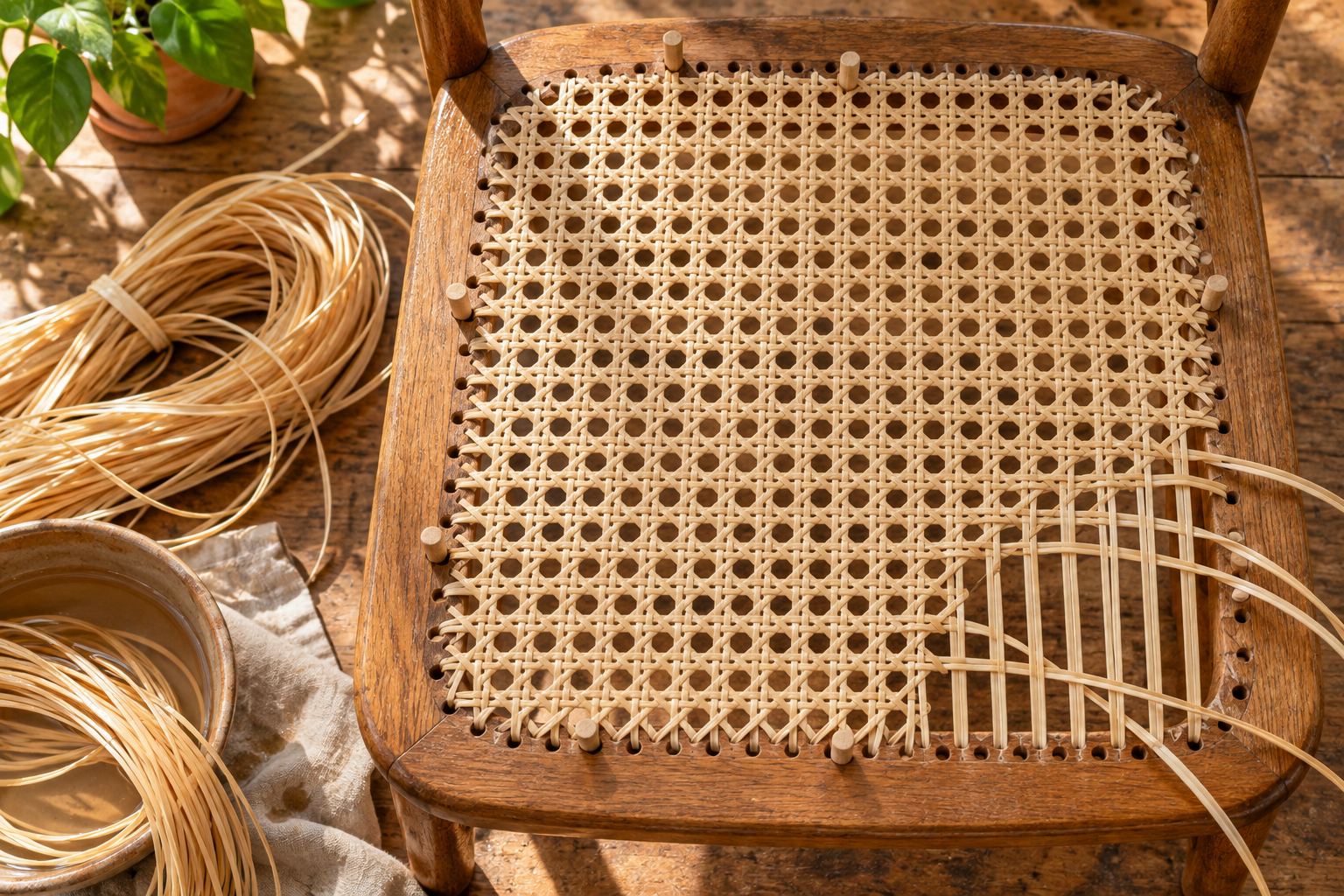
- Measure the hole diameter and the distance between hole centers before you choose a size.
- If you still have a piece of the old cane, use it to match the size.
- Soak a few strands at a time for 10 to 15 minutes; keep the working strand damp.
- Weave with the shiny side up.
- Choose binder about two sizes wider than your strand cane.
-
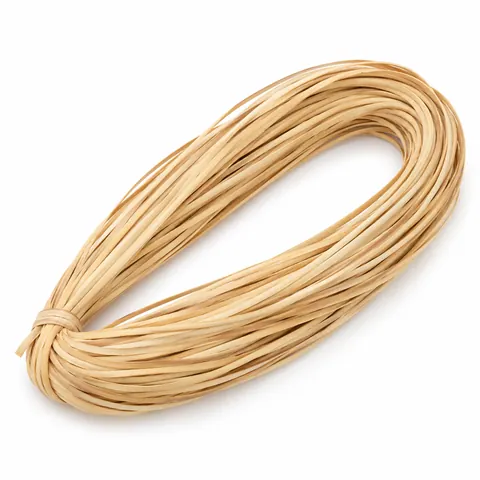
Strand Chair Cane, 270 ft Hank with Binder, 2 mm to 3.5 mm
Natural strand chair cane for hand caning a seat through drilled holes: a 270 ft hank, about one seat, with 4 mm binder. Six sizes, 2 to 3.5 mm.
From $17.99 · 6 options
-
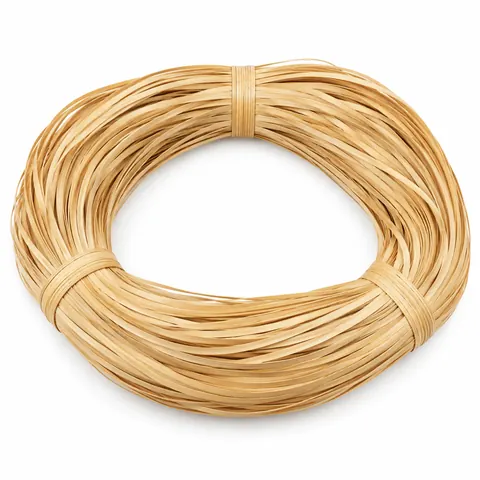
Strand Chair Cane, 1000 ft Hank for 3 to 4 Seats, 2 mm to 3.5 mm
A 1000 ft hank of natural strand chair cane with four strands of 4 mm binder, enough for about three to four hand-caned seats. Six sizes, 2 to 3.5 mm.
From $29.99 · 6 options
-
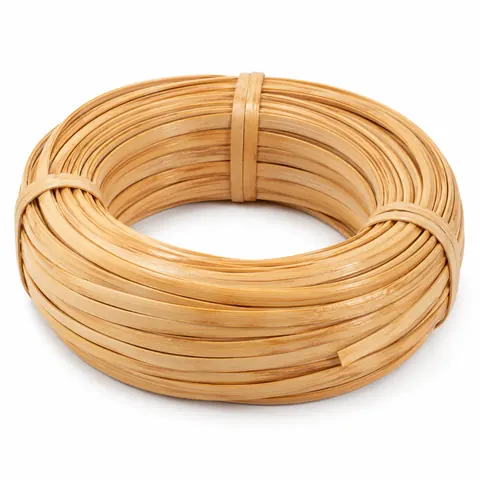
Binder Cane, 500 ft Hank, 4, 5 or 6 mm Wide
Wide, flat natural binder cane in 500 ft hanks, 4, 5 or 6 mm, to finish the edge of hand-caned seats, wrap joints and handles, and lash basket rims.
From $49.99 · 3 options
-
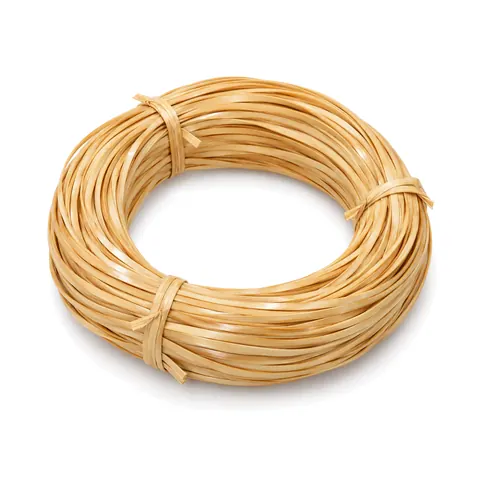
Chair Cane by the Pound, Narrow Common 3.25 mm, 1 lb Coil
A 1 lb coil of natural strand chair cane in the narrow common size, 3.25 mm wide, sold by weight for restorers who cane larger seats and chair backs.
$25.99
Questions
Can I put pressed cane on a chair that has holes?
Not as it is. Pressed cane needs a groove to hold the spline, so a chair with holes is hand caned with strand cane. Routing a groove into an old frame changes the chair for good, so it is usually better to keep it hand caned.
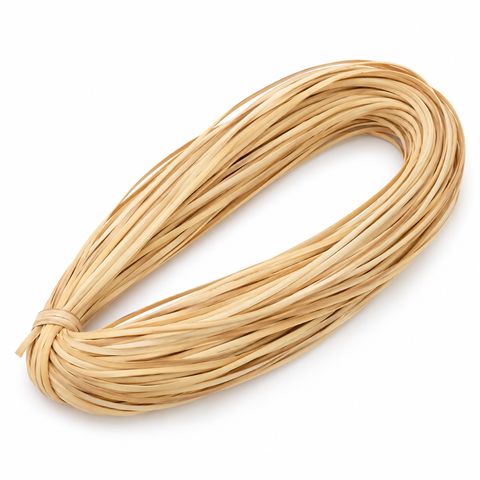 Strand Chair Cane
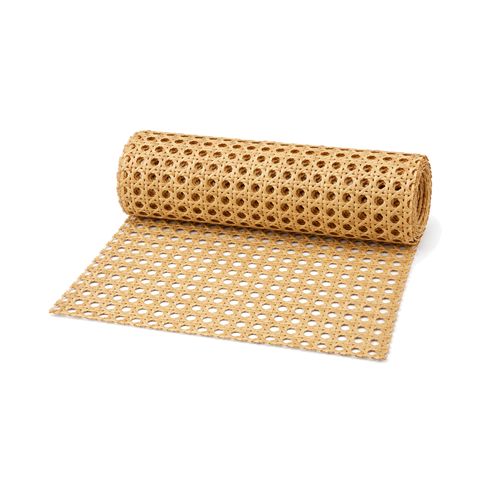 Cane Webbing Roll
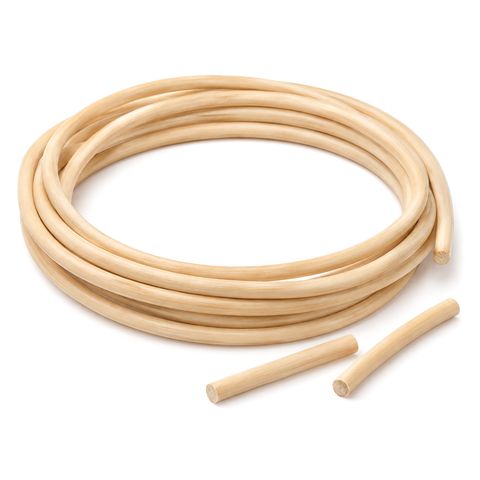 Reed Spline for Chair Caning
What is binder cane for?
Binder is a wider flat strand laid over the row of holes around the edge to cover them and finish the seat, tied down with a thinner strand through the holes. It is also used to wrap furniture joints and handles and for basket rims.
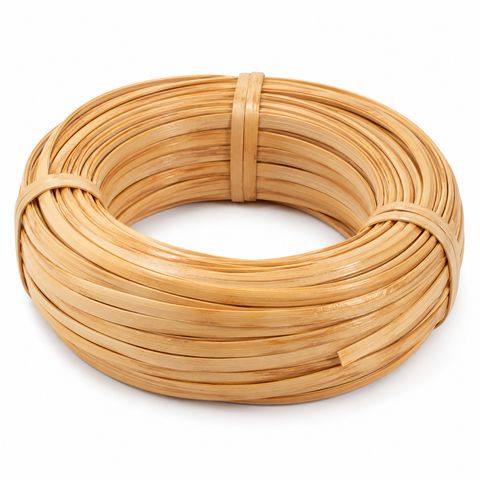 Binder Cane
How should I store leftover cane?
Dry, loosely coiled and out of direct sun. Let any soaked strands dry fully before you put them away with the rest.
Why does my cane split or crack while I weave?
Usually it has dried out. Keep the working strand damp and dip it again as you go, and soak only a few strands at a time so the rest does not sit in water too long.