Sizing
How to measure patio chair straps: width, length, count
Measure vinyl patio chair straps before you order: the width, each strap path with its wrap, straps per section and rivet hole size, with a worksheet.
Updated
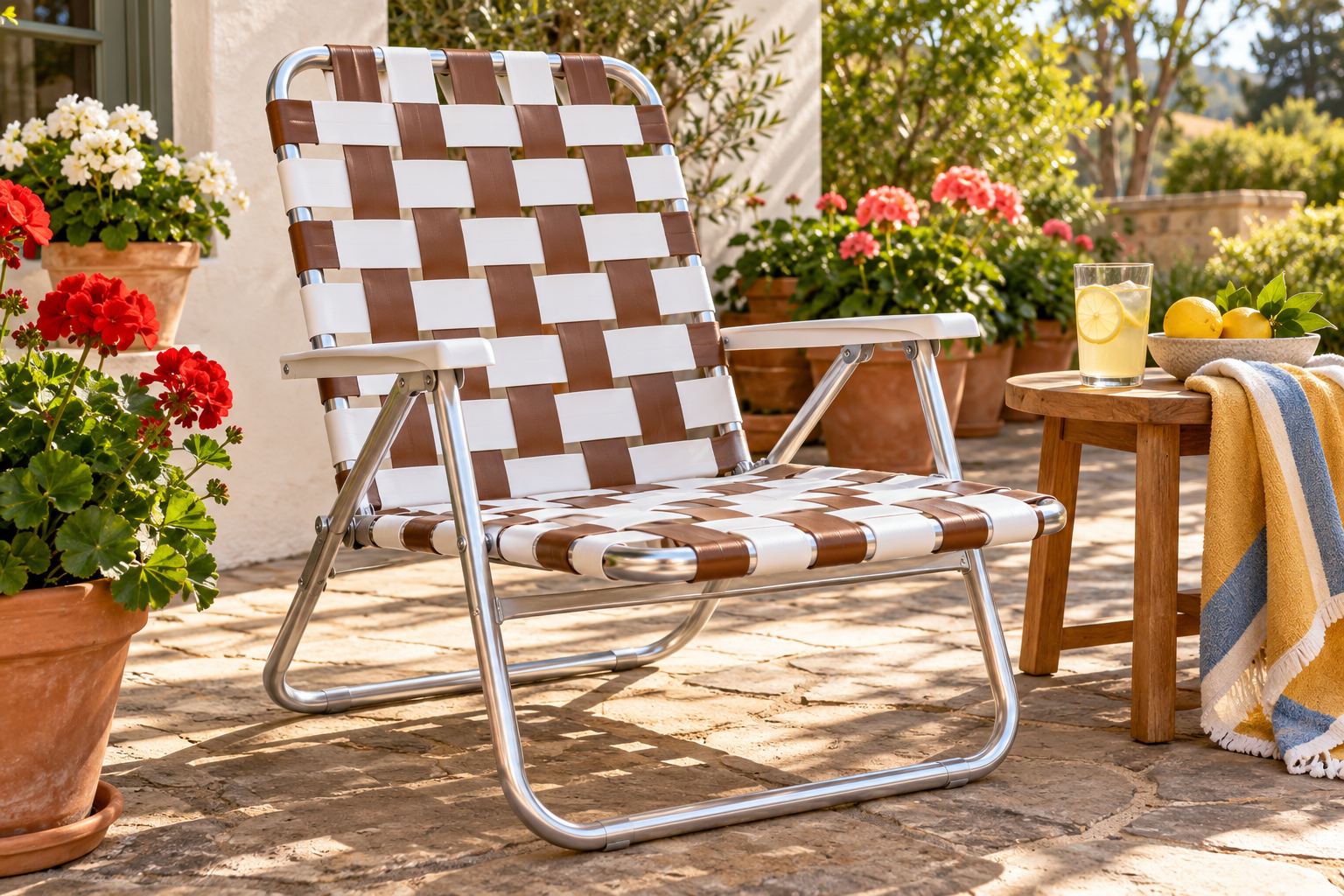
Four measurements tell you what to order for a strap chair: the width of the straps, the length of each strap’s path including the wrap around the frame, how many straps there are in each section, and the size of the rivet holes. Fill them in on the worksheet below and you can order strap and rivets in one go.
Everything to buy is on the fix outdoor patio chairs project page, and fitting the straps is covered in how to replace vinyl straps on patio chairs.
Before you start
Measure before you cut anything off. Photograph the seat, the back and any leg rest from above and from underneath, so you can see the wrap and the spacing later.
This guide is for flat vinyl straps riveted to an aluminum frame. A fabric seat held in channels in the side rails is a sling: see how to replace a patio chair sling. Round or oval vinyl cord wrapped many times around the frame is lacing: see how to restring a patio chair with vinyl lacing.
What you need
- A cloth tape measure, or a piece of string and a ruler
- Drill bits of 7/32 in and 1/4 in, or a full set
- A flat screwdriver or pliers to pull one rivet
- A pencil and this worksheet, or your phone
1. Measure the width
Measure across the middle of an old strap while it is still on the chair. Straps stretch in use and read narrower than new strap.
| Old strap measures | Order |
|---|---|
| About 1 3/4 in | 2 in vinyl strap |
| About 1 1/4 to 1 3/8 in | 1.5 in vinyl strap |
Measure in the middle of the seat, not at the wrap, where the strap is pinched around the tube. If no old strap is left, measure one on a matching chair from the same set.
2. Note the wrap
- Single wrap: each strap goes about halfway around the frame tube, and the rivet sits underneath where you can see it.
- Double wrap: the strap goes all the way around the tube and covers the rivet.
Copy what your chair has, and measure it the same way.
3. Measure each strap’s path
Use a cloth tape or a string, not a stiff steel tape.
- Start at the center of the rivet hole on one side.
- Follow the path of the old strap around the frame tube, across the seat, and around the opposite tube.
- Stop at the center of the rivet hole on the far side.
- On a double-wrap chair, take the tape all the way around each tube, just as the strap goes.
The mistake people make is measuring straight across between the tubes and leaving out the wrap. That strap comes out far too short.
Measure one strap in each length group. Straps in the same section usually span the same distance; if a back tapers, measure the top strap and the bottom strap and treat them as separate groups. If a strap is missing, measure its neighbor.
4. Count the straps
Count the straps in each section: seat, back, and leg rest on a chaise lounge. If straps are missing, count the rivet holes along one frame tube instead; each strap uses one hole on each side. Note the colors too, since many chairs alternate two colors in a pattern.
5. Measure the rivet holes
Find an empty hole, or pull one rivet with a screwdriver or pliers. Slide drill bits into the hole, smooth shank first. The largest bit that slides in snugly, without forcing, is your hole size: 7/32 in or 1/4 in. Check two or three holes; they should all match.
If even a 1/4 in bit is loose, the holes may be worn, or the chair may use metal clips at the strap ends instead of rivets. Our patio strap rivets will not hold in a hole larger than 1/4 in.
The 3/16 in hole you punch in each new strap end is a separate thing, covered in the fitting guide.
The worksheet
Cut length is the measured path less 10 to 15 percent, because hot vinyl stretches when you fit it. Start in the middle of that range and cut one test strap per group before you cut the rest.
| Section | Straps | Wrap | Measured path | Cut length | Strap needed (straps × cut length) |
|---|---|---|---|---|---|
| Seat | |||||
| Back | |||||
| Leg rest | |||||
| Spares (one or two straps) | |||||
| Total |
Also note: strap width, color or colors, and hole size. Rivets needed = straps × 2, plus a few spares.
Example: a chaise lounge
This example uses double wrap and the middle of the range, 12.5 percent shorter (measured path × 0.875).
| Section | Straps | Wrap | Measured path | Cut length | Strap needed |
|---|---|---|---|---|---|
| Back | 9 | Double | 25 in | 21 7/8 in | 196 7/8 in |
| Seat | 6 | Double | 25 in | 21 7/8 in | 131 1/4 in |
| Leg rest | 8 | Double | 22 in | 19 1/4 in | 154 in |
| Spares | 2 | one of each length | 41 1/8 in | ||
| Total | 25 | 523 1/4 in, about 43.6 ft |
- Strap: a 50 ft roll covers it with room for a test strap; a 20 ft roll would not.
- Rivets: 23 straps × 2 = 46. The 7/32 in pack of 100 covers it easily; the 1/4 in pack of 50 leaves four spares.
From worksheet to order
- Width: one width for the whole chair, 2 in or 1.5 in.
- Roll length: strap comes in 20, 50 and 200 ft rolls. For a set of chairs, add up every chair; the 200 ft roll suits several lounges.
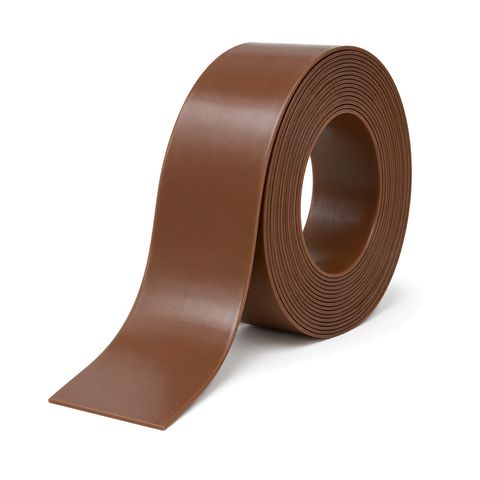
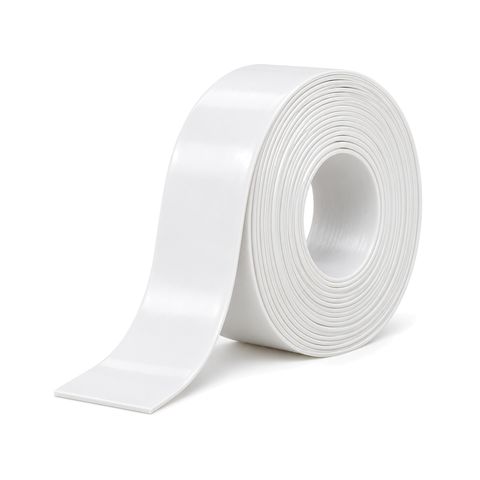
- Color: the 2 in strap comes in brown, driftwood, white and black; the 1.5 in strap in brown, driftwood and white. For a two-color pattern, work out each color on its own line.
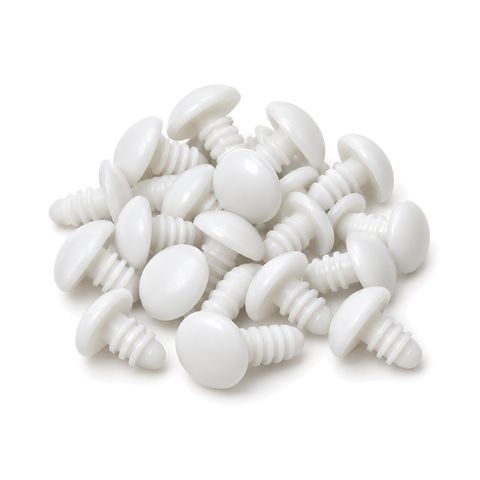
- Rivets: two per strap, plus spares, in the hole size you measured: 7/32 in (100 pack) or 1/4 in (50 pack).
- While the chair is upside down: check the feet. Worn or missing caps let the frame scrape and tip; patio chair feet caps replace them.
Next steps
With the strap and rivets in hand, follow how to replace vinyl straps on patio chairs for the hot-water soak, punching and riveting. For slings, lacing, zero gravity cords and the rest of the patio, see the fix outdoor patio chairs project page and outdoor furniture repair.