Sizing
Strand cane size chart: superfine to common by hole size
Choose strand chair cane from superfine 2 mm to common 3.5 mm by hole size and spacing, pick the binder, measure your holes and decide between two sizes.
Updated
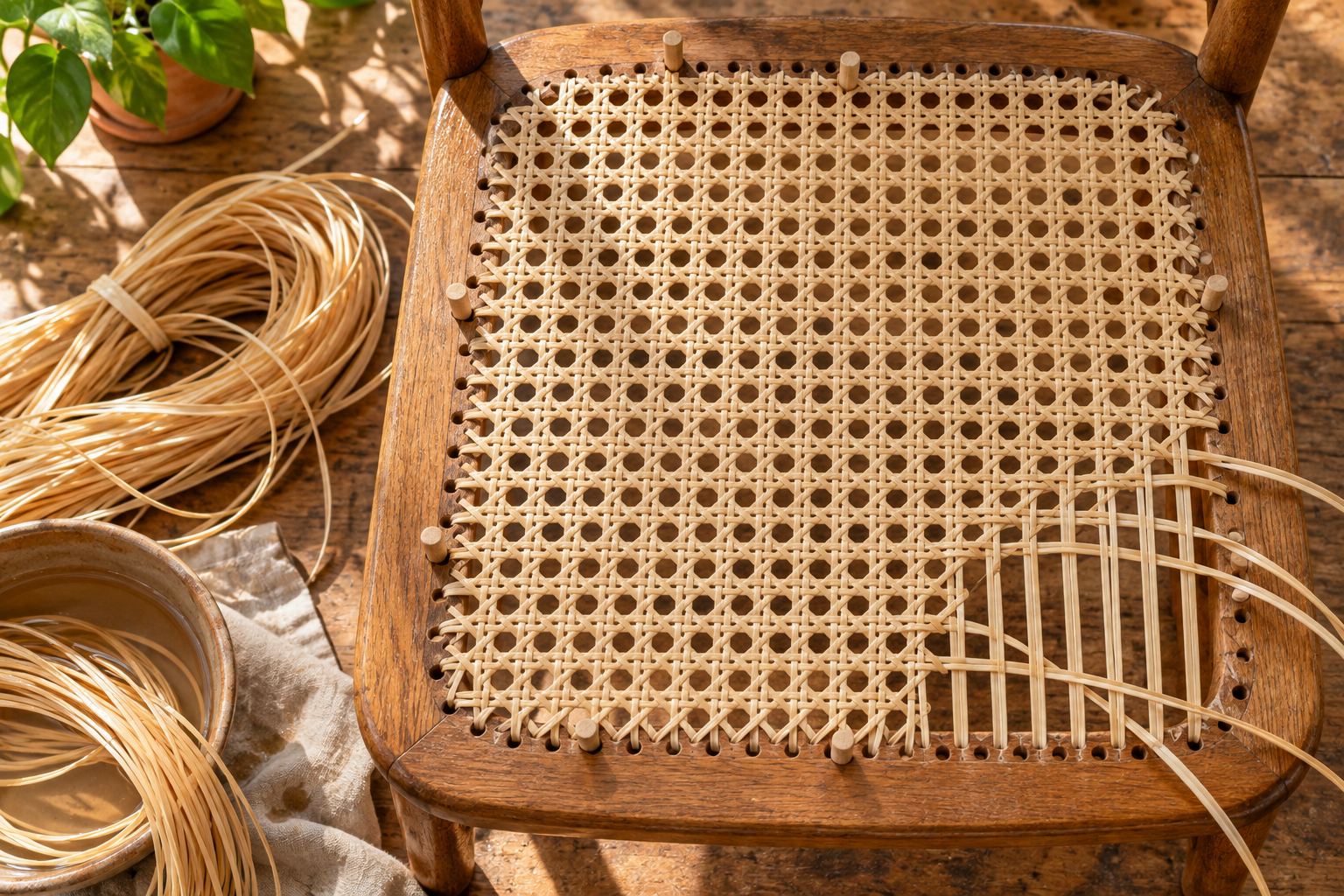
Strand cane size follows the holes in your chair, not the size of the seat. Measure the hole diameter and the spacing from the center of one hole to the center of the next, then find the closest row in the chart below. If you land between two rows, let the hole diameter decide, and take the narrower cane when in doubt.
Everything you need for the whole job is on the hand cane a chair seat project page.
What you need
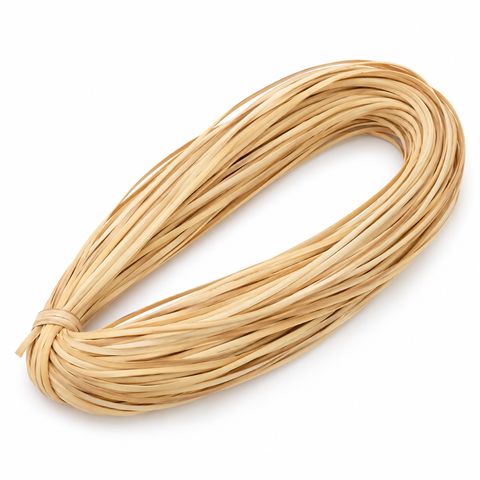
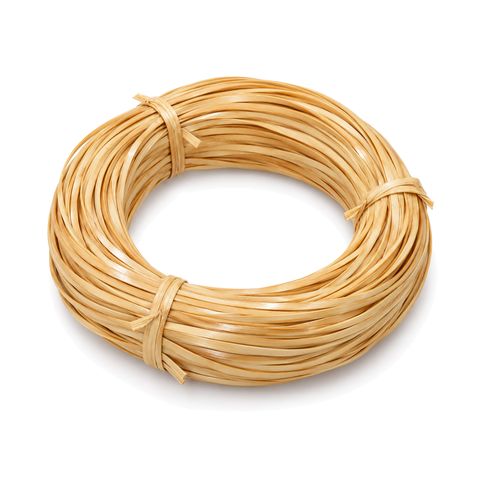
- Strand chair cane, 270 ft hank, in the size from the chart, for one average seat
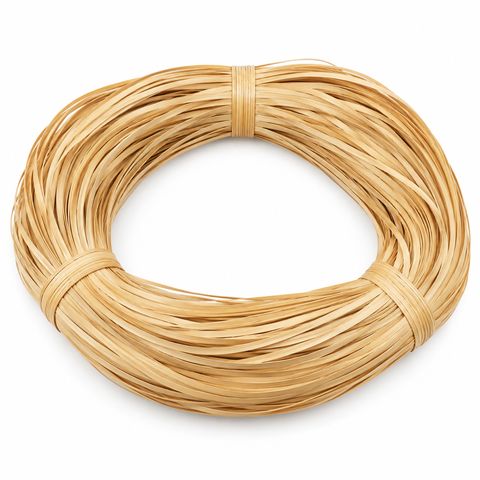
- Strand chair cane, 1000 ft hank, for three to four average seats
- Binder cane, only if you want a different width from the 4 mm binder packed in each hank
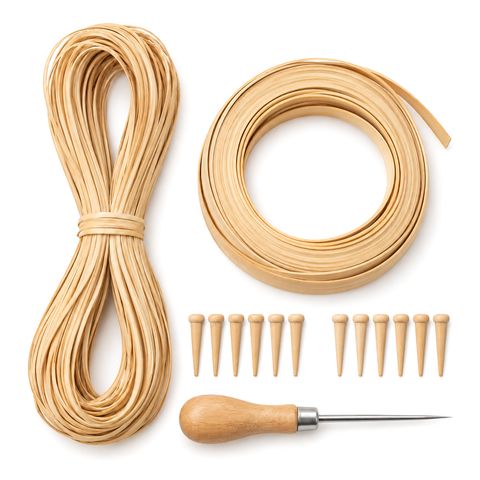
- Or the hand caning kit: a 270 ft hank in fine, medium or common, one strand of 4 mm binder, 12 pegs and an awl
- To measure: a set of drill bits, a ruler marked in sixteenths and a pencil
Strand cane size chart
| Cane size | Width | Hole diameter | Hole spacing, center to center | Spaces in 6 in |
|---|---|---|---|---|
| Superfine | 2 mm | 1/8 in | 3/8 to 7/16 in | 14 to 16 |
| Fine-fine | 2.25 mm | 3/16 in | 1/2 in | 12 |
| Fine | 2.5 mm | 3/16 to 7/32 in | 9/16 to 5/8 in | 10 to 11 |
| Narrow medium | 2.75 mm | 1/4 in | 5/8 in | about 10 |
| Medium | 3 mm | 1/4 in | 3/4 in | 8 |
| Common | 3.5 mm | 5/16 in | 7/8 in | about 7 |
The last column is the number of gaps between hole centers along 6 in of rail. Counting over 6 in averages out uneven drilling, which is why it is the easiest way to read your spacing.
Supplier charts agree more on hole diameter than on spacing. Most give the spacings above; a few list each size a sixteenth to an eighth of an inch closer, and among the finer sizes they differ most between fine and narrow medium. That is why the hole diameter is the tiebreaker.
If you measure in millimeters
| Inches | mm |
|---|---|
| 1/8 in | 3.2 mm |
| 3/16 in | 4.8 mm |
| 7/32 in | 5.6 mm |
| 1/4 in | 6.4 mm |
| 5/16 in | 7.9 mm |
| 3/8 in | 9.5 mm |
| 1/2 in | 12.7 mm |
| 5/8 in | 15.9 mm |
| 3/4 in | 19.1 mm |
| 7/8 in | 22.2 mm |
Narrow common, 3.25 mm
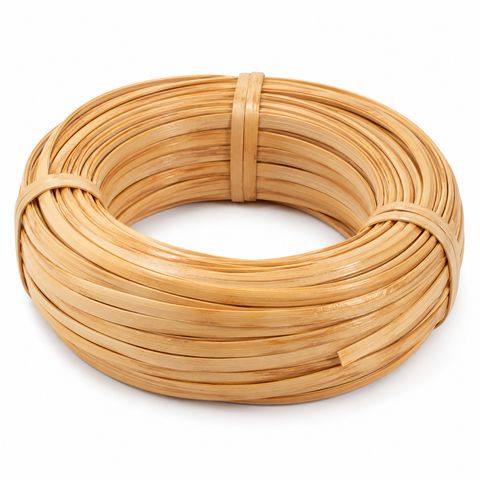
Most charts skip from medium (3 mm) to common (3.5 mm). Narrow common sits between them. We sell it by weight as chair cane by the pound, for restorers who cane larger seats and backs. Consider it when your holes and spacing fall between the medium and common rows, or when a clean piece of the old seat measures 3.25 mm. Binder is not included with the coil.
How to measure your holes
Hole diameter
- Clear the old cane, pegs and binder out of the holes with an awl. A hole with cane still in it reads small.
- Slide drill bits into a hole, smooth shank end first. The largest bit that goes in without forcing is the hole diameter.
- Check one hole on each rail. Hand-drilled holes vary, so go by the size most of them share.
Hole spacing
- Lay a ruler along a straight run of holes, such as the back rail.
- Set the zero mark on the center of one hole.
- Count the gaps between hole centers up to the 6 in mark.
- Compare the count with the last column of the chart, or divide 6 by the count. Eight gaps is 3/4 in spacing; twelve is 1/2 in.
- Repeat on a side rail and use the average.
The common mistake is measuring one pair of holes. A single gap can easily be off by a sixteenth, which is the whole difference between two sizes.
If you have the old cane
A clean piece of the old seat is a good second opinion. Measure the width of one strand in mm and find the closest size. Still check it against your holes: an earlier repair may have used the wrong cane.
When your chair falls between two sizes
- Let the hole diameter decide. Each hole takes a strand from several steps of the weave, plus the loop that ties down the binder. Small holes need the narrower cane, whatever the spacing says.
- A worked example. Holes 5/8 in apart could be fine or narrow medium. If they are 3/16 to 7/32 in across, choose fine. If they are a full 1/4 in, choose narrow medium.
- Between medium and common. If your spacing falls between 3/4 and 7/8 in, go by the holes again: 1/4 in holes take medium, 5/16 in holes take common, and holes in between suit narrow common.
- Test a strand. Soak one strand of the size you are considering and pass it through a hole a few times. If a few passes already fill the hole, go one size finer.
- Still unsure? Take the finer cane. A slightly finer seat looks fine and is easier to weave. A cane that is too wide jams the holes in the diagonal steps, and the seat cannot be finished neatly.
Do not choose by the size of the chair or by which cane looks sturdier. A big seat with small, close holes still takes fine cane.
Binder sizes
Binder is the wide strand laid over the row of holes at the end, tied down with a loop of the seat cane at each hole or every other hole. It hides the holes and protects the edge of the weave. Pick binder about two sizes wider than the seat cane, and wide enough to cover the holes.
| Binder width | Good for |
|---|---|
| 4 mm (about 5/32 in) | Most seats woven in fine to medium cane; one strand comes in each 270 ft hank, four in each 1000 ft hank |
| 5 mm (about 3/16 in) | Seats woven in common cane, or large holes |
| 6 mm (about 1/4 in) | Big, coarse seats, and wrapping legs, joints and handles |
To check, lay a soaked strand of binder over a few holes. It should cover them with a little to spare. One seat needs only enough binder to go once around the holes plus a few inches at each corner, so the binder packed in the hank is usually enough. Buy a 500 ft hank of binder cane when you want another width, are caning many seats or need binder for wrapping. Wrapping is covered in how to wrap chair legs with binder cane.
How much cane to buy
| Job | What to buy |
|---|---|
| One average dining chair seat | One 270 ft hank |
| Large seat, armchair, or seat and back together | Two 270 ft hanks |
| A set of three or four chairs | One 1000 ft hank |
| A first seat, with pegs and an awl | The hand caning kit |
| Larger seats and backs in narrow common | Chair cane by the pound, plus binder |
For a set of chairs, buy all the cane in one size at the same time so every seat looks the same.
Before you start weaving
Store the hank dry, loosely coiled and out of direct sun until you need it. Pull strands out one at a time from the tied end so the rest do not tangle. Soak only a few strands at a time, in warm water for 10 to 15 minutes; how to soak cane and reed explains why and how to keep the working strand damp.
Then follow the seven steps in hand caning a chair seat. If your chair has a groove around the seat instead of holes, it takes pressed cane webbing, not strand cane; see the reed spline size chart.
The cane, binder, pegs and kit for this job are all listed on the hand cane a chair seat project page, and the full range is in hand caning supplies.