How-to
How to make a cane headboard: framed panel or DIY frame
Two ways to a cane headboard: order a framed panel, or build a frame and staple cane from a wide roll. Widths by bed size and how to mount it.
Updated

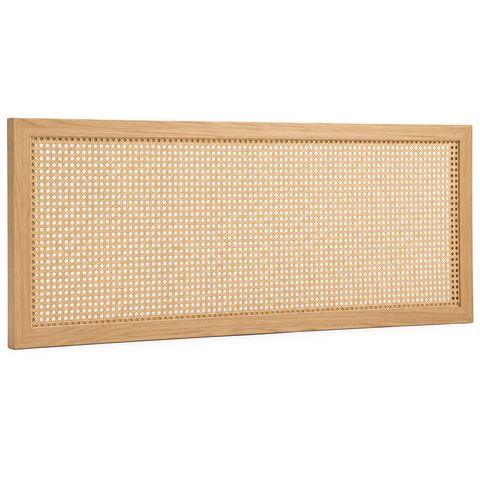
A cane headboard is a wide wooden frame with cane webbing across the middle, fixed to the wall or to the bed frame behind the mattress. You can order the panel ready-made, or build a simple frame yourself and staple cane from a wide roll to the back of it. Either way, make it a little wider than the mattress and hang it so its bottom edge hides behind the top of the mattress.
Everything you need for both routes is on the cane headboards and furniture makeovers project page.
Two routes
| Framed panel | Your own frame | |
|---|---|---|
| What you get | A solid-wood frame with natural cane already set in | A frame you build, with cane stapled to the back |
| Sizes | Twin to king, or any size up to 48 x 72 in made to order | Any size; one piece of cane as wide as the roll allows |
| Frame finish | Oak, walnut-tone or black; white on the made-to-size panel | Your own wood, stain or paint |
Widths by bed size
These are the standard US mattress widths. Our headboard panels are 2 to 3 in wider, which looks right behind the mattress. If your bed frame sticks out past the mattress, go by the frame.
| Bed | Mattress width | Our headboard panel |
|---|---|---|
| Twin | 38 in | 41 x 26 in |
| Twin XL | 38 in (same width, longer) | 41 x 26 in |
| Full | 54 in | 56 x 26 in |
| Queen | 60 in | 62 x 26 in |
| King | 76 in | 78 x 26 in |
| California king | 72 in | 78 x 26 in, 3 in past each side |
Route 1: order a framed panel
The framed cane headboard panel comes in the four bed sizes above, all 26 in tall, with open weave natural cane in an oak, walnut-tone or black frame. It ships oversize, so you send a quote request with the size, frame and delivery address, and we reply with the shipping cost. Mounting hardware is not included unless we agree on it in the quote; tell us whether the panel goes on the wall or a bed frame.
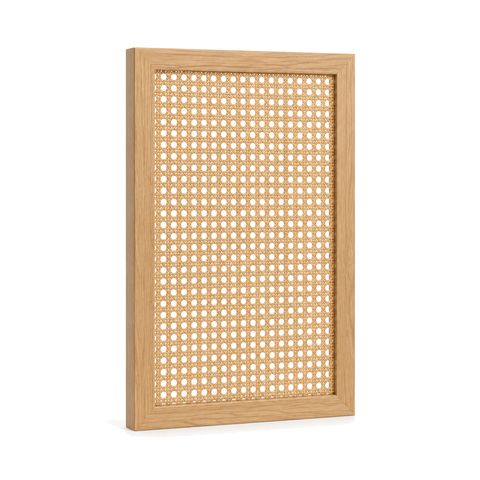
For any other size, a white frame, or square or herringbone weave, use the made-to-size framed cane panel. It is built to the width and height you enter, from 6 to 48 in wide and 6 to 72 in tall in 1/4 in steps, and we email a drawing with the final dimensions for you to approve before we cut. Try sizes and finishes in the panel builder.
A 48 in panel covers a twin. For a wider bed, two or three panels side by side give a divided headboard: two 31 x 26 in panels make the 62 in width of a queen. For a single panel larger than 48 x 72 in, ask for a trade quote.
Route 2: build your own frame
What you need
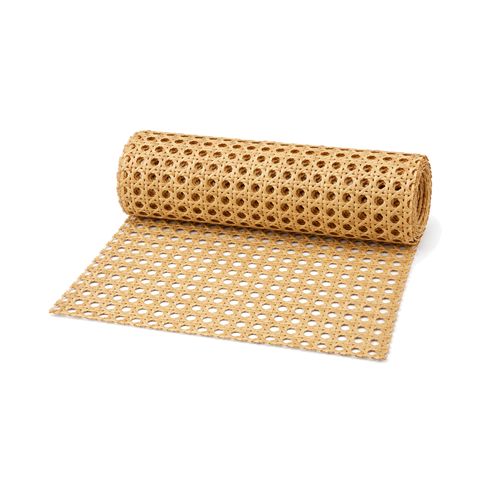
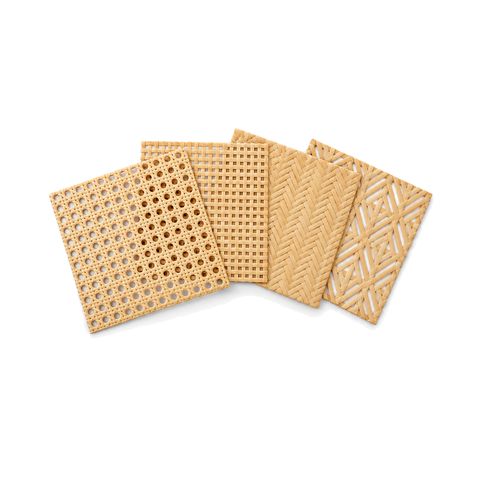
- Cane webbing: open weave in 14 to 36 in widths, square weave up to 24 in, or diamond weave, which also comes as a 48 in wide sheet
- A cane webbing sample pack if you are still choosing a weave
- Boards for the frame, such as 1x4s (3/4 x 3 1/2 in actual size), and screws
- Thin trim strip to cover the stapled edge
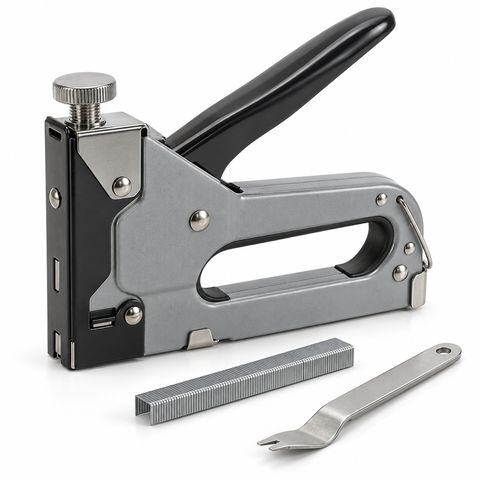
- An upholstery staple gun with short staples that will not come through the face of the frame
- Wood glue and spring clamps
- A utility knife, saw, drill, square and tape measure
- A tub or bathtub for soaking, and old towels
Steps
- Decide the outside size. Width: the mattress or bed frame plus 2 to 3 in. Height: what suits the room; the bottom few inches sit behind the mattress.
- Build and finish the frame. Cut the boards, glue and screw the corners, and check it is square: the two diagonal measurements should be equal. Stain or paint the wood now, before the cane goes on, so no finish lands on the cane. If you want to color the cane too, see how to stain or paint cane.
- Size the cane. Measure the opening inside the frame and add 1 in on every side for the glue and staples. Lay the long side along the roll and let the height run across the roll’s width, so the roll only has to be as wide as the shorter side. Do not join two pieces: the seam shows.
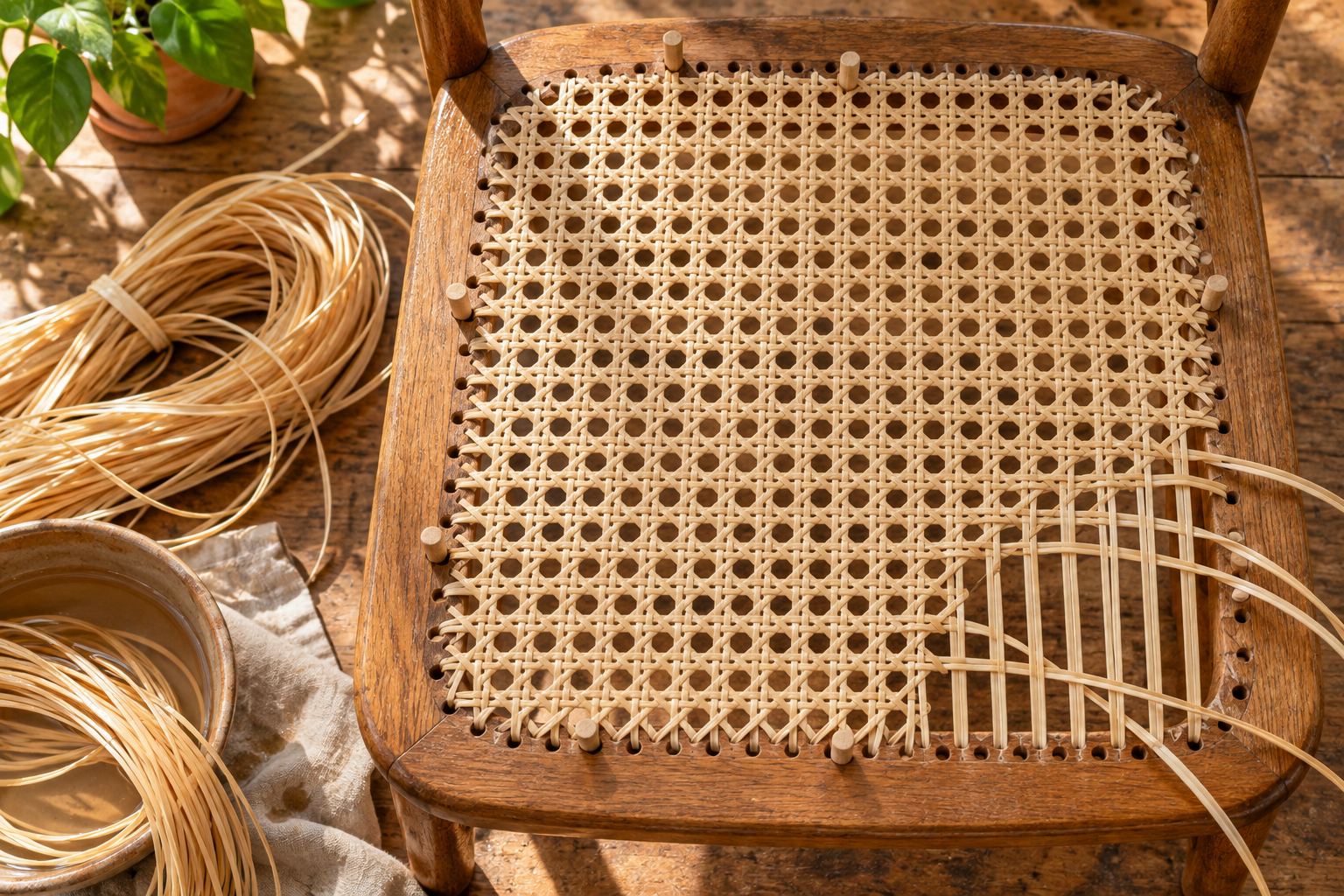
- Soak the cane in warm water for about 30 minutes, then blot it with a towel. The common mistake is stapling it on dry: dry cane stays loose and ripples, while damp cane shrinks tight as it dries.
- Glue and staple it to the back. Lay the frame face down and run a thin bead of glue around the back of the opening. Lay the cane on shiny side down, so the shiny side faces the room. Staple the middle of the top edge, then the middle of the bottom, then the middle of each side, and work out toward the corners with the staples close together. Keep the strands straight, and do not stretch damp cane hard.
- Let it dry flat for about 24 hours. Trim the extra cane with a sharp knife, then glue a trim strip over the staples.
Example: a queen headboard from one roll
| Measurement | |
|---|---|
| Outside of the frame | 62 x 26 in |
| Frame boards | 1x4, 3 1/2 in wide |
| Opening | 62 − 7 = 55 in wide, 26 − 7 = 19 in tall |
| Cane piece, 1 in extra all round | 57 x 21 in |
| Roll | 24 in x 5 ft: the 21 in height goes across the roll, the 57 in along it |
With the same boards, a twin frame (41 in) needs a 36 x 21 in piece, which fits a 24 in x 3.3 ft roll. A full (56 in) needs 51 x 21 in from a 24 in x 5 ft roll, and a king (78 in) needs 73 x 21 in, so a 24 in x 10 ft roll. Every roll is measured before it ships, so you can plan to the inch.
For an opening taller than the widest roll covers, add a crosspiece and cane each section on its own, or use the 48 in diamond sheet. More layouts: how much cane webbing do I need and the roll builder.
Mounting
On the wall
A French cleat is the simplest strong hanger: a strip of wood cut lengthwise at a bevel into two matching halves. One half is screwed to the wall with the bevel facing up and toward the wall. The other is fixed to the back of the headboard with the bevel facing down, and the headboard drops onto the wall half.
- Measure from the floor to the top of the mattress, with any topper on. Plan the bottom edge of the headboard a little below that height so no gap shows above the pillows.
- Find the wall studs with a stud finder. In most US houses they are 16 in apart, sometimes 24 in. Screw the wall half of the cleat into at least two studs, and check it is level.
- Fix the other half to the back of the headboard at the height that puts the panel where you planned, then lift the headboard onto the cleat.
Do not hang a long headboard on drywall anchors alone.
On the bed frame
Many metal bed frames have headboard brackets with holes or slots for bolts. Screw two upright wooden legs to the back of the headboard, set so its bottom edge sits a little below the top of the mattress. Mark the bracket holes on the legs, drill and bolt it on. No brackets? Hang it on the wall instead.
Care and next steps
Dust the cane with a soft brush and keep it away from heat vents; cane furniture care and repair has the rest. For a matching nightstand or dresser, how to cane a cabinet door uses the same staple and trim method, and choosing a cane webbing weave compares the weaves. The panels, rolls and tools are on the cane headboards and furniture makeovers project page.