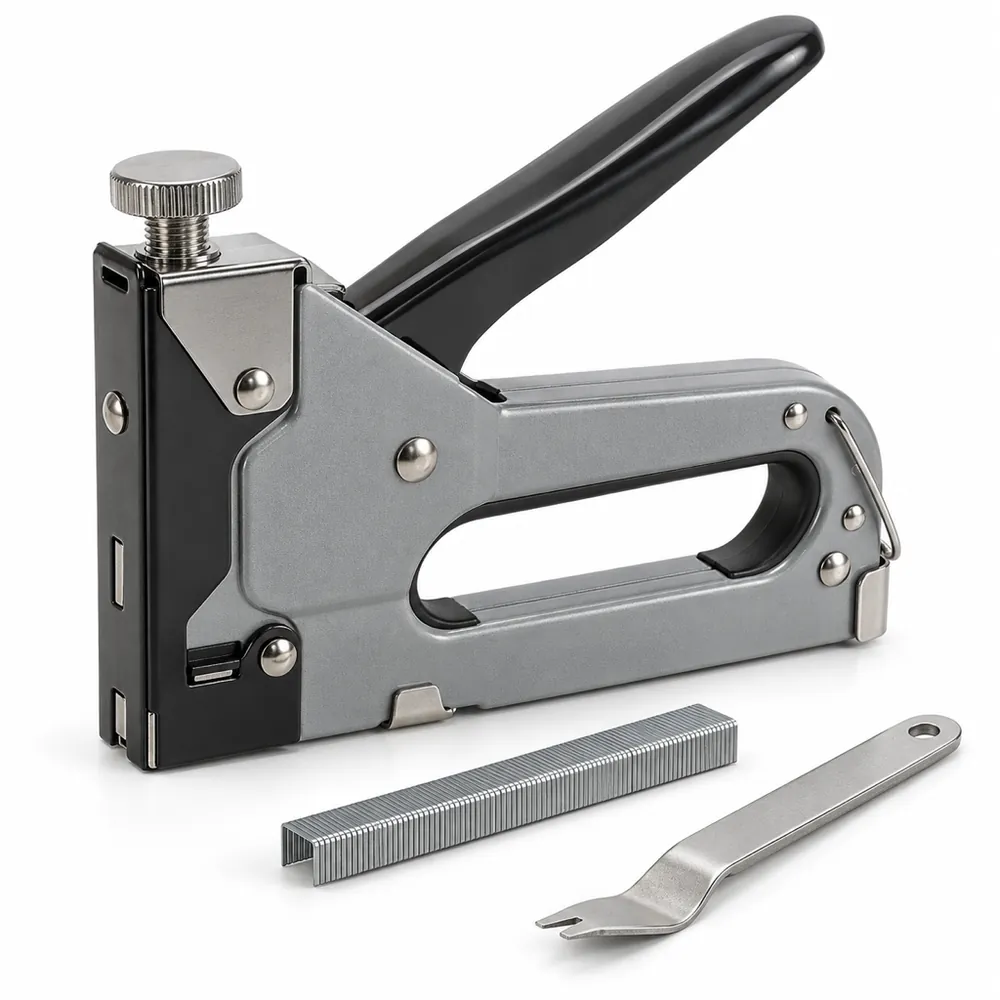
Photos illustrate the product type.
Tools for Caning and Upholstery
Upholstery Staple Gun Kit, Manual, with T50-Type Staples and Remover
Manual heavy-duty staple gun with about 3,000 T50-type staples and a staple remover, for cane on cabinet doors, seat webbing, fabric and dust covers.
Most chair seat and cabinet door jobs end with a staple gun. It fixes soaked cane webbing to the back of a cabinet door frame, holds jute webbing and elastic webbing to the seat rails, and pulls seat fabric and dust cover fabric tight on a drop-in seat.
This kit is a manual heavy-duty staple gun: no battery, no cord, nothing to charge. It takes standard T50-type staples, so refills are easy to find. It comes with about 3,000 staples and a staple remover for the ones that go in wrong.
Getting staples to sit flush:
- Hold the gun square to the work, not tilted.
- Press the nose firmly against the wood before you squeeze. A staple that stands up usually means the gun lifted as it fired.
- If one stands proud in hard wood, tap it down with a mallet, or pull it and fire another beside it.
On each job:
- Cabinet doors: staple the soaked cane at the middle of each side first, then work out toward the corners, a staple every few inches.
- Webbing: fold the end over and set a staggered row of staples, so they do not all split the rail along one line of grain.
- Seat fabric: one staple in the middle of each side first, then work toward the corners, pulling evenly.
- Dust cover: last, across the underside of the seat, with the raw edge folded under.
Use the shortest staple that holds. It should go well into the wood without coming through the face of a door frame or the far side of a thin rail. T50-type staples are sold in several leg lengths, and 1/4 in staples suit cane on cabinet doors.
See the tool lists for adding cane to cabinet doors and for re-webbing and re-padding a chair seat.
How to choose
The kit comes in one version, so the choice is the staple. Use the shortest leg that holds firmly. For cane on the back of a cabinet door frame, 1/4 in staples hold the cane without coming through the face. Folded webbing and several layers of fabric need a longer leg to reach the wood; very hard wood is easier with a shorter one. Fire a few test staples into a hidden spot on the frame before you start.
A manual gun suits a few chairs or doors at a time. If you staple all day, every day, a powered gun saves your hand; for re-webbing a seat or caning a pair of doors, this is all you need.
Questions
What staples does it take?
Standard T50-type staples, which are sold in several leg lengths. About 3,000 come in the kit.
My staples do not go all the way in. What helps?
Press the nose hard against the work and hold the gun square as you squeeze. In very hard wood, use a shorter staple, or tap the last bit down with a mallet.
Which staples should I use for cane on cabinet doors?
1/4 in. They hold the cane webbing without coming through the face of a typical door frame.
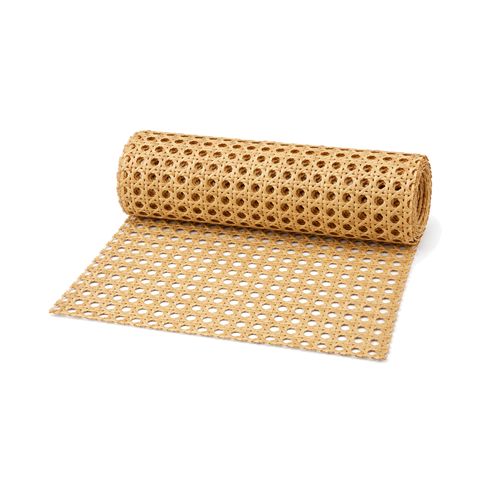 Cane Webbing Roll
Can I staple elastic webbing?
Yes, on frames made for staples or tacks. Fold the end back and set a staggered row of staples at an angle to the weave, so each one catches several rubber strands.
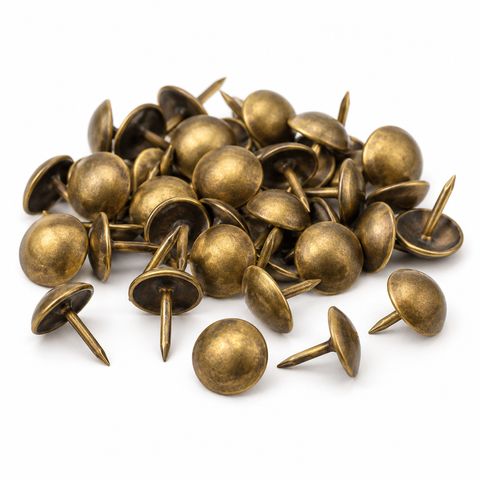 Upholstery Tacks
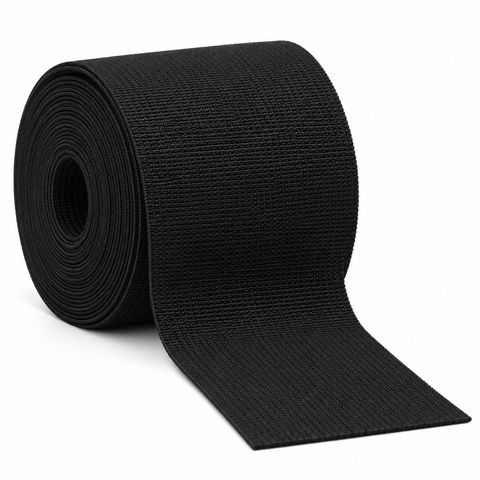 Elastic Chair Webbing
Do I need it for a pressed cane seat?
No. Pressed cane is held by reed spline glued into a groove. The staple gun is for cane fixed to the back of a frame, such as a cabinet door or a headboard.
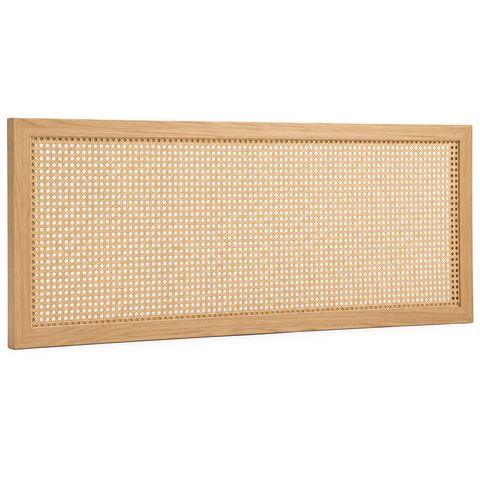 Cane Headboard Panel in a Wood Frame
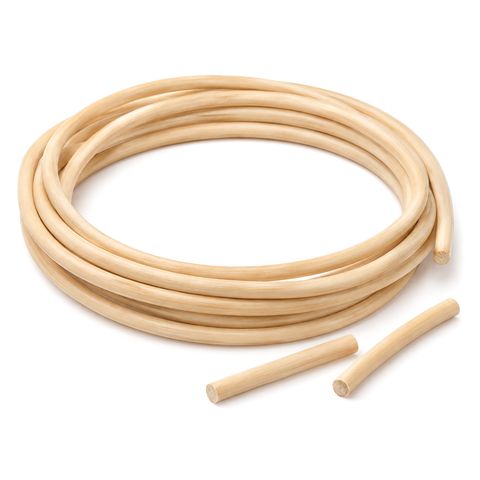 Reed Spline for Chair Caning
You may also need
-
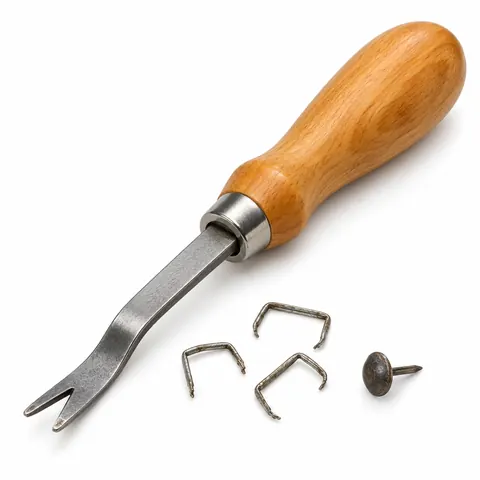
Upholstery Staple Remover and Tack Lifter, Single or 5-Piece Set
Flat notched lifter that slides under old staples and tacks and levers them out without splitting the wood. Single tool or a 5-piece set with pliers.
From $6.99 · 2 options
-
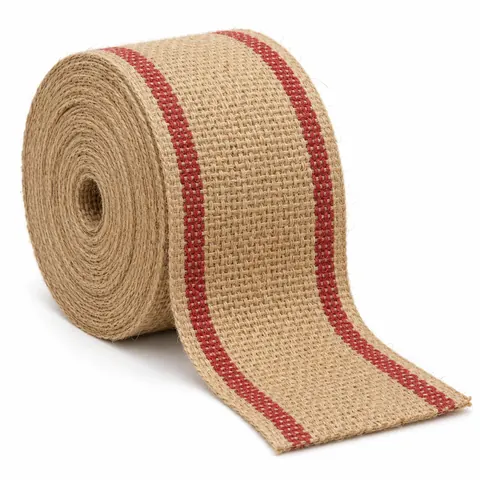
Jute Upholstery Webbing, 3.5 in Wide, 10 yd (30 ft) Roll
Natural woven jute webbing, 3.5 in wide on a 10 yd roll: the firm, traditional base woven across a seat frame under springs, padding or a drop-in seat.
$13.99
-
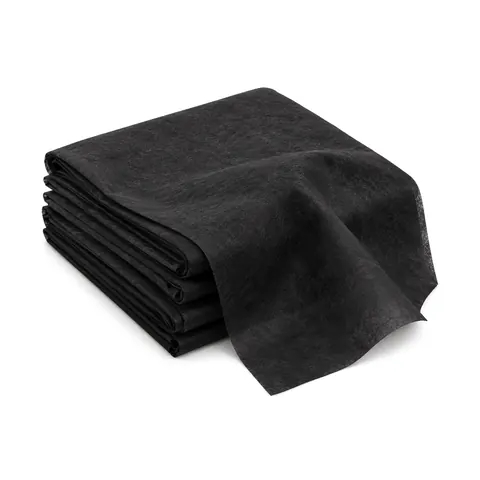
Black Dust Cover Fabric (Cambric) for Upholstery, 60 in or 36 in
Black nonwoven dust cover fabric, or cambric, stapled under a re-upholstered seat to keep dust and loose filling in. 60 in x 3 yd or 36 in x 6 yd.
From $9.99 · 2 options