Sizing
How much cane webbing do I need? Measure and pick a roll
How to measure chair seats, backs, cabinet doors and headboards for cane webbing, what to add for grooves or stapling, and which roll to buy.
Updated
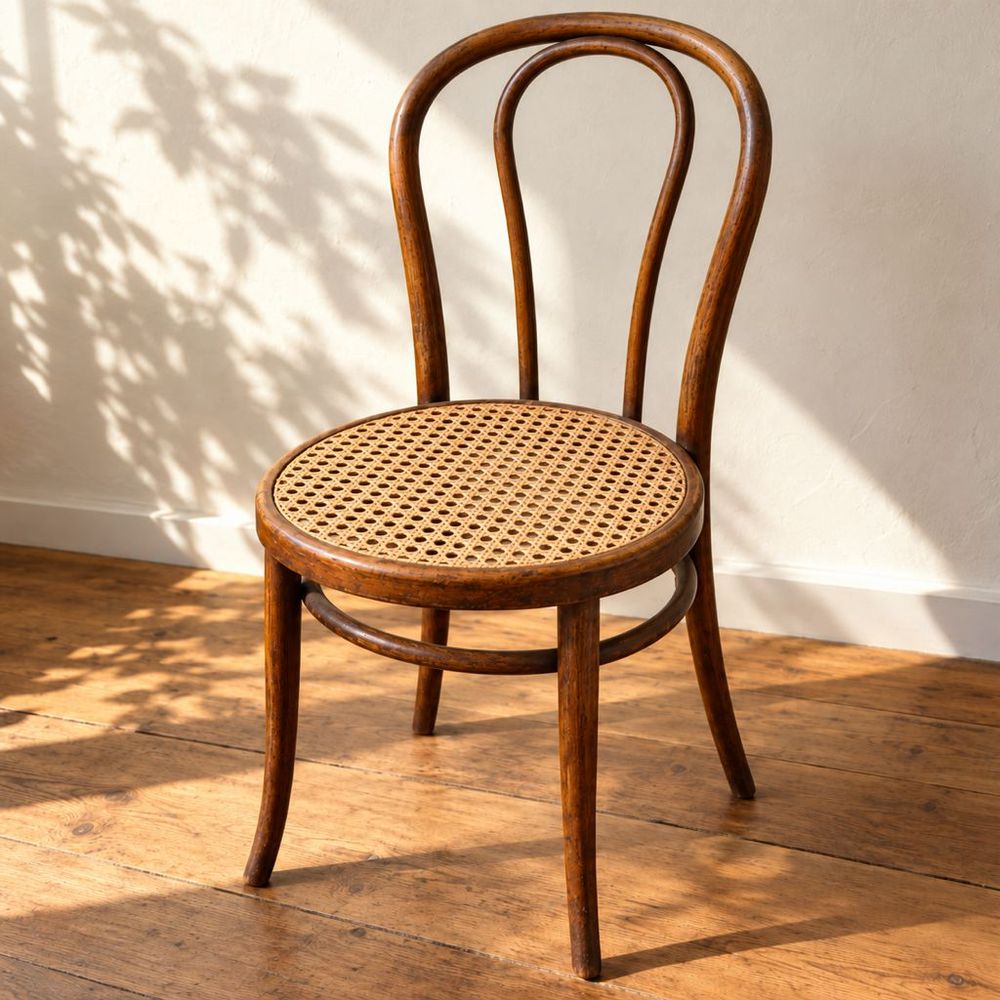
Cane webbing is sold by width and length, so the question is really two questions: how big does each piece have to be, and how do those pieces fit on a roll? Get the first right and the second is simple arithmetic.
The two rules
How much extra you add depends on how the cane is fixed.
| How it is installed | What to measure | What to add |
|---|---|---|
| Pressed into a groove with spline (chair seats, chair backs, grooved frames) | From the outer edge of the groove to the outer edge on the other side | 2 in to the width and 2 in to the depth, which leaves 1 in past the groove all round |
| Glued and stapled behind a frame (cabinet doors, headboards, screens) | The opening the cane must fill | 1 in of overlap on every side, so 2 in to the width and 2 in to the height |
Those are the minimums. If it is your first project, an extra inch or two each way gives you more to hold and some room to straighten the pattern.
Measuring chair seats and backs
- Measure side to side from the outer edge of the groove to the outer edge on the other side. Seats are often wider at the front, so measure at the widest point.
- Measure front to back between the outer edges of the groove, at the deepest point.
- For a round seat, measure the diameter across the outer edges of the groove in two directions and use the larger number.
- A caned back is measured the same way, across its own groove.
- Add 2 in to each number.
Our guide to measuring a spline groove also covers groove width and spline length.
Measuring cabinet doors
On a door with the center panel removed, the cane is stapled and glued to the back of the frame.
- Measure the width and height of the opening, the hole you can see through.
- Add 1 in of overlap on every side: 2 in to each measurement.
- Check that the back of the frame has at least 1 in of flat wood around the opening to staple into.
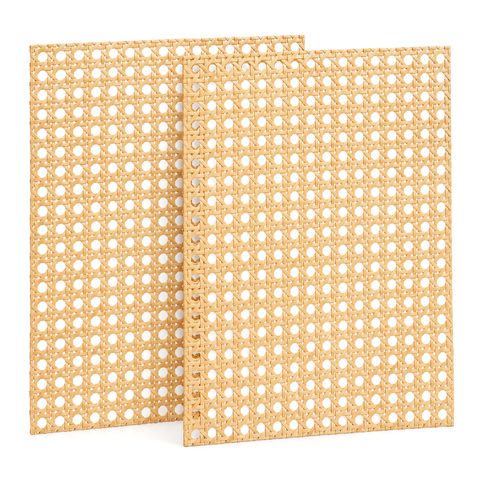
The cabinet door cane inserts are precut pairs cut from the same roll, so two doors match. Our guide on how to cane a cabinet door covers cutting the opening and stapling.
Measuring headboards and large panels
Measure the area of cane you want to see inside the frame, then add 1 in on every side. A long headboard is usually wider than any roll, but that does not matter: run the long side along the roll’s length and let the height go across the roll’s width. The roll width only has to cover the shorter side of your piece.
If you would rather skip the frame work, the framed cane headboard panel comes in twin to king, and the panel builder prices a framed panel to your exact size.
Picking a width and length from the roll
Two checks:
- Width: the roll must be at least as wide as the shorter side of your piece, or as wide as two pieces placed side by side.
- Length: add up the pieces laid end to end along the roll, plus a few inches spare. A few loose strands at the cut ends of a roll are normal, so do not plan to use the last inch.
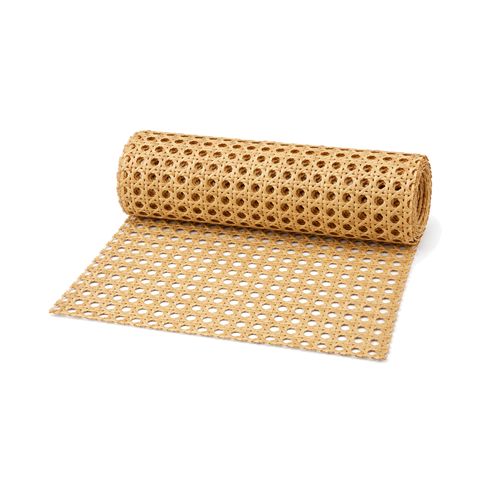
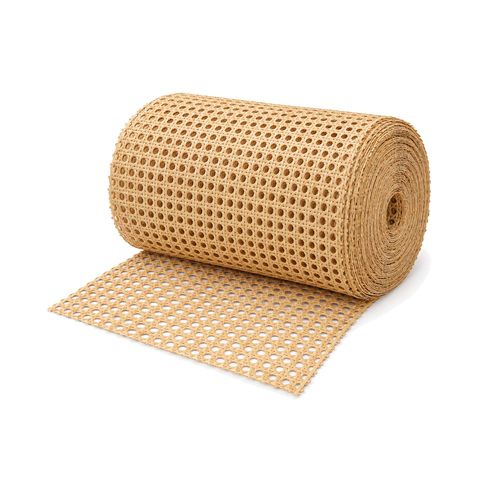
Open weave cane webbing comes in these sizes:
| Roll width | Lengths |
|---|---|
| 14 in | 3.3, 5 or 10 ft |
| 18 in | 3.3, 5 or 10 ft |
| 24 in | 3.3, 5, 10 or 16.6 ft |
| 36 in | 5, 6.6, 10 or 16.6 ft |
In inches, 3.3 ft is about 40 in, 5 ft is 60 in, 6.6 ft is about 79 in, 10 ft is 120 in and 16.6 ft is about 199 in. Other weaves come in their own widths; see choosing a cane webbing weave. Every roll is measured before it ships. To try layouts on screen, use the roll builder.
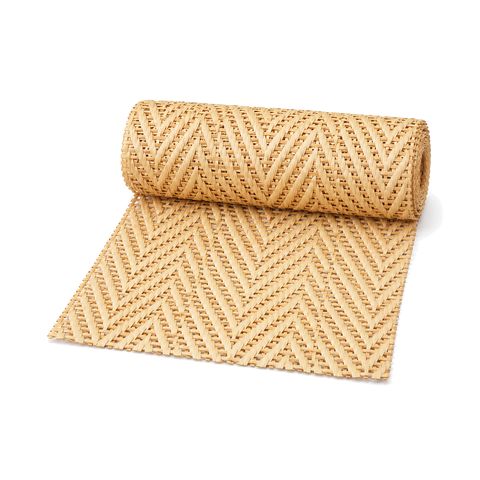
Open and square weaves look the same turned 90 degrees, so you can lay a piece either way on the roll. Herringbone and diamond weaves have a direction. Turning a piece changes which way the pattern runs, so keep it the same across a pair of doors or a set of chairs.
Worked examples
These are example measurements to show the method. Use your own.
| Project | Measured | Cut size (each) | How it lays out | Roll to buy |
|---|---|---|---|---|
| One dining chair seat | 15 x 14 in at outer edge of groove | 17 x 16 in | 17 in across an 18 in roll, 16 in along it | 18 in x 3.3 ft, with room for a second seat |
| Four matching seats | 15 x 14 in each | 17 x 16 in, four pieces | Four pieces end to end: 64 in | 18 in x 10 ft (5 ft is only 60 in) |
| Seat and back of one chair | Seat 15 x 14 in, back 11 x 9 in | 17 x 16 in and 13 x 11 in | End to end on an 18 in roll: 27 in | 18 in x 3.3 ft |
| Small stool seat | 10 x 10 in at outer edge of groove | 12 x 12 in | One flat sheet | 12 x 12 in precut sheet, or a 14 in x 3.3 ft roll |
| Pair of cabinet doors | Openings 11 x 17 in | 13 x 19 in, two pieces | 19 in across a 24 in roll, 13 + 13 = 26 in along it | 24 in x 3.3 ft |
| Queen headboard | Opening 58 x 24 in | 60 x 26 in | 26 in across a 36 in roll, 60 in along it | 36 in x 6.6 ft (5 ft leaves no spare) |
For the four seats, a 36 in x 5 ft roll also works: two pieces side by side (34 in) and two rows (32 in).
Other ways to buy
- Cut to size: the made-to-size cane sheet is cut to the exact width and length you enter, from 6 to 36 in wide and 6 to 72 in long. Enter the size with the allowance already added.
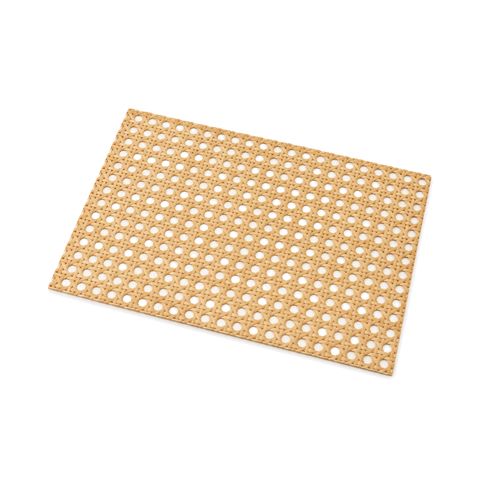
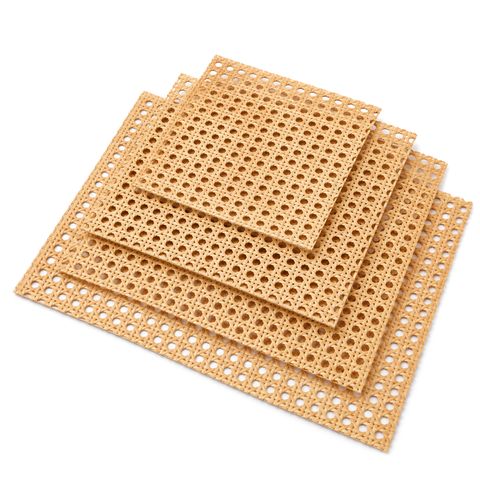
- Flat sheets: precut cane sheets in 12 x 12, 18 x 18, 24 x 24 and 24 x 36 in ship flat, so there is no roll curl on small projects.
- Lots of chairs: the trade roll comes in 50 or 100 ft lengths. Cane is a natural material and the color varies from roll to roll, so cut a whole matching set from one roll.
Do not forget the spline
Every grooved seat or back also needs spline: the groove length plus 6 in, in the size that matches your groove width. A 6 ft coil does one average seat. See the reed spline size chart.
When your numbers are ready, browse cane webbing or cane panels.
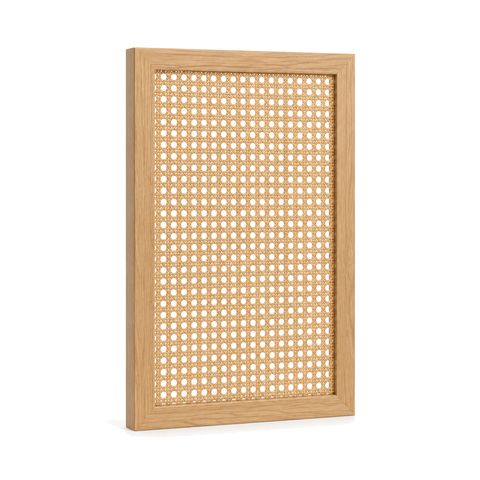 Framed Cane Panel Made to Your Size
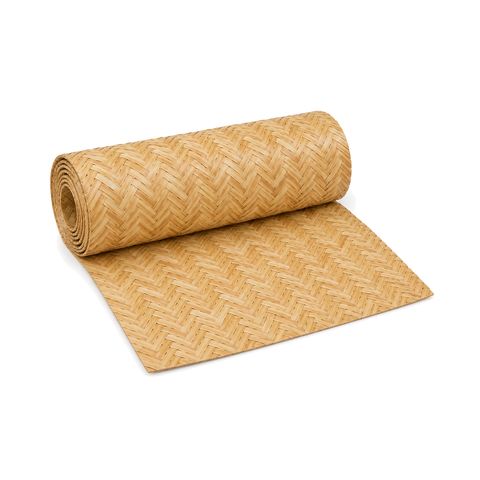 Herringbone Cane Webbing
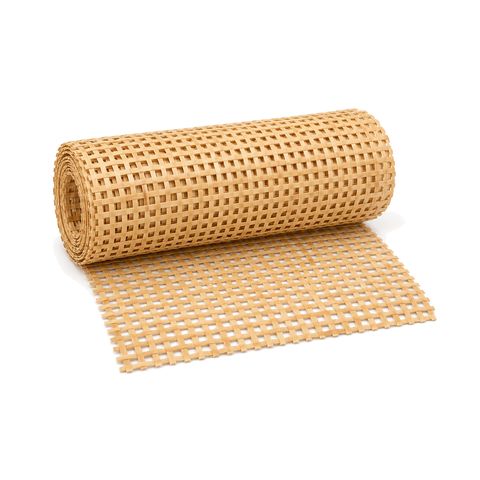 Square Cane Webbing Roll (Radio Weave)
 Diamond Weave Cane Webbing (V Pattern)