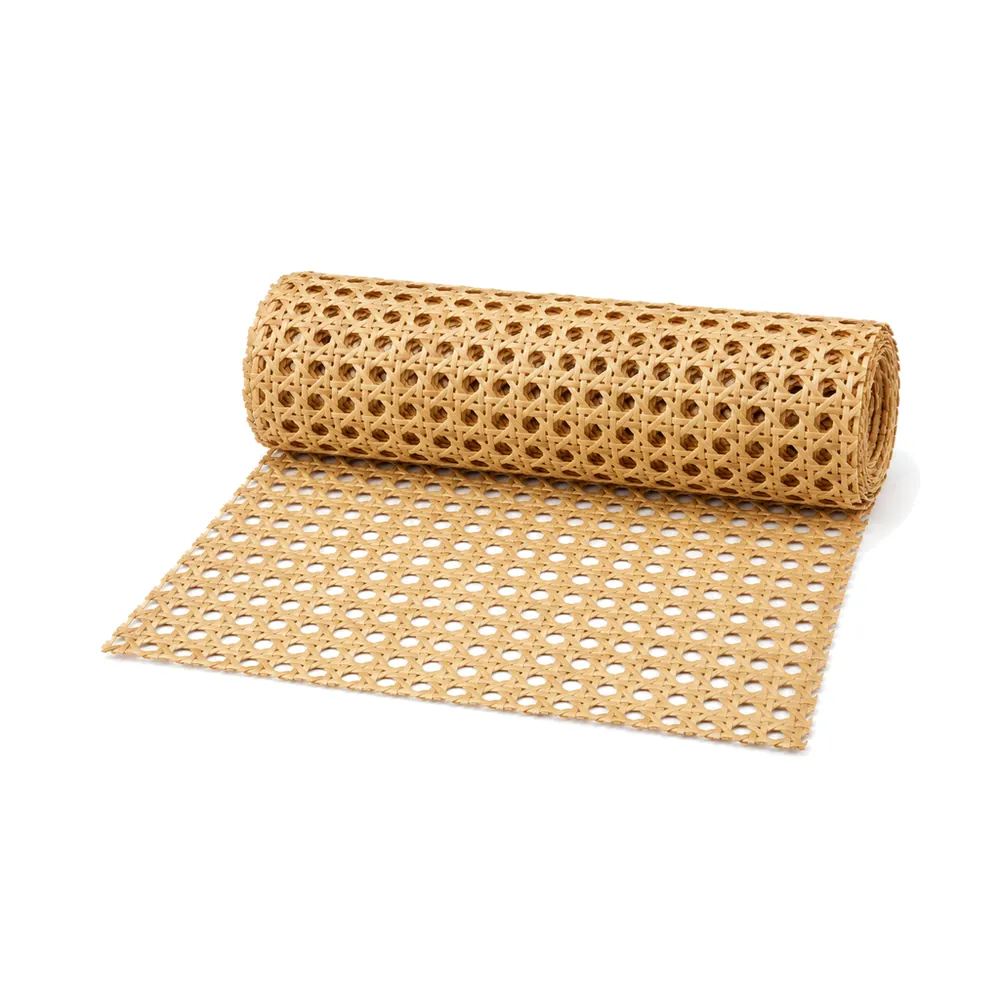
Photos illustrate the product type.
Cane Webbing Roll, Open Weave Natural Rattan, 14 to 36 in Wide
Natural rattan cane webbing in the classic open weave, on rolls 14 to 36 in wide, for chair seats, cabinet doors, headboards and screens.
Every roll is measured before it ships. Natural material: color and grain vary. Soak about 30 minutes before use.
This is the cane you see on bentwood chairs and bistro seats: thin, flat strands of natural rattan cane, machine woven in four directions so they leave small octagonal holes. In the trade it is called pressed cane, and it is also sold as open mesh or hexagonal weave. Ours is undyed, with the honey-blond color of the glossy outer skin of the rattan palm.
The same roll goes in two different ways:
- Chair seats and backs with a routed groove: press the cane into the groove with wooden wedges, then glue reed spline into the groove to lock it.
- Cabinet doors, headboards and screens: stretch the cane over the back of the frame, glue and staple it, and cover the edge with a thin strip of trim.
Either way, soak the cane for about 30 minutes in warm water first. Wet cane bends into a groove or over a frame edge without cracking. As it dries it shrinks and pulls tight, which is what makes a new seat firm. Keep the shiny side facing out; the back is duller and slightly rougher.
Every roll is measured before it ships, so you get the full length you ordered. Rattan is a natural material, and color and grain vary from roll to roll. A few loose strands at the cut ends are normal and disappear when you trim the piece to size.
Spline, wedges and glue are not included. Measure your groove first and add the matching spline size to your order, or look at our bundle that pairs a roll with #8 spline for 3/16 in grooves.
How to choose
For a chair seat, measure across the opening from groove to groove at the widest point, then from front to back. Add at least 2 in to each number; that extra goes down into the groove and gives you something to hold while you wedge it. The shorter number decides the roll width, the longer one tells you how much length each seat uses. Example: an opening of 15 x 17 in needs a piece at least 17 x 19 in, so the 18 in roll fits, and 3.3 ft is enough for two seats.
For a cabinet door, measure the opening in the frame and allow at least 1 in extra on every side for staples. For a headboard or screen, check the short side: an opening up to 34 in fits the 36 in roll. When several doors must match, buy one longer roll rather than several short ones.
Questions
Which side of the cane goes up?
The shiny side. Run your fingers over both faces: the smooth, glossy one is the face and goes up on a seat or toward the room on a door.
Do I really have to soak it?
Yes. Dry cane cracks when you bend it into a groove or around a frame edge. Soak it about 30 minutes in warm water, fit it while damp, and let it dry completely before anyone sits on it.
How many seats can I cut from one roll?
Add at least 2 in to your groove-to-groove opening in both directions, then see how many of those pieces fit along the roll. For example, 17 x 19 in pieces fit six times on an 18 in x 10 ft roll.
Can I stain or paint natural cane?
You can, but test on an offcut first. The glossy outer skin resists stain, so color tends to take unevenly. If you want dark cane, our walnut-stained square weave saves you the job.
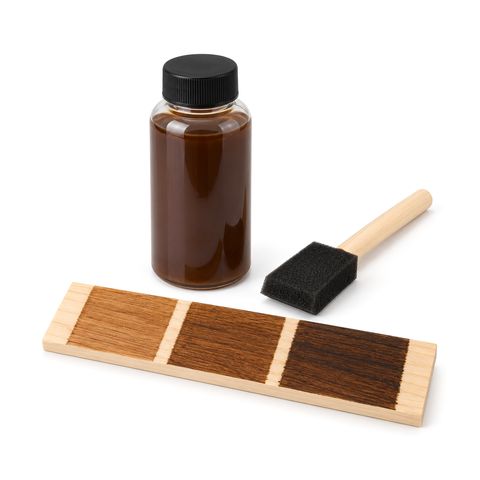 Water-Based Wood Stain for Chair Frames and Cane
Can I use it outdoors or in a bathroom?
Natural cane is happiest indoors, away from rain and constant damp. For porches, boats or bathrooms, our PE plastic cane webbing stands up to water and humidity better.
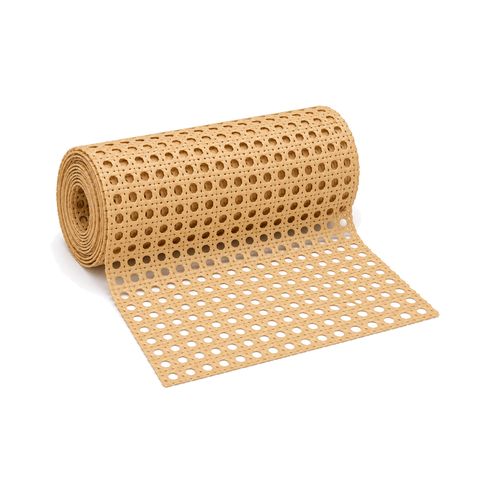 Plastic Cane Webbing (PE)
You may also need
-
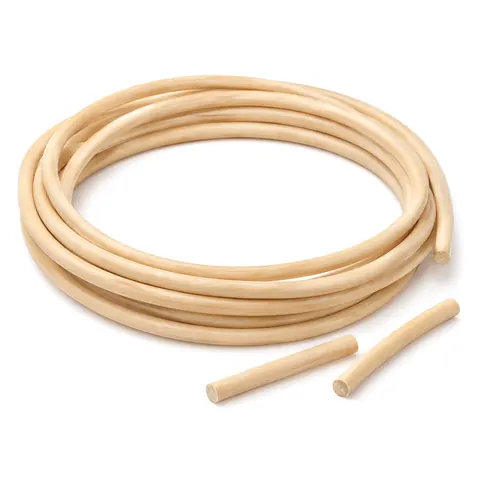
Reed Spline for Chair Caning, 6 ft Coil, Sizes #6.5 to #11
Reed spline that locks pressed cane into a chair seat groove, in nine sizes from #6.5 to #11: #7 fits 1/8 in, #8 fits 3/16 in, #9 fits 1/4 in grooves.
From $7.99 · 9 options
-
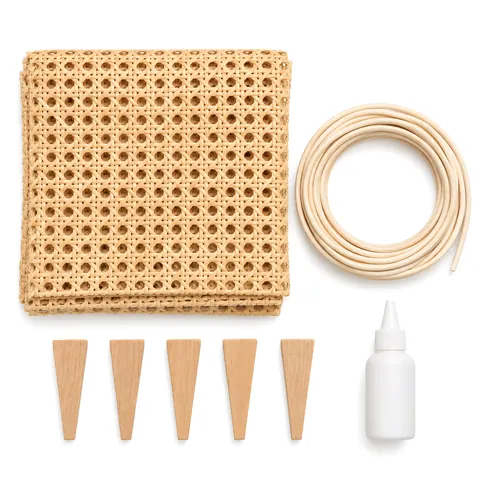
Chair Seat Caning Kit for Pressed Cane, with Spline and Wedges
Replace one pressed cane chair seat: a sheet of open weave cane, 6 ft of reed spline in your groove size, 5 hardwood wedges and wood glue.
From $27.99 · 12 options
-
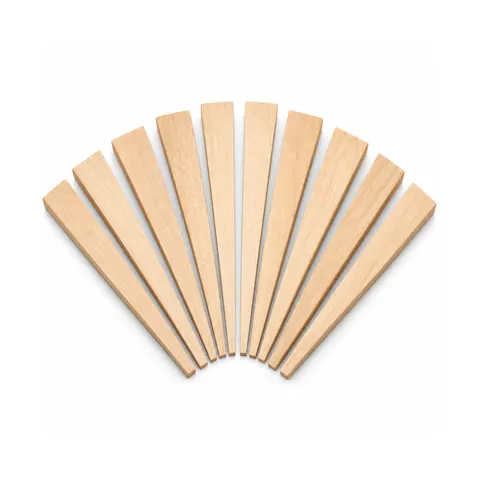
Caning Wedges, Hardwood, 3.9 in, Packs of 10, 20 or 40
Smooth hardwood wedges with a thin edge for tapping pressed cane into the groove and holding it while you work round the seat; packs of 10, 20 or 40.
From $11.99 · 3 options
-
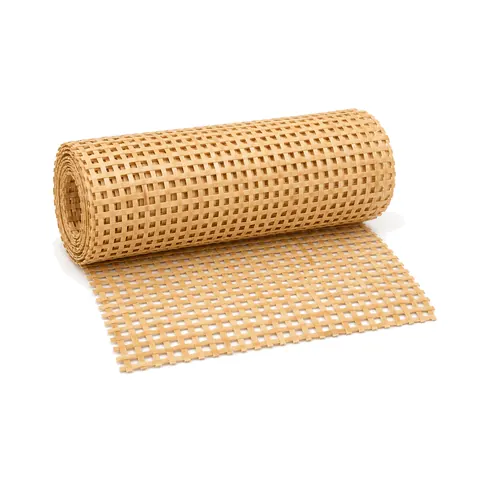
Square Cane Webbing Roll (Radio Weave), Natural Rattan, 14 to 24 in
Square weave cane webbing, also called radio weave: natural rattan strands crossed at right angles in a neat grid, for doors and wall panels.
From $19.99 · 5 options