Materials
Elastic vs jute upholstery webbing: which does your seat need?
Elastic webbing is for modern seats without springs; jute is the firm base under springs and padding. How each is fixed, stretched and spaced.
Updated
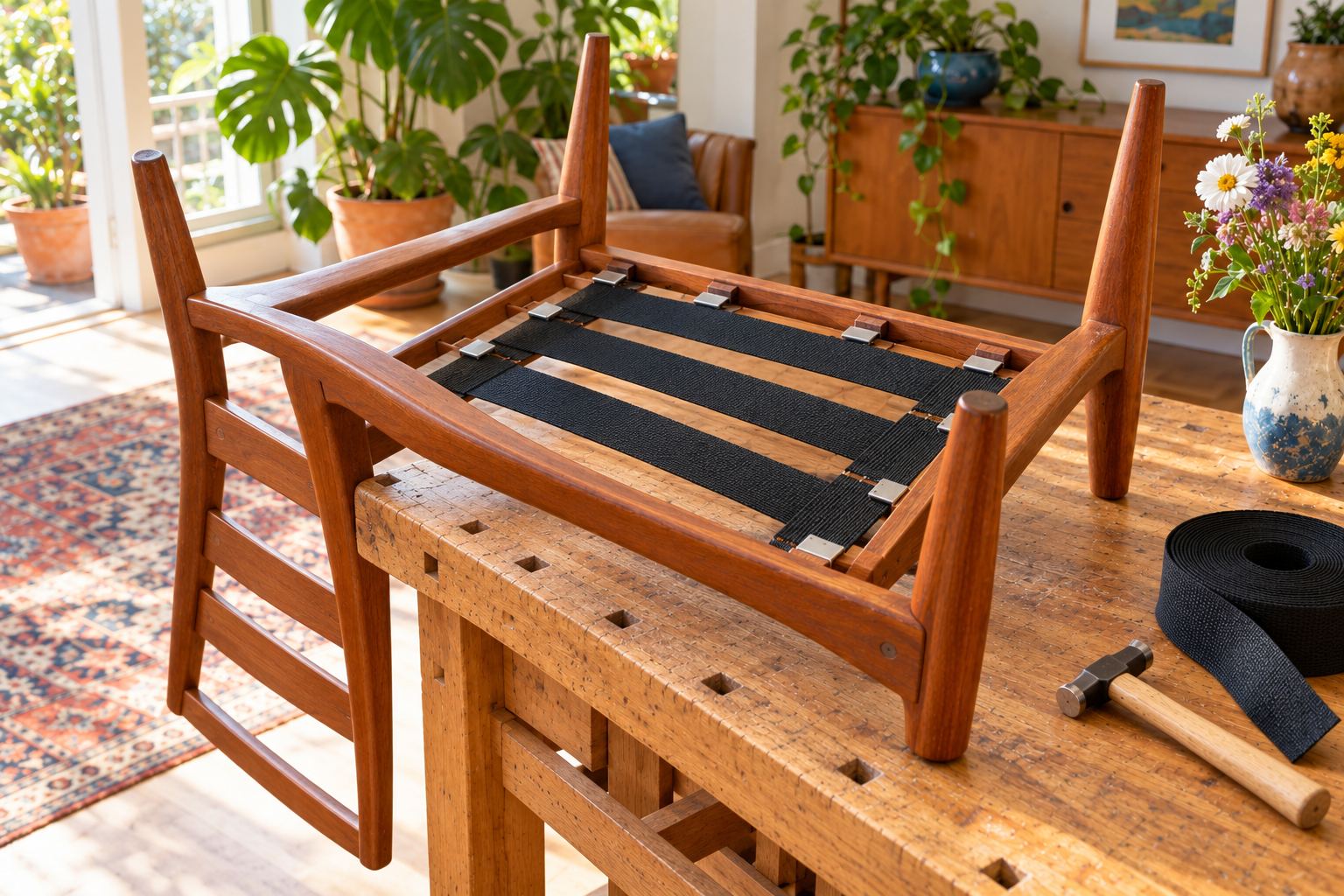
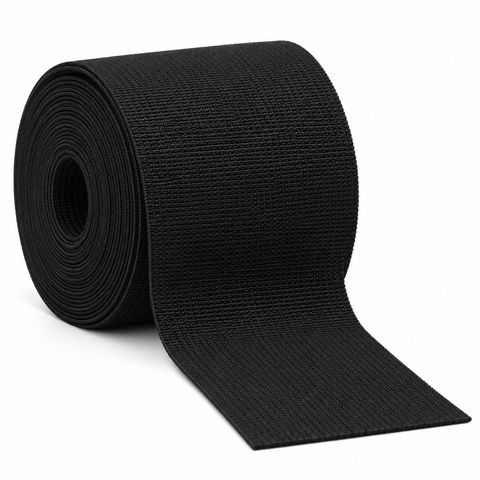
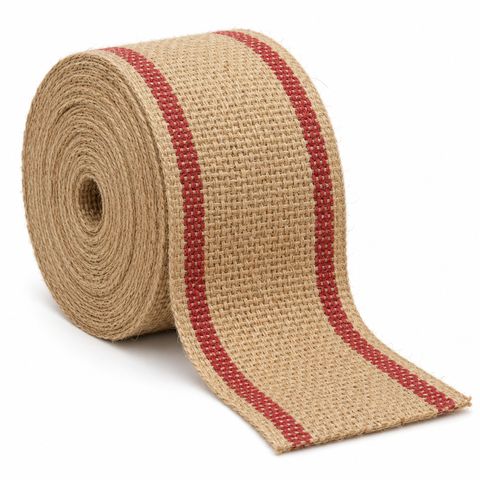
Elastic webbing is for modern seats without springs: the rubber straps stretch and spring back, and foam or a loose cushion sits right on them. Jute webbing is for traditional seats: it does not stretch, and it is pulled tight to make a firm base for springs, stuffing or the padding of a drop-in seat. The safest rule is to replace like with like.
Everything you need for either kind is on the project page for re-webbing and re-padding a chair seat.
The two side by side
| Elastic webbing | Jute webbing | |
|---|---|---|
| Material | Black rubber-latex strap | Natural woven jute strap |
| Our width | 2 in | 3.5 in |
| Stretch | Stretches and springs back | Does not stretch like elastic |
| Typical seat | Modern chairs, Danish-style lounge chairs and sofas, with foam or a cushion on top and no springs | Traditional sprung and stuffed seats, and drop-in seats |
| Layout | One direction on many chairs; some add a second layer woven across | Woven over and under, both directions |
| Tension | Stretched 5 to 10 percent, by hand | Levered tight with a webbing stretcher |
| Fixing | Clips in a slot, staples or tacks | Tacks or staples, through a folded end |
| Feel | Soft give | Firm; the give comes from what sits on top |
Which one did your chair have?
Turn the chair or the seat frame over and look before you strip anything.
- Black, rubbery straps, often with a small metal clip at each end hooked into a slot along the rail, are elastic webbing. They are common under the cushions of mid-century and Danish-style chairs, dining chairs and sofas.
- Pale brown woven straps, tacked or stapled to the top of the rails and woven over and under each other, are jute. Coil springs, a layer of burlap or old stuffing usually sit on top.
If there is nothing left to look at, let the seat decide. A seat with springs needs jute. A seat built to take foam or a cushion directly, with no springs, can take elastic.
Elastic webbing in detail
Elastic webbing is the springy part of the seat. When the rubber dries out with age, the straps go slack or snap and the cushion sinks.
Tension. Each strap is stretched about 5 to 10 percent, by hand. To see the stretch, make two pen marks 10 in apart on a relaxed strap and pull until they sit about 10 1/2 to 11 in apart. More stretch is not better: it makes a hard seat and strains the frame and the fixings.
Spacing. For 2 in straps, gaps of about 1 in are common, so the straps sit about 3 in apart, center to center. Copy the old layout when you can.
Fixing.
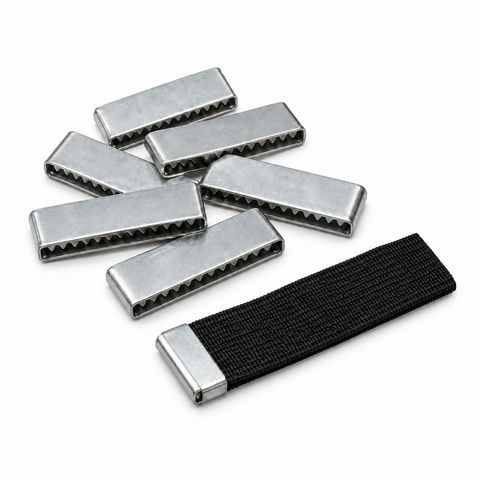
- Clips. On many mid-century and Danish modern chairs, each strap end has a flat metal webbing clip pressed onto it, and the clip hooks into a slot cut along the rail. You need one clip per strap end, so a seat with six straps needs twelve clips. Squeeze each clip in a vise until its teeth bite the webbing.
- Staples or tacks. On a plain rail, fold the end over and fix it with a staggered row of heavy staples or tacks, stretch the strap across and fix the far end the same way. Set staples at an angle to the weave, so each one catches several rubber strands.
Our elastic chair webbing is 2 in wide, in 32, 40 and 160 ft lengths. The full method is in our guide to re-webbing a chair seat with elastic webbing.
Jute webbing in detail
Jute is the foundation of traditional upholstery. Everything else is built on it, so it has to be tight and even.
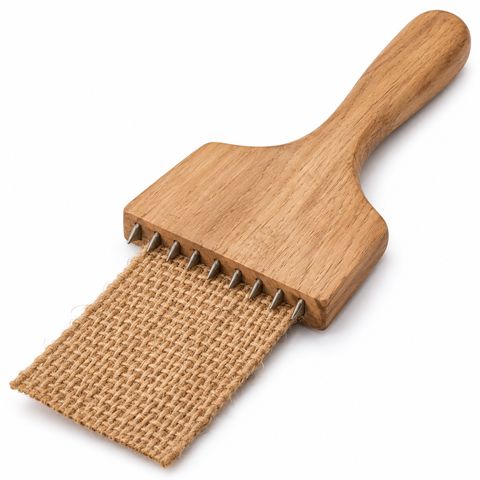
Tension. Jute does not stretch, and you cannot pull it tight enough by hand. A webbing stretcher, a hardwood paddle with short spikes that grip the strap, braces against the frame and levers the webbing tight while you fix it. Work straight off the roll and cut each strap only after it is fixed at both ends, because the stretcher needs the spare length to grip.
Layout. Fix all the straps one way first, close together and evenly spaced, then weave the cross straps over and under them. Lay the roll across the frame dry first to see how many straps fit without overlapping.
Fixing.
- Fold the end over by about 1 in and fix it to the rail through both layers with a staggered row of tacks or staples. A staggered row is less likely to split the wood than a straight line.
- Stretch the strap across with the stretcher and fix a row on the far rail while it is held.
- Release the stretcher, cut the strap leaving about 1 to 1 1/2 in, fold the tail back and fix it again.
Use plain upholstery tacks with a broad head, since small heads can pull through the webbing under tension. Sizes #10 and #12 are the usual choice for webbing, the larger for armchairs and heavier frames.
A quick test: hold a hammer loosely and let its head drop onto the webbing. It should bounce. On a drop-in seat frame, stop before the frame bends.
Our jute upholstery webbing is 3.5 in wide, on a 10 yd (30 ft) roll.
Clips, staples or tacks?
- Clips are for elastic webbing on frames with a slot. They make a neat edge with nothing showing, and a strap can be unhooked and refitted. They are never used on jute.
- Staples work for both kinds and are the quickest. Use heavy staples that are shorter than the rail is thick, and go through a folded, double layer at each end.
- Tacks are the traditional fixing for jute and suit old frames that were tacked before. They also hold elastic. Decorative domed tacks are for show and are not meant to hold webbing under tension.
Whatever you use, copy what the chair had where the frame allows it. Old holes and slots tell you where the fixings belong.
Can you swap one for the other?
Rarely as a simple repair. Elastic under a sprung seat would let the springs sink and tilt. Jute under a seat designed for elastic makes it much firmer than intended, because the foam and cushion were chosen to sit on something that gives. Changing from one to the other means rebuilding the seat, padding included, to a new design.
How much to buy
Elastic. Count the straps, multiply by the cut length (about 5 to 10 percent shorter than the span between fixings), add a little for folds or trimming and one spare strap. Six straps at 19 in come to about 9.5 ft for one direction.
Jute. Allow each strap the width over the outside of the rails plus a few inches for the fold and the tail. Eight straps of 20 in come to about 13 ft, a little under half a roll.
Next steps
Once the webbing is in, the padding and cover go back on top. For a drop-in dining seat, follow our guide to reupholstering a drop-in chair seat. For the full list of webbing, clips, foam and tools, see the re-web and re-pad a chair seat project, or browse chair seat repair and upholstery.
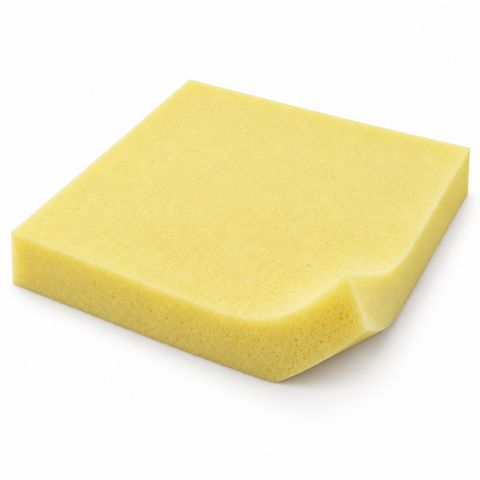 Upholstery Foam for Chair Seats
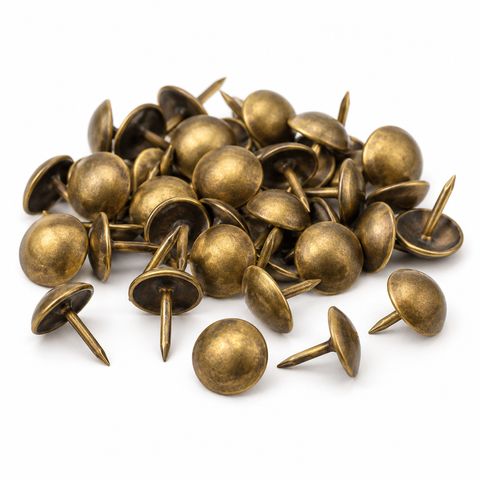 Upholstery Tacks