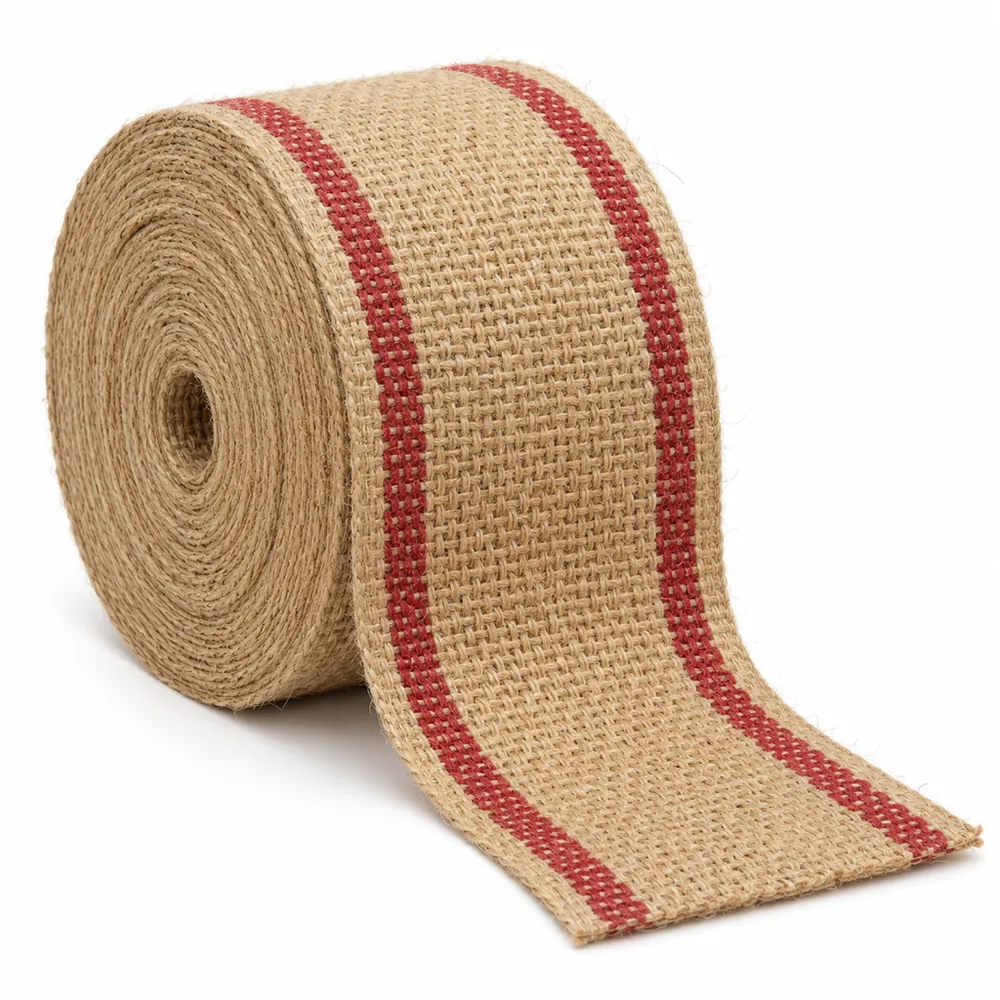
Photos illustrate the product type.
Chair Seat Repair & Upholstery
Jute Upholstery Webbing, 3.5 in Wide, 10 yd (30 ft) Roll
Natural woven jute webbing, 3.5 in wide on a 10 yd roll: the firm, traditional base woven across a seat frame under springs, padding or a drop-in seat.
Jute webbing is the base of a traditional upholstered seat. Straps of it are woven across the seat frame, over and under, and everything else sits on top: springs, padding, or the frame of a drop-in seat with its own padding. This roll is natural woven jute, 3.5 in wide and 10 yd (30 ft) long.
Unlike elastic webbing, jute does not stretch. It has to be pulled tight as it goes on, and that is the job of a webbing stretcher, a hand tool that grips the strap and levers it against the frame. A slack strap stays slack, and the seat sags in the middle.
How it goes on:
- Work straight off the roll and don't cut the straps first. The stretcher needs the extra length to grip.
- Fold the cut end over and fix it to one rail with tacks or staples through both layers.
- Pull the strap across to the opposite rail with the stretcher, fix it there, then cut it off with a tail. Fold the tail back over and fix it again.
- Run all the straps one way first, evenly spaced, then weave the cross straps over and under them.
- Keep every strap at the same tension, so the seat is even under the padding.
Before you strip an old seat, note how many straps it had in each direction and where they sat on the rails. Copying that layout is the safest guide for the new webbing.
Jute is a natural fiber. Keep the roll dry until you use it, and keep the finished seat away from damp floors and walls.
How to choose
Jute or elastic? Choose jute for traditional sprung, padded and drop-in seats, where the base must be firm and not give. Choose elastic webbing for modern chairs whose cushions rest on springy straps.
To see if one roll is enough, count the straps your seat needs in each direction and measure across the frame over the outside edges of the rails. Allow each strap that length plus a few inches for the folded end and the tail. Add them up. A roll is 360 in long; for example, eight straps of 20 in each use about 13 ft, a little under half the roll. Armchairs and sofas take more, so add up the whole job before you order.
Questions
Jute or elastic webbing?
Jute for traditional sprung, padded and drop-in seats, where the base must not give. Elastic for modern chairs whose cushions rest on springy straps. Copy what the chair had.
Do I need a webbing stretcher?
For a tight seat, yes. Jute does not stretch, so it has to be pulled taut as it goes on, and hands alone rarely get it tight enough. The roll is webbing only.
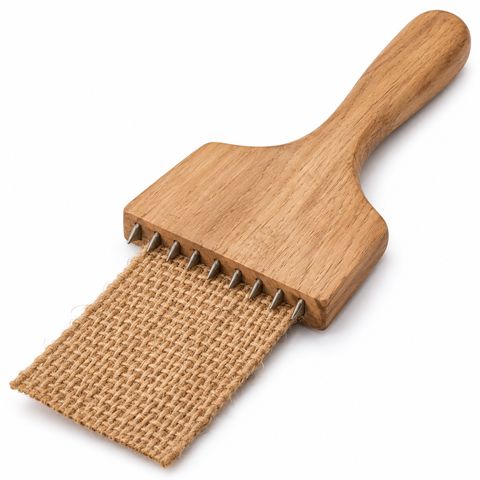 Webbing Stretcher for Jute Upholstery Webbing
Tacks or staples?
Either works. An upholstery stapler is quicker; tacks are the traditional choice and suit old frames that were tacked before.
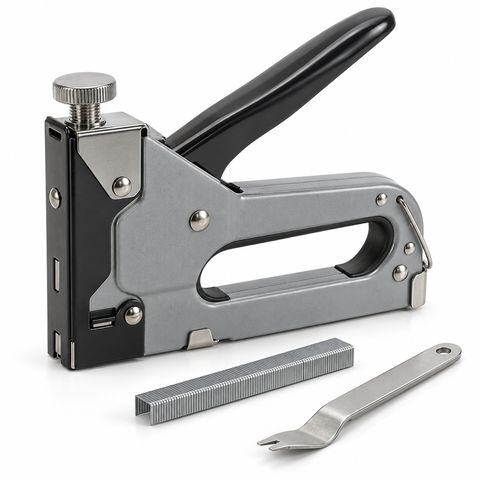 Upholstery Staple Gun Kit
How do I stop the cut end fraying?
Fold it over before you fix it, and put the tacks or staples through both layers.
You may also need
-
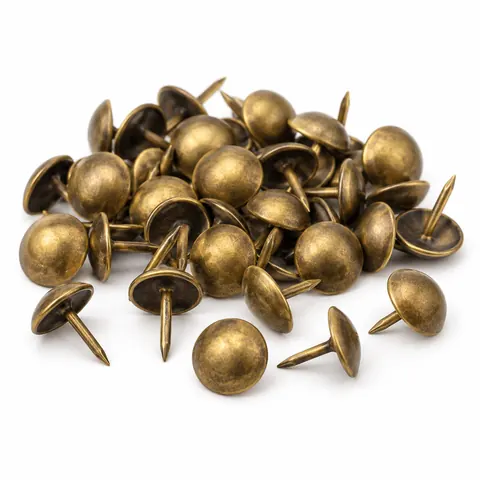
Upholstery Tacks, Antique Brass, 7/16 in Domed Head, 100 or 500
Round domed decorative tacks in an antique brass finish, 7/16 in head, for finishing rush, seagrass and upholstered seat edges and for nailhead trim.
From $6.99 · 2 options
-
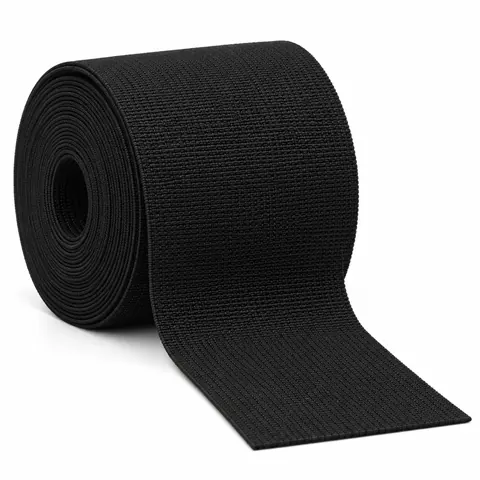
Elastic Chair Webbing, 2 in Wide, Black, 32, 40 or 160 ft Roll
Black rubber-latex elastic webbing, 2 in wide, for the springy support under seat cushions on chairs and sofas. Rolls of 32, 40 or 160 ft.
From $9.99 · 3 options
-
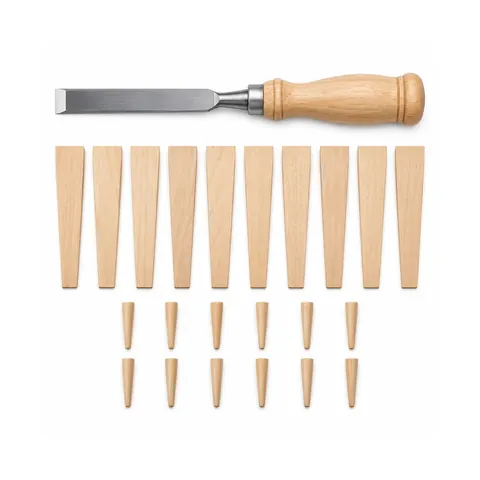
Pressed Caning Tool Set: Chisel, 10 Wedges and 12 Pegs
The reusable tools for pressed cane work in one box: a caning chisel with a 1/8 or 3/16 in blade, 10 hardwood wedges and 12 tapered wooden pegs.
$39.99 · 2 options