Care
How to patch a hole in a cane seat: honest options
Small damage in pressed and hand-caned seats: gluing broken ends, a temporary patch from below, re-weaving a few strands, and when to replace.
Updated
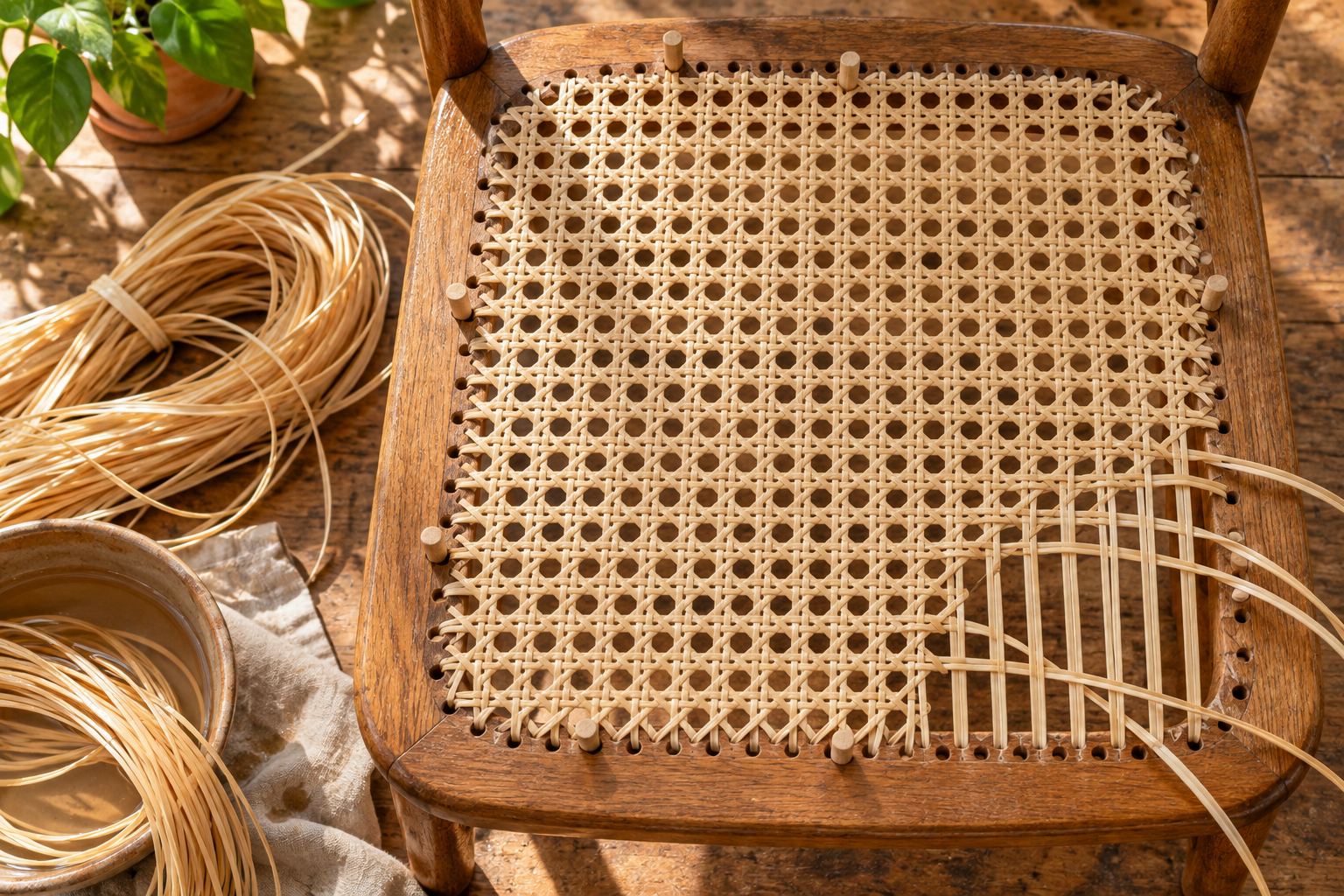
What you can do about a hole depends on how the seat was made. On a hand-caned seat, woven strand by strand through holes, you can cut out a few broken strands and weave new ones in along the same path; once the new cane darkens, the repair is hard to spot. On a pressed seat, one machine-woven sheet held in a groove with spline, there is no invisible patch. You can glue broken ends down and put a patch underneath to keep the chair in use for a while, but the lasting fix is a new sheet.
Everything for a new pressed seat is on the replace a pressed cane seat project page. For chairs with holes, see hand-cane a chair seat.
First, which kind of seat do you have?
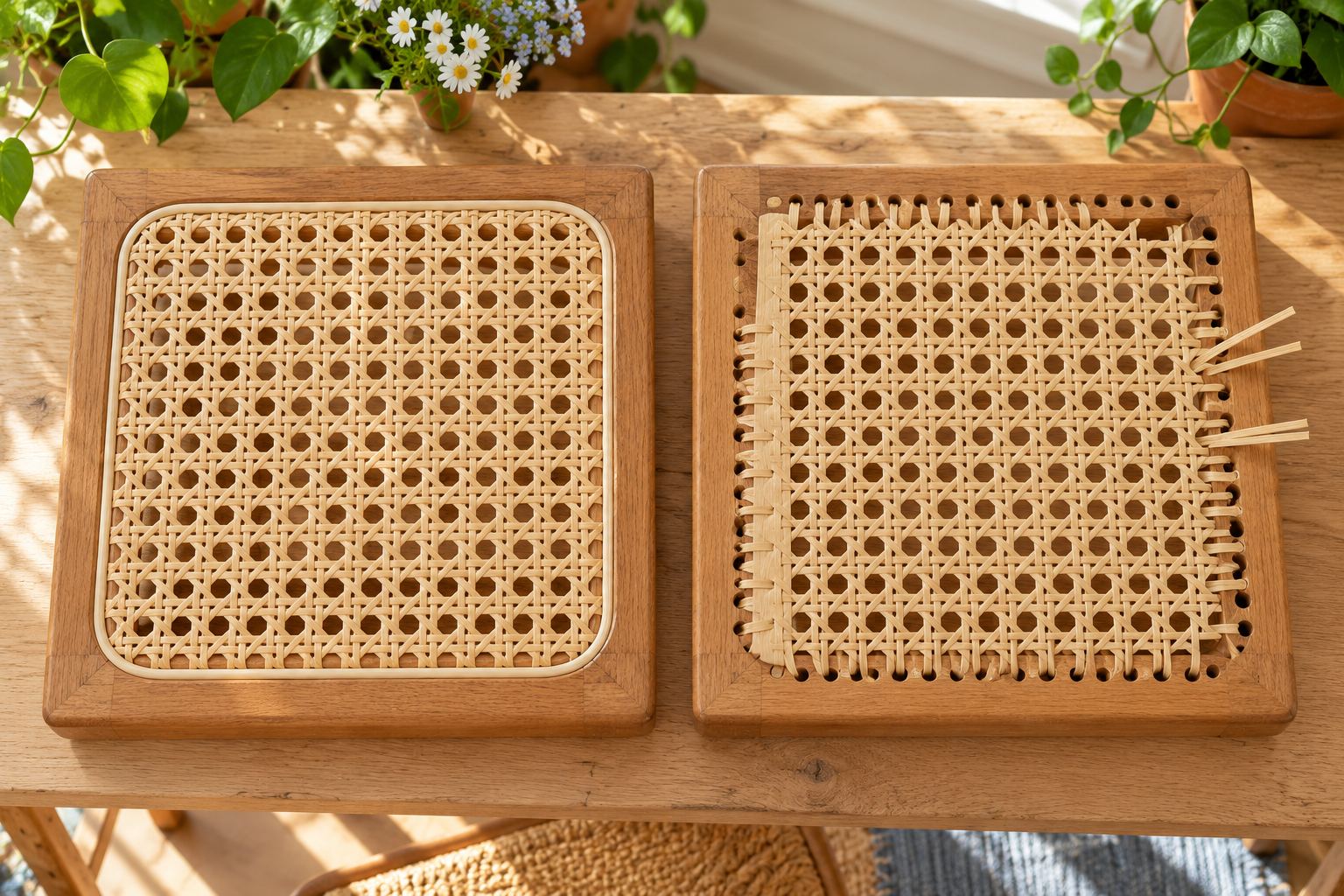
Look at the edge of the seat. A rounded strip of spline sitting in a narrow channel means pressed cane. A row of drilled holes, usually covered by a wide flat strand called binder, means hand caning. Turned over, a hand-caned seat shows loops of cane running between the holes; a pressed seat shows only the frame. Cane webbing vs hand caning has photos and a full comparison.
How bad is the damage?
| Damage | Pressed cane | Hand-caned |
|---|---|---|
| One or two broken strands, no hole yet | Glue the loose ends down from below | Re-weave those strands |
| A small hole a few strands across | Temporary patch from below, then plan a new sheet | Re-weave the strands in that area |
| A hole that keeps growing, or several holes | New sheet | Re-cane the whole seat |
| Cane brittle and breaking in many places | New sheet | Re-cane the whole seat |
Two things make any repair a waste of time: cane so dry it cracks when you press it, and a frame with loose joints. Glue loose joints first; if the cane is brittle, replace it.
Pressed cane
Why a patch never really disappears
A pressed seat is held only at its edges, in the groove, and every strand carries part of the load. When a few strands break, their neighbors take up the slack, stretch more and break next, which is why a small hole keeps growing. A patch adds a second layer under the hole. It takes some of the load, but its strands never line up exactly with the old ones, the double layer looks darker, and the sheet around it is still weak. Treat it as a way to buy time, not a repair.
Holding repair: glue broken ends down
For one or two broken strands with no hole yet:
- Turn the chair over.
- Snip off frayed tips so they stop snagging clothes, but leave each end long enough to lie on a neighboring strand.
- Put a dot of wood glue under each loose end and press it onto the strand beside or under it.
- Hold the ends with masking tape or a clothespin while the glue dries, and wipe any squeeze-out off right away with a damp cloth. Dried glue leaves shiny spots on cane.
Temporary patch from below
For a small hole, a patch glued under the seat keeps the edges from fraying and fingers from poking through.
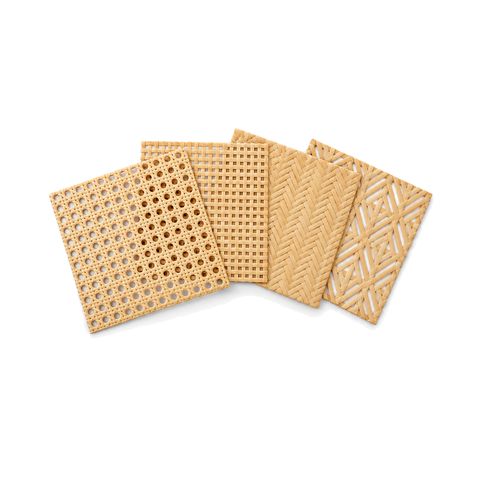
- Get matching cane. You need a scrap of cane webbing in the same weave with holes the same size as the seat’s. Lay it on the seat to check: if the holes do not line up, the patch will look worse. If you have no offcut, our cane webbing sample pack includes a 12 x 12 in piece of open weave, the pattern on most pressed seats; hold it against the seat to check the holes match.
- Trim the hole. Snip off loose, broken strand ends so the edge of the hole is clean.
- Cut the patch big enough to reach well past the broken strands into sound cane on every side. Cut along straight rows.
- Soak the patch in warm water for about 30 minutes, then blot it between towels so it is damp, not dripping.
- Fit it from underneath. Turn the chair over and set the patch against the underside of the hole, shiny side facing up into the hole so the good face shows. Line its rows up with the seat’s rows as closely as you can.
- Glue it at the edges. Put small dabs of wood glue where the edges of the patch meet strands of the seat. Do not flood it. Hold it with clothespins, tape or a light weight.
- Let the glue dry for 24 hours before anyone sits on it.
Then plan the replacement. A cushion helps a patched seat last, but the sheet around the patch keeps wearing.
The lasting fix: a new sheet
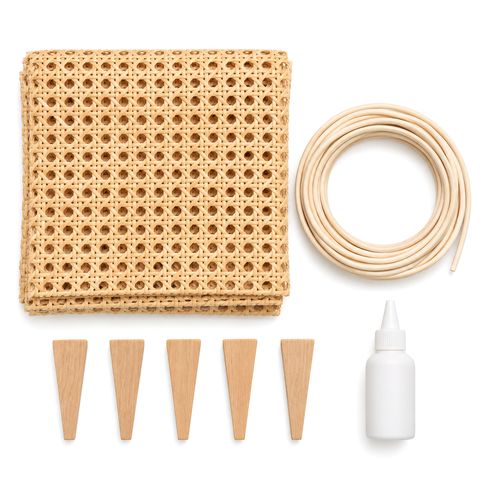
Replacing a pressed seat is a good first caning job: cut out the old cane, lift out the spline, wedge in a new sheet and glue in new spline. Our guides on removing old spline and cane and replacing a pressed cane seat walk through it, and the chair seat caning kit has the cane, spline, wedges and glue in one box.
Hand-caned seats: re-weave a few strands
Each strand on a hand-caned seat runs from hole to hole and is tied off underneath, so a broken strand can be replaced along its own path without touching the rest.
What you need
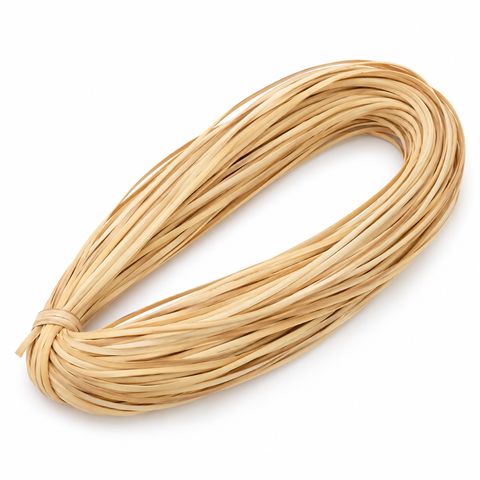
- Strand cane the same width as the strands in the seat. Measure an intact strand with calipers and check the strand cane size chart.
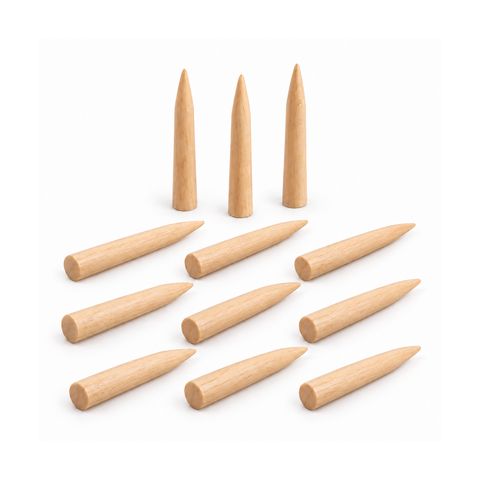
- A few caning pegs to hold the new strand in the holes while you work
- An awl, sharp scissors or a craft knife, and a sponge with warm water
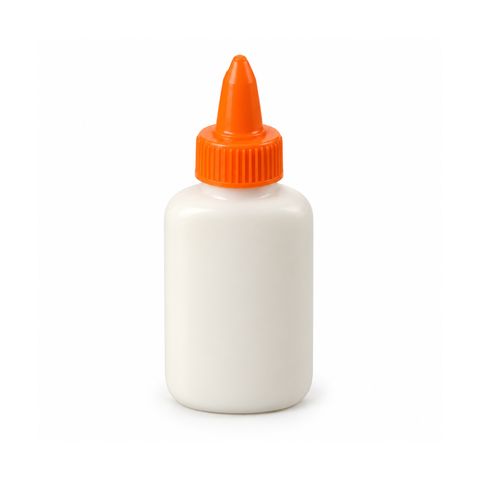
- Wood glue for a dot on each knot
Steps
- Find the path. Work out which of the seven steps the broken strand belongs to: front to back, side to side, or one of the diagonals. Hand caning a chair seat explains the pattern. Diagonals are the easiest to replace because they are woven last. Strands from the first layers sit under everything else, so a new one has to be threaded through the same over-under path as its neighbor.
- Take out the broken strand. Cut it close to the holes at each end and ease the pieces out of the weave. Underneath, cut the old ends free, taking care not to nick the loops beside them.
- Soak a new strand in warm water for 10 to 15 minutes. Keep it damp with the sponge while you work.
- Anchor the start. Underneath, tie the end around a nearby loop of cane between two holes, or hold it with a peg in the hole for now.
- Weave it in. Bring the strand up through the hole, shiny side up, and follow exactly the same over-under path as the matching strand next to it. Open a path with the awl where the weave is tight. Do not let it twist.
- Set the tension. Pull it snug to match its neighbors, not tighter. It shrinks as it dries, and a strand pulled hard while wet can snap.
- Tie off. Take the strand down through the hole at the far end, tie it around a loop underneath while it is damp, pull tight and trim. A dot of glue on the knot keeps it from working loose.
- Let it dry before anyone sits on the seat.
If the broken strand ends in a hole under the binder at the edge, the binder’s loops have to be lifted at that hole to get the new strand through. That is fiddly work on old, dry binder, and it is often the point where re-caning the whole seat makes more sense.
Common mistakes
- Gluing a patch on top of the seat. It shows more and catches on clothes. Patch from below.
- Too much glue. It runs onto the cane and dries in shiny patches.
- A repair strand of the wrong width. It stands out for good. Measure first.
- Pulling the new strand tight. Wet cane shrinks as it dries, and an over-tight strand can break or pull its neighbors.
- Patching brittle cane. If the strands crack when you press them, the next hole is already on its way.
- Waiting. A small hole in pressed cane grows every time someone sits down.
When a sound seat has gone slack rather than broken, tightening it with water is the fix. When the damage is past patching, the replace a pressed cane seat and hand-cane a chair seat project pages list everything you need, and you can browse caning kits and hand caning supplies.
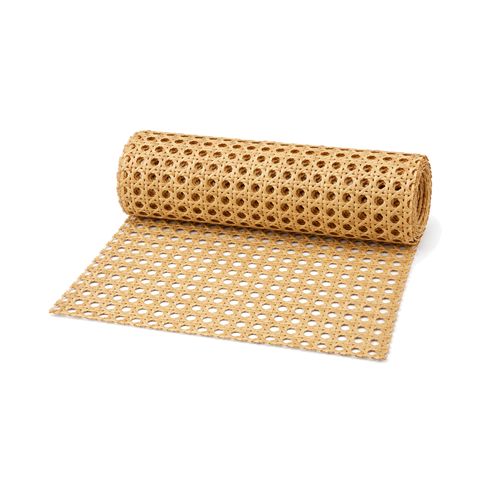 Cane Webbing Roll