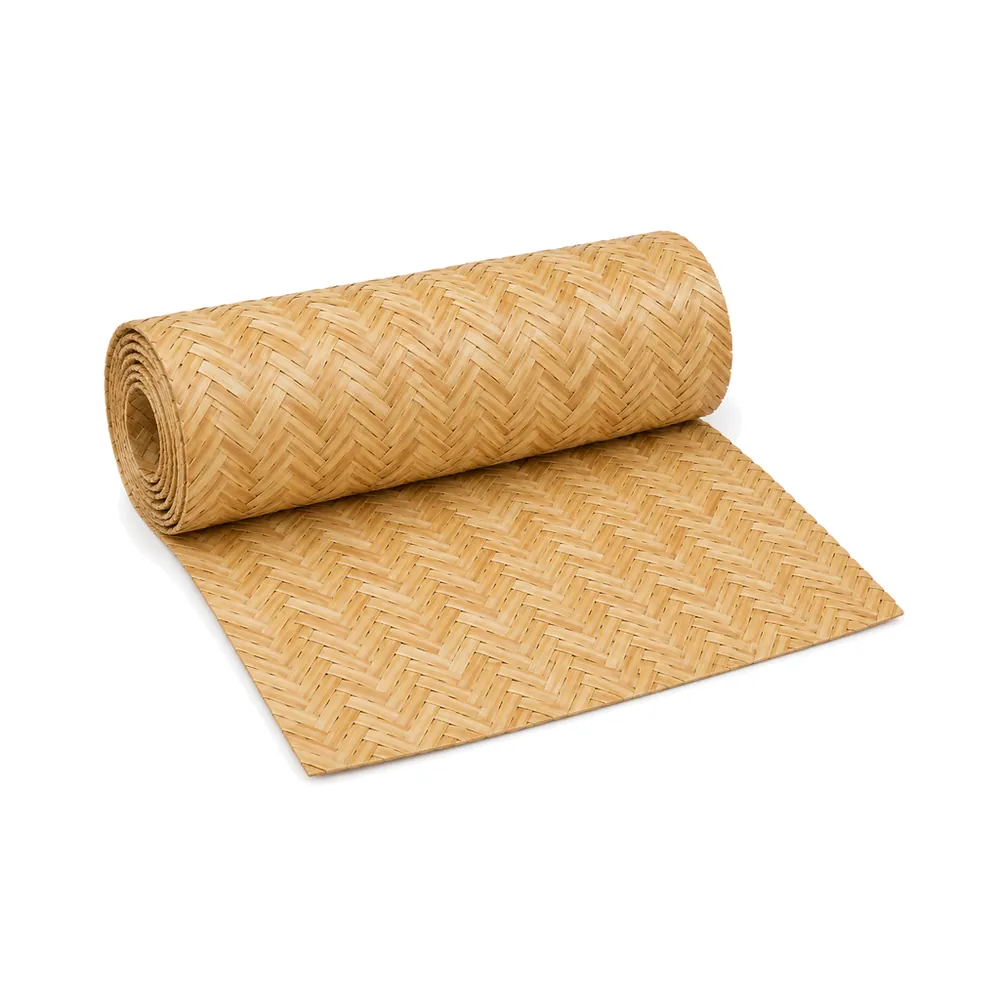
Photos illustrate the product type.
Herringbone Cane Webbing, Closed Weave Natural Rattan, 24 in Wide
Closed herringbone cane webbing in natural rattan, 24 in wide with no open holes. Hides what is behind cabinet doors, drawer fronts and wall panels.
Every roll is measured before it ships. Natural material: color and grain vary. Soak about 30 minutes before use.
Herringbone is a closed weave. Flat strands of natural rattan cane are woven in a twill, stepping over and under each other so the surface forms rows of zigzags with no holes between them. You get a solid, textured sheet that still reads as cane, but you cannot see through it.
That makes it the weave for doors that hide things: a media cabinet full of cables, a pantry, a shoe cabinet, a linen closet. On wall panels and drawer fronts it gives an even, quiet texture where open weave could look busy.
Herringbone is meant for flat frames rather than chair seats. The usual method:
- Cut the piece at least 1 in larger than the opening on every side.
- Soak it about 30 minutes in warm water so the strands bend over the frame edge without splitting.
- Lay the frame face down and set the cane on it shiny side down, so the glossy face shows from the front.
- Staple the middle of each side first, then work toward the corners, pulling the cane snug as you go.
- Glue the edge to the frame, trim off the excess, and cover the staples with a thin strip of wood.
As it dries, the cane shrinks and pulls flat across the opening.
Decide which way the zigzags should run before you cut anything. Running them up and down or side to side changes the look of a tall door quite a bit. Mark an arrow on the back of each piece so every door in a set matches, and cut the whole set from one roll, because natural cane varies in color.
The roll is 24 in wide and comes in 2, 4 or 8 ft lengths, measured before it ships.
How to choose
Every roll is 24 in wide, so one side of each piece can be up to 24 in. Measure the frame opening and add 2 in to both the width and the height (1 in per side). One of those two numbers must be 24 in or less; add up the other numbers for all your pieces to find the length you need.
Example: two doors with 16 x 20 in openings need two 18 x 22 in pieces. Laid end to end that is 44 in, so the 4 ft roll covers both. One small door fits on the 2 ft roll; a row of kitchen uppers or a wall panel calls for 8 ft. An opening larger than 22 in in both directions will not fit in one piece.
Questions
Can herringbone go in a chair seat with spline?
It is made for flat frames such as doors, drawer fronts and wall panels, glued and stapled behind the opening. For a seat, open or square weave pressed into a groove is the usual choice.
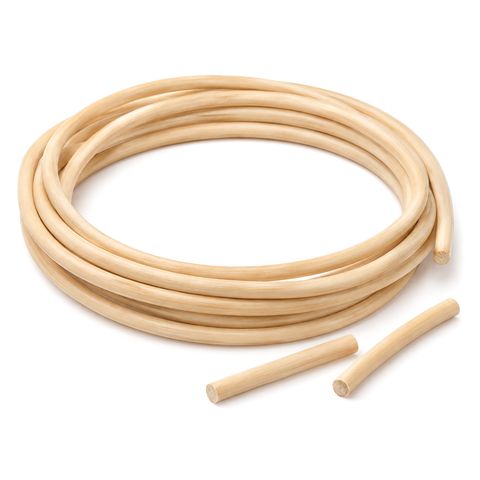 Reed Spline for Chair Caning
Do I need to soak it?
Yes, about 30 minutes in warm water. Dry cane can split along the strands when you bend it over the edge of a frame, and a soaked sheet shrinks flat as it dries.
Does it hide the inside of a cabinet?
Yes. There are no open holes, so it hides what is behind it far better than open or square weave.
What glue should I use?
Ordinary wood glue along the back edge of the frame, together with staples. The staples hold the cane while it dries and pulls tight; the glue keeps the edge from working loose later.
 Wood Glue for Caning
You may also need
-
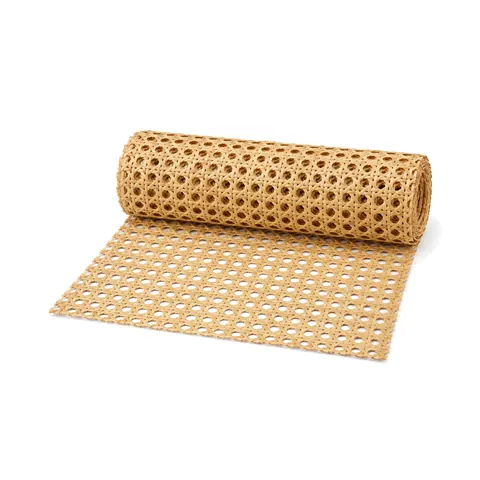
Cane Webbing Roll, Open Weave Natural Rattan, 14 to 36 in Wide
Natural rattan cane webbing in the classic open weave, on rolls 14 to 36 in wide, for chair seats, cabinet doors, headboards and screens.
From $18.99 · 14 options
-
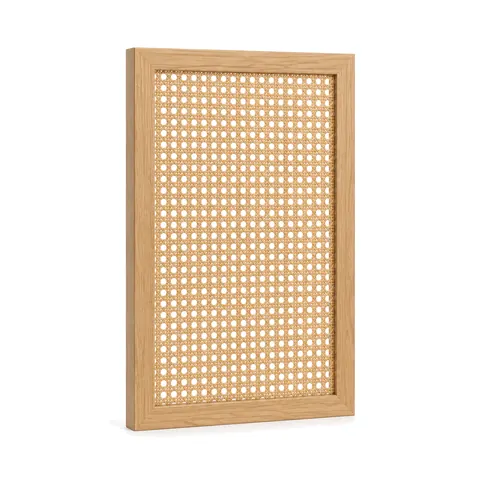
Framed Cane Panel Made to Your Size, Solid Wood Frame, 3 Weaves
A solid-wood frame with natural cane webbing set in, built to the width and height you enter, with a drawing emailed for your approval before we cut.
From $88.99
-
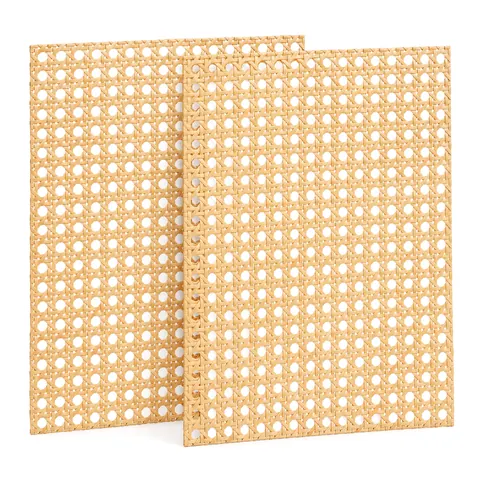
Cane Inserts for Cabinet Doors, Matching Pair, Open or Square Weave
Two matching cane sheets cut from the same roll for a pair of cabinet doors, in open or square weave, 12 x 24, 16 x 30 or 20 x 36 in per sheet.
From $32.99 · 6 options