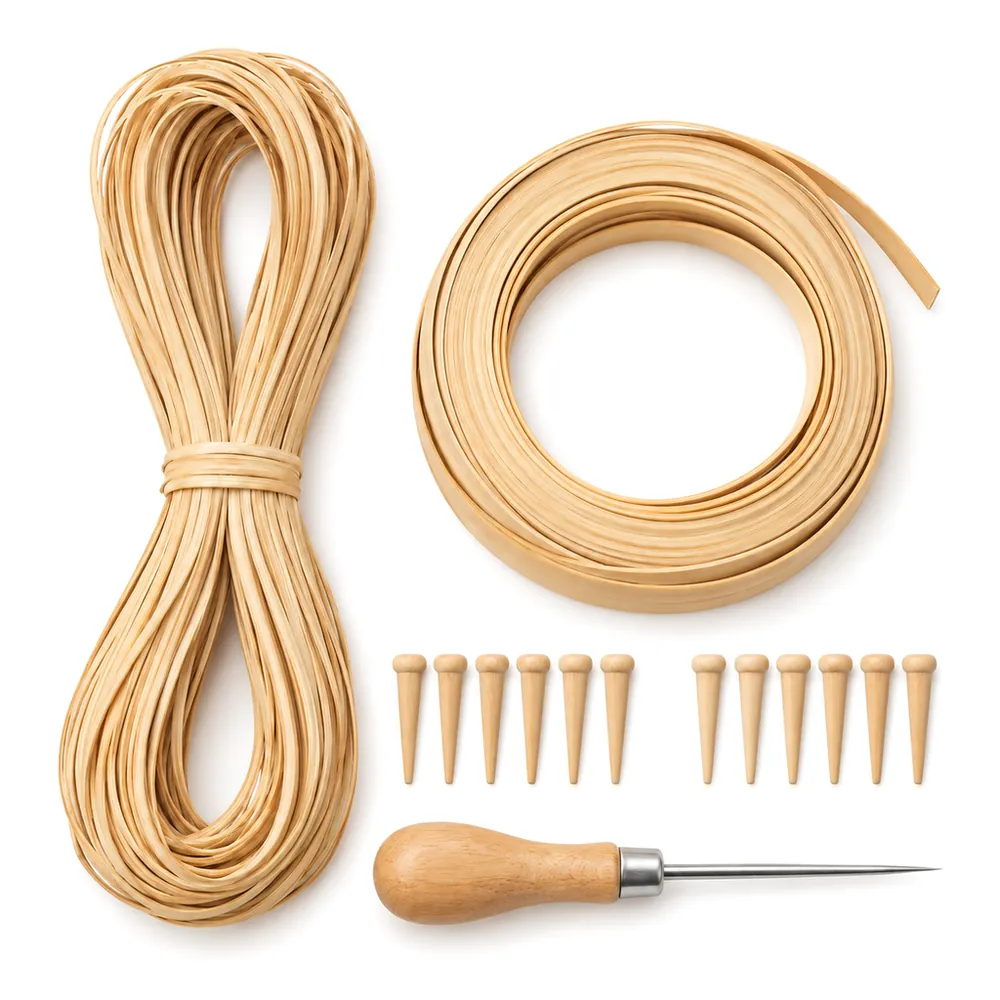
Photos illustrate the product type.
Hand Caning Kit for Hole-to-Hole Chair Seats, 270 ft Strand Cane
Hand-cane a seat through its drilled holes: a 270 ft hank of strand cane, 4 mm binder cane, 12 wooden pegs and an awl, in fine, medium or common.
Many older chairs have a ring of small holes drilled around the seat instead of a groove. Those seats were caned by hand, one strand at a time, and this kit has the cane and tools to weave one in the traditional seven-step pattern.
The seven steps build the seat in layers. Strands run front to back, then side to side on top, then front to back again, and the fourth pass weaves side to side through the first three. Two diagonal passes lock the weave and form the familiar octagonal holes. The last step lays the wider binder cane over the holes around the edge.
You will also need:
- Sharp scissors or side cutters
- A shallow tray of warm water and a towel
- A damp sponge to keep the working strand moist
- A utility knife and a drill bit no bigger than the holes, to clear out the old seat
Soak a few strands at a time for 10 to 15 minutes. Keep the shiny side up on every pass and do not let the strand twist. The pegs hold each strand end in its hole until the next strand comes through, and you move them along as you work. The awl opens crowded holes and lifts strands when the diagonals get tight.
One hank usually does one average dining chair seat. Large seats may need a second hank, so if your seat is on the big side, order one with the kit. Our hand caning guide follows all seven steps in order and has the chart for picking the cane width.
How to choose
The cane width has to suit the holes in your chair. Measure two things: the diameter of one hole, and the distance from the center of one hole to the center of the next. Larger holes set farther apart take wider cane.
This kit comes in fine 2.5 mm, medium 3 mm and common 3.5 mm. Our hand caning guide has a chart that matches each width to hole size and spacing, so check it before you order. If a piece of the old seat survives, measure one of its strands with calipers as a second check.
If the chart points to a width not offered here, such as superfine 2 mm, fine-fine 2.25 mm or narrow medium 2.75 mm, buy strand cane by the hank in that size, along with binder cane and pegs.
Questions
How is this different from a pressed cane seat kit?
Pressed cane is a woven sheet locked into a groove. Hand caning is woven strand by strand through holes drilled around the seat. Look at your chair: holes mean hand caning, a groove means pressed cane.
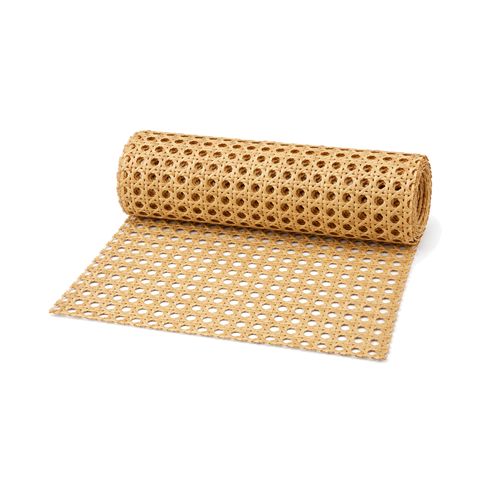 Cane Webbing Roll
How long do I soak the strand cane?
About 10 to 15 minutes in warm water, a few strands at a time. There is no need to leave it longer; keep the strand you are weaving damp with a sponge instead.
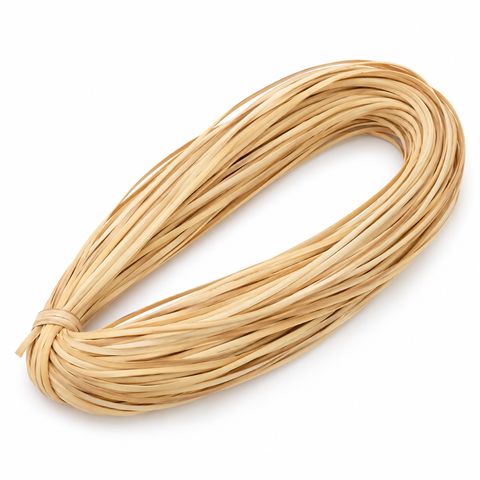 Strand Chair Cane
Do I have to remove all the old cane first?
Yes. Cut the old seat out, then clear every hole of old cane and pegs with the awl or a drill bit no bigger than the hole, so new strands pass through freely.
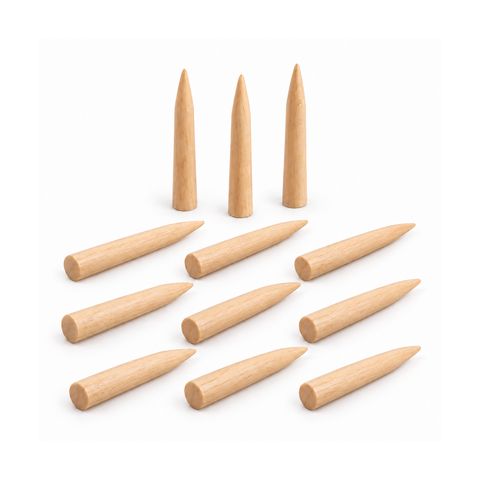 Caning Pegs for Hand Caning
Will one hank be enough?
One hank usually does one average dining chair seat. For a large seat, or a seat and a back, plan on a second hank.
What is the binder cane for?
It is a wider strand laid over the row of holes around the edge and tied down with a thinner strand looped through the holes. It covers the holes and gives the seat a finished border.
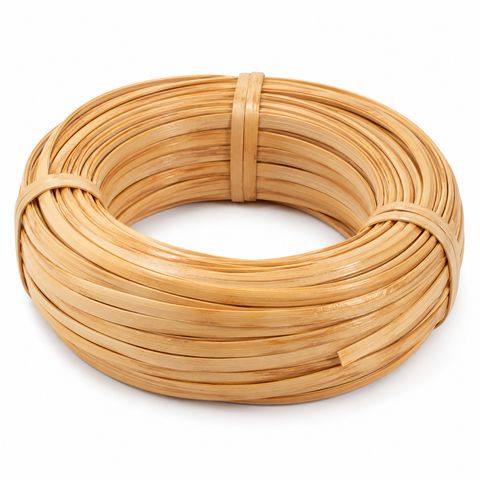 Binder Cane
You may also need
-
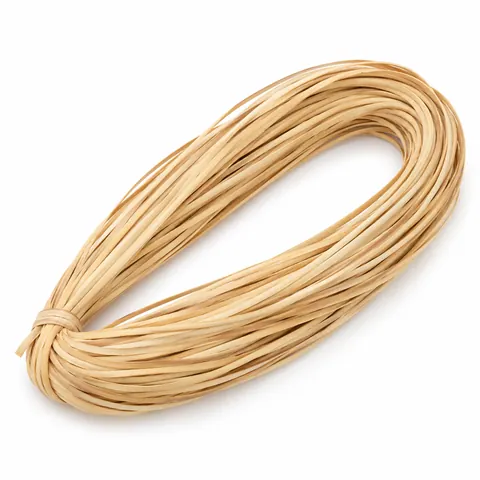
Strand Chair Cane, 270 ft Hank with Binder, 2 mm to 3.5 mm
Natural strand chair cane for hand caning a seat through drilled holes: a 270 ft hank, about one seat, with 4 mm binder. Six sizes, 2 to 3.5 mm.
From $17.99 · 6 options
-
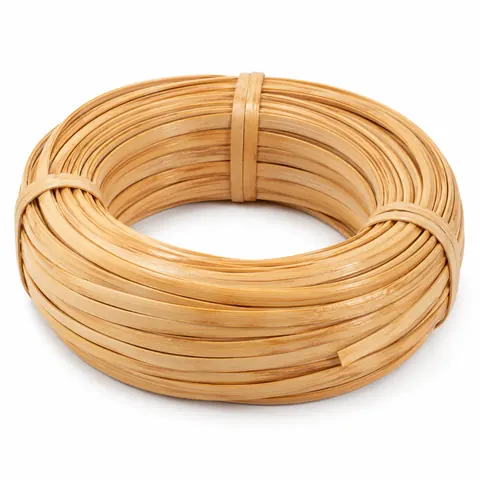
Binder Cane, 500 ft Hank, 4, 5 or 6 mm Wide
Wide, flat natural binder cane in 500 ft hanks, 4, 5 or 6 mm, to finish the edge of hand-caned seats, wrap joints and handles, and lash basket rims.
From $49.99 · 3 options
-
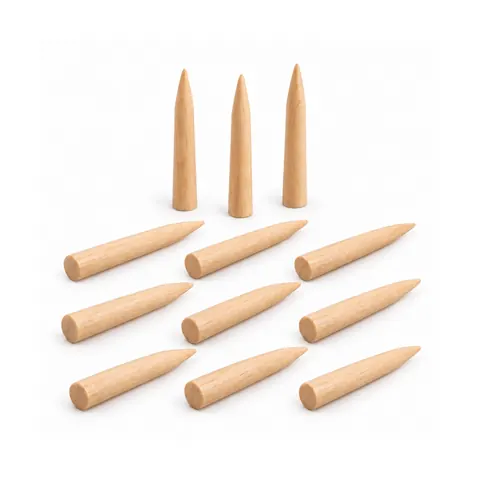
Caning Pegs for Hand Caning, Tapered Wood, 12 or 50 Pack
Tapered wooden pegs that hold strand cane tight in the holes while you hand-cane a seat, and later plug holes under the binder; packs of 12 or 50.
From $5.99 · 2 options