Materials
Danish cord vs fiber rush vs seagrass: which cord?
Danish cord, fiber rush or seagrass: how each looks and feels, how it wears, how it is fixed to the chair, and how to tell which one your chair had.
Updated
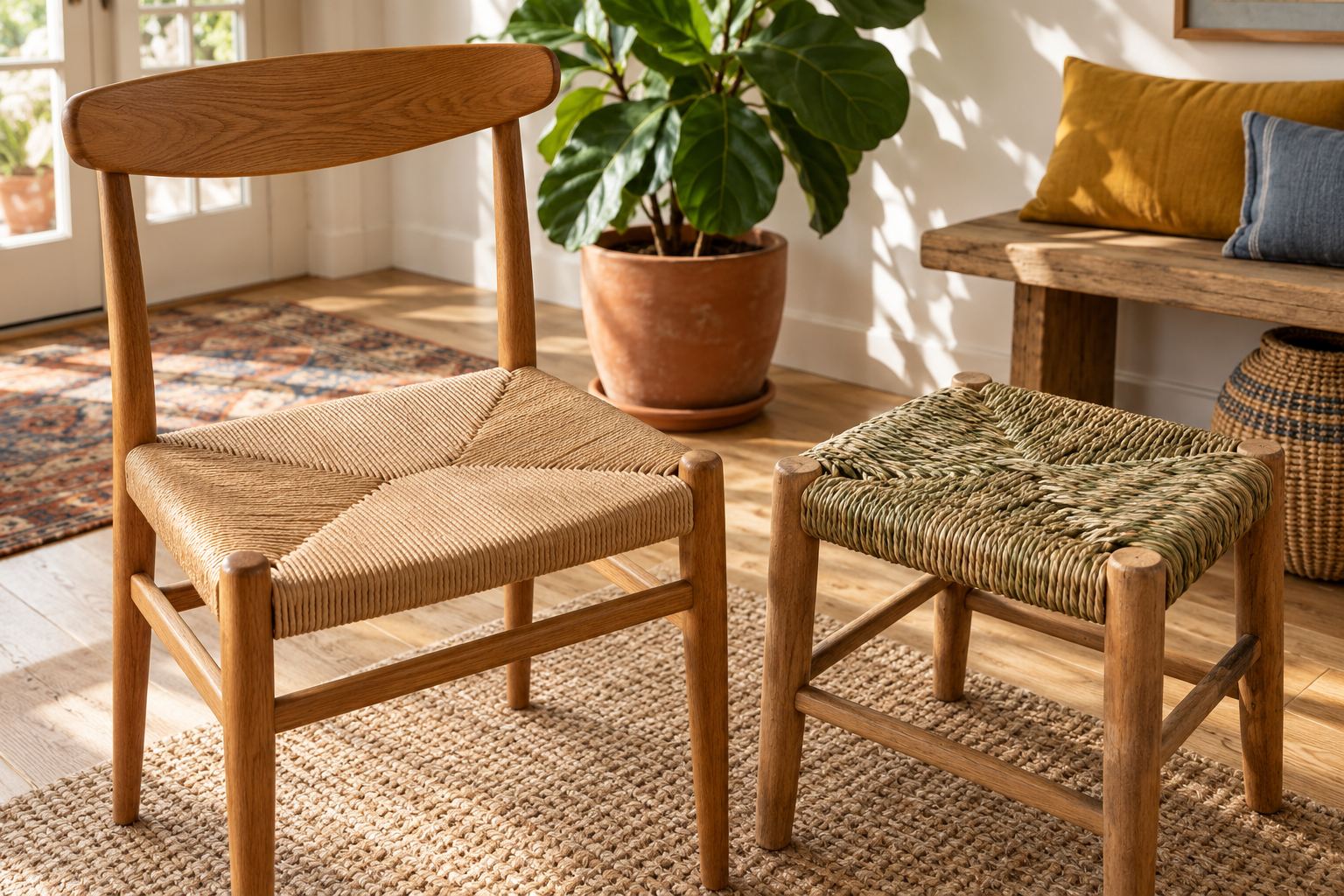
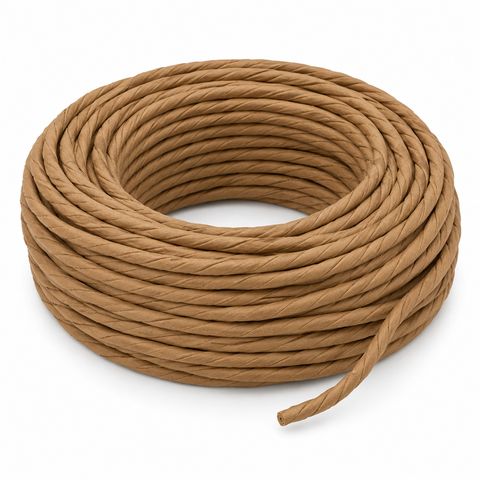
Match the cord to the chair. Danish cord is the paper cord of mid-century Danish modern chairs and stools, usually woven warp and weft with the warp hooked over L-nails. Fiber rush is twisted kraft paper that imitates cattail rush on ladderback and farmhouse chairs, woven in the rush pattern. Seagrass is a natural grass cord with a green-to-wheat, slightly uneven twist, woven in the rush pattern on stools and cottage chairs. All three are woven dry, and all three are for indoor seats.
The supplies for each job are on two project pages: weave a Danish cord seat and weave a rush, seagrass or tape seat.
At a glance
| Danish cord | Fiber rush | Seagrass | |
|---|---|---|---|
| Made of | Three plies of twisted kraft paper, laced or unlaced | Kraft paper twisted into one tight cord | Natural seagrass twisted into a cord |
| Look | Even and crisp | Even and smooth, like cattail rush | Slightly irregular, handmade texture |
| Colors | Natural light tan, or black (laced) | Kraft brown; white in 6/32 in | Green to wheat; mellows with light |
| Thickness | About 1/8 in (3 mm) | 4/32 to 7/32 in | #0 to #3, 2.25 to 5 mm |
| Usual pattern | Warp and weft | Rush pattern | Rush pattern; warp and weft on square stools |
| How it is fixed | Warp loops hooked on L-nails inside the rails | Tacked inside a rail, then wrapped around the rails | Tacked inside a rail, then wrapped around the rails |
| Preparation | Woven dry | Woven dry | Woven dry or lightly misted |
| Finish | Usually none | Shellac or a water-based finish | Optional; test on an offcut first |
| Typical frames | Mid-century side chairs, stools, benches | Ladderback, farmhouse and country chairs | Footstools, stools, cottage chairs |
Look and feel
Danish cord
Danish cord is three plies of kraft paper. In laced cord the plies are twisted together into a round, firm cord, so each row stands out with a crisp, rope-like line. In unlaced cord the plies lie side by side, which gives a flatter, softer, almost fabric-like surface. Woven warp and weft, it makes a tight, even check that looks tailored rather than rustic.
Fiber rush
Fiber rush is kraft paper twisted into a smooth, round cord that is even from end to end. In the rush pattern it forms four triangles that meet in the middle, with diagonal lines running from each corner. It looks like traditional cattail rush but more uniform, and its kraft brown darkens a little under a finish.
Seagrass
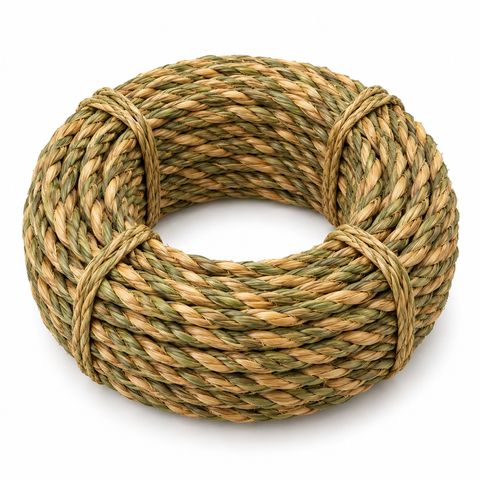
Seagrass is a natural grass, twisted into a cord that varies a little in thickness along its length. The seat has a textured, handmade look, and the color starts green to wheat and mellows with light into a softer, warmer tone. When new it has a slight grassy smell.
How each one wears
All three are strong when dry, and all three dislike water.
- Danish cord is paper. Spills should be blotted at once, and the seat should never be soaked or scrubbed. It is usually left unfinished.
- Fiber rush is paper too. A finish of shellac or a water-based clear coat helps it resist wear and spills, so it is worth sealing.
- Seagrass is a natural fiber. Long spells of rain or damp can stain it or let mildew in, so keep it indoors or under cover.
On rush-pattern seats, the wear point is the inside edge of the rails. Stuffing the pockets between the top and bottom layers keeps the seat firm and stops the cord from sagging and wearing through there. For outdoor rope-style chairs, none of these is the right material; use olefin cord instead.
Woven dry, all three
Unlike cane and reed, none of these cords is soaked. Paper cord softens and loses strength in water, and seagrass only ever needs a light mist on a stiff or kinked stretch. Because they do not shrink as they dry, pull every wrap snug as you go. A loose wrap stays loose.
How each is fixed to the chair
L-nails: Danish cord
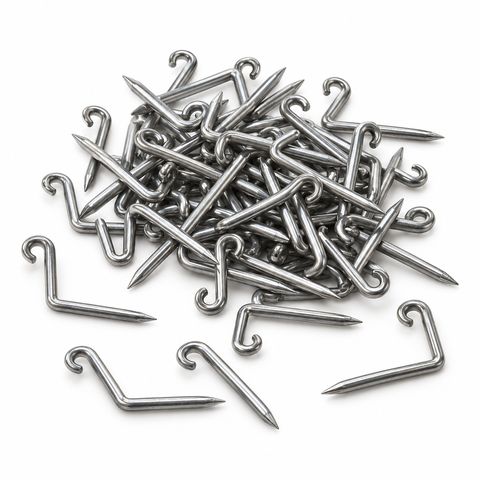
Danish cord seats woven warp and weft are held by small L-shaped steel nails driven into the inside face of the rails, out of sight. The warp is hooked over them in pairs, and on many seats the weft loops hook over nails along the side rails too. A typical chair seat uses 30 to 50. See how to weave a Danish cord seat.
Tacks and wrapping: fiber rush and seagrass
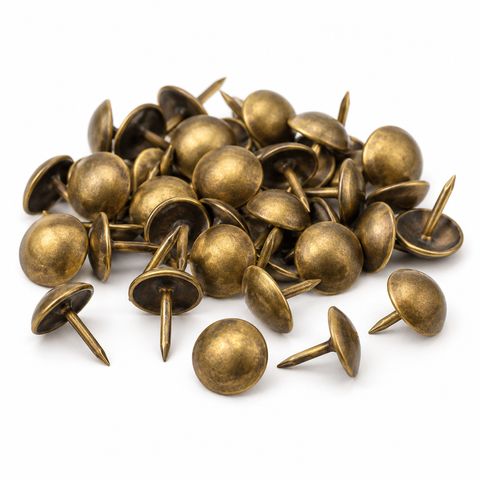
Rush-pattern seats need no L-nails. The first end is tacked to the inside of a side rail, the cord is wrapped around the rails corner by corner, and the last end is tacked underneath. Joins are square knots hidden inside the seat. The only other fasteners are the tacks that hold the short strands used to fill the front corners on seats that are wider at the front. See weaving a fiber rush seat and how to weave a seagrass seat.
How to tell which your chair had
- Look underneath. A row of small L-shaped nails along the inside of the rails, with cord loops hooked on them, means a Danish cord seat woven warp and weft. A few tacks and pockets stuffed with cardboard mean a rush-pattern seat.
- Look at the pattern. A woven check of paired cords is Danish cord. Four triangles meeting in the middle is the rush pattern, which can be fiber rush, seagrass, natural rush, or Danish cord on some Danish modern chairs.
- Look closely at one strand. Three distinct plies twisted around each other: laced Danish cord. Three plies lying side by side: unlaced Danish cord. One smooth, even, round cord in brown, often a little glossy from shellac: fiber rush. A cord that varies in thickness, with visible grass fibers and a green, straw or faded wheat color: seagrass.
- Untwist a cut end from underneath. Paper cord opens into strips of paper. Seagrass opens into grass fibers. Natural cattail rush is twisted by hand from leaves as it is woven, so it is less regular than fiber rush. Fiber rush or seagrass can replace it.
- Measure it. Use calipers, or count the wraps in 1 in along a rail and divide 25.4 by that number for the thickness in mm. Matching the size keeps a chair in a set looking like its neighbors.
Choosing for a new seat
On a restoration, use what the chair had: the frame, the fasteners and the look were made for it. On a frame with no seat, or if you want a change, the frame decides most of it. Four rails with posts above them take any rush-pattern cord, or flat tape. A frame with L-nails, or a row of small nail holes along the inside of the rails, was built for Danish cord woven warp and weft. If the rails have sharp edges, round them slightly with sandpaper so they do not cut into the cord.
For how much to buy, see how much seat weaving cord do I need. Then pick your project: Danish cord seat, or rush, seagrass or tape seat.
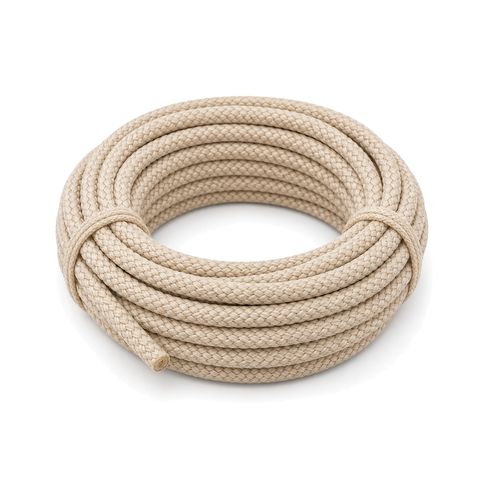 Olefin Cord for Woven Patio Chairs