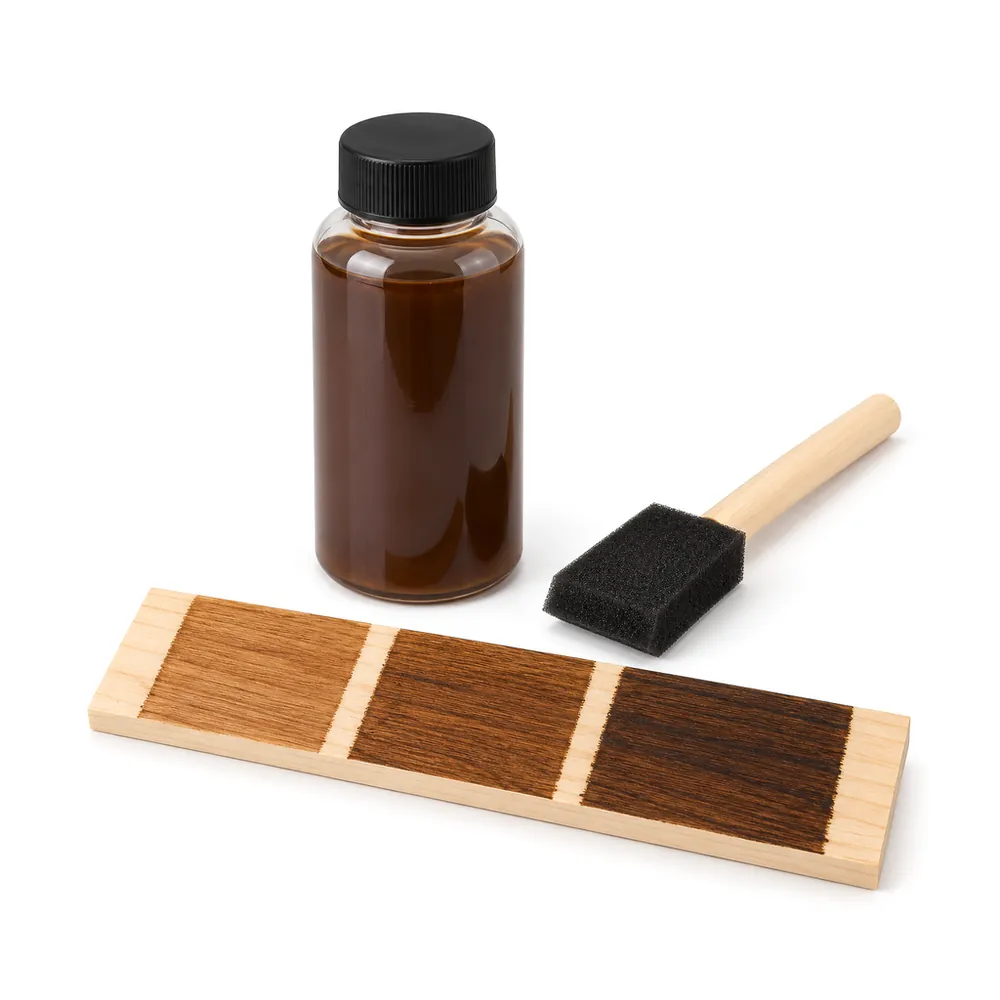
Photos illustrate the product type.
Water-Based Wood Stain for Chair Frames and Cane, 8.5 fl oz
Water-based wood stain in an 8.5 fl oz bottle, for refinishing chair frames and toning new natural cane to sit with an older frame. Five colors.
New natural cane is pale, and it can look very bright next to a chair frame that has had decades to darken. This water-based stain helps in two ways: it refinishes the wood of the frame, and it can tone new cane down so it sits better next to the old wood. It comes in an 8.5 fl oz bottle in natural, golden oak, walnut, dark walnut and teak.
On the frame:
- Sand the wood bare and smooth, and wipe off the dust. Old finish or wax left on the surface keeps stain from taking evenly.
- Wipe the wood with a damp cloth, let it dry and sand lightly with fine paper. Water raises the grain, and doing it now keeps the stained surface from feeling rough.
- Stir the stain well before and during use.
- Brush or wipe on a thin coat, then wipe the excess off along the grain with a clean cloth.
- Let it dry, and add another coat if you want it darker.
On cane:
Natural cane has a glossy outer skin that takes stain unevenly, so it can look patchy or streaky. Always test on an offcut of the same cane first. Let a newly installed seat dry out completely, apply thin coats rather than one heavy one, and wipe off the excess as you go.
Stain adds color but no protection. When it is fully dry, protect the frame with paste wax or a clear finish. Clean brushes and spills with water while the stain is still wet.
Test every color on a hidden spot or an offcut before you do the whole chair. The same stain looks different on oak, maple, beech or pine, and on new cane next to old. The clean and refinish project page lists everything for the whole job.
How to choose
Choose the color by testing, not by its name. The same stain looks different on oak, maple, beech or pine, and an old frame has its own color under the finish.
To match a frame, find a hidden spot under a seat rail, sand a small patch bare and try two neighboring colors side by side. Thin coats let you build up slowly; adding a coat is easy, but taking color off is not.
To tone new cane, test on an offcut, one thin coat at a time, and stop when it sits comfortably next to the frame. It rarely needs to match exactly, because cane and wood never look quite the same.
Questions
Can I stain new cane to match my old chair?
You can tone it, but test on an offcut first. The glossy skin of natural cane takes stain unevenly, so use thin coats and wipe off the excess. Let a newly installed seat dry completely before you start.
Do I need a finish on top?
On the frame, yes. Stain adds color but no protection, so once it is fully dry, protect it with paste wax or a clear finish.
Can I stain over the old finish?
Not for an even color. Stain has to soak into bare wood, so sand off the old finish and any wax first.
Why does the wood feel rough after staining?
Water raises the grain. Next time, dampen the bare wood, let it dry and sand lightly before you stain. For now, let it dry and smooth it very gently with fine sandpaper before the finish.
How do I clean up?
With water, while the stain is still wet. Wipe spills straight away; dry stain is much harder to remove.
You may also need
-
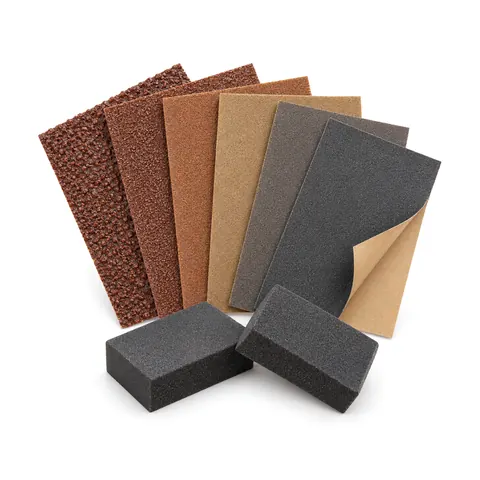
Sandpaper Assortment for Wood, 60 to 400 Grit, Sheets or Detail Kit
Mixed-grit sandpaper for refinishing chair frames: coarse to strip old finish, medium to smooth, fine before stain and wax. Sheets or a detail kit.
From $9.99 · 3 options
-
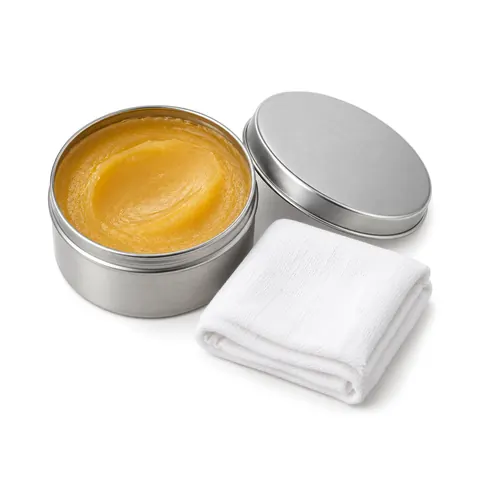
Furniture Paste Wax, Beeswax and Carnauba, 3.5 oz or 8 oz Tin
Solvent-free paste wax made with beeswax and carnauba, for protecting and polishing the wood frames of cane and rush chairs after cleaning or refinishing.
From $12.99 · 2 options
-
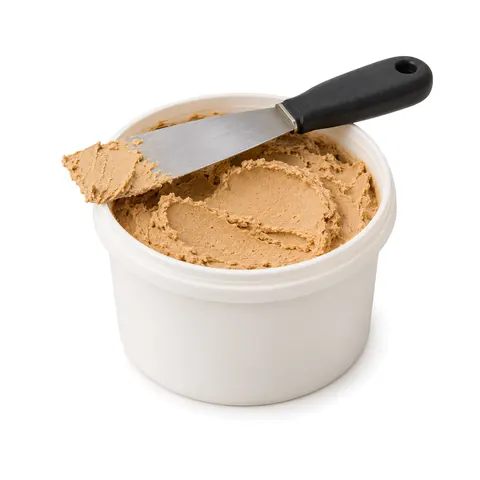
Water-Based Stainable Wood Filler, Natural, Oak or Walnut
Water-based wood filler that sands smooth and takes stain, for old tack and staple holes, dents in seat frames and small chips along a spline groove.
From $10.99 · 4 options