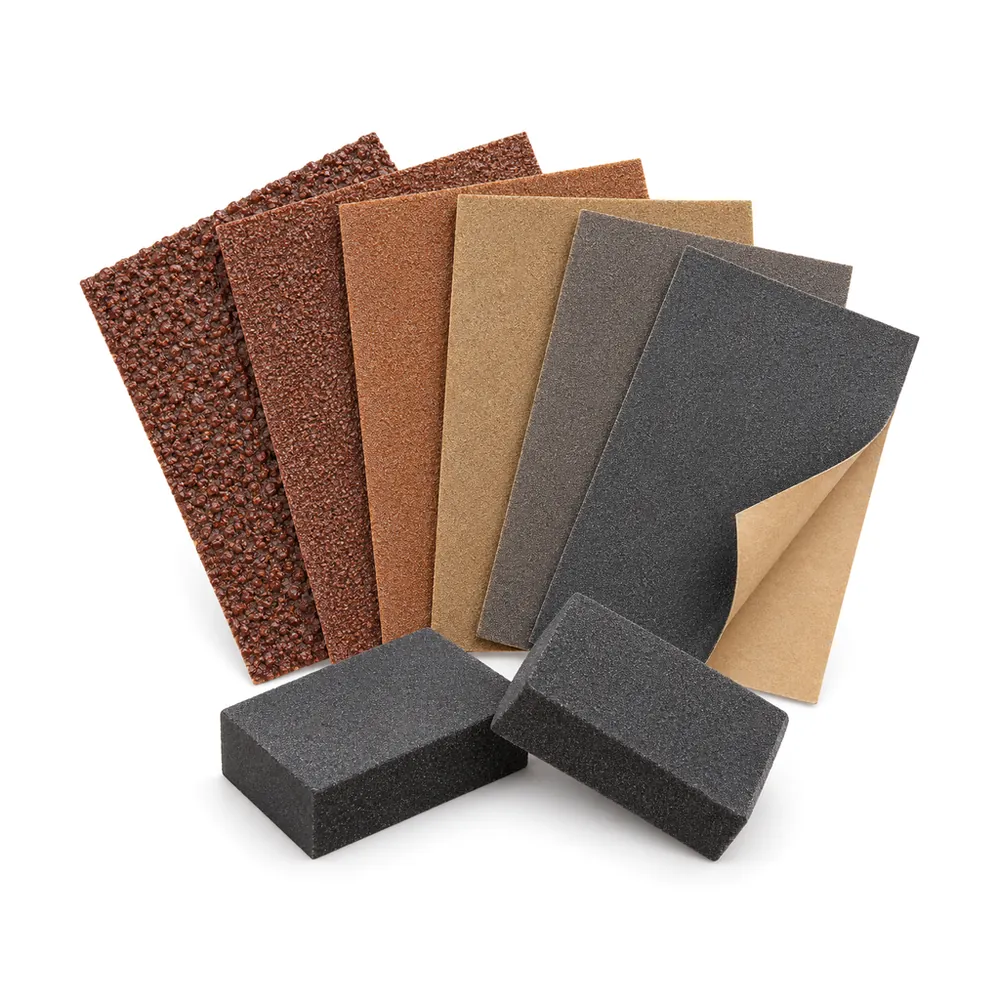
Photos illustrate the product type.
Sandpaper Assortment for Wood, 60 to 400 Grit, Sheets or Detail Kit
Mixed-grit sandpaper for refinishing chair frames: coarse to strip old finish, medium to smooth, fine before stain and wax. Sheets or a detail kit.
Refinishing a chair frame is mostly sanding, and it goes faster with the right grit at each stage. This assortment puts the range in one pack: coarse to take off old finish, medium to smooth the wood, fine before stain and wax.
Three packs:
- Quarter sheets, 60 to 400 grit: a handy size for hand sanding or wrapping around a block
- 25 full sheets, 9 x 11 in, 80 to 400 grit: for bigger jobs and sets of chairs
- Detail kit with small finger sanding blocks: for spindles, rungs, carved parts and the edges of a spline groove
A typical order of work:
- 60 or 80 grit only where there is old finish or paint to remove. It cuts fast and leaves deep scratches.
- 120 to 150 grit to smooth the wood and take out those scratches.
- 180 to 220 grit for the last pass before stain or wax. Going much finer on bare wood can stop stain from soaking in evenly.
- 320 to 400 grit for a light pass between coats of finish.
Do not jump from coarse straight to fine, or the coarse scratches will show through the stain. Sand along the grain, and wipe off the dust before each new grit.
On a cane or rush chair, keep the paper off the seat. Sandpaper scuffs the glossy skin of cane and fuzzes rush and cord. Mask the edge of the seat with painter's tape and use a finger block to work up to it. For round rungs and spindles, pull a strip of paper back and forth around them like a shoeshine cloth. The clean and refinish project page lists everything for the whole job.
How to choose
For one chair, the quarter sheets are the easy choice. They cover every stage from 60 to 400 grit, and the small size is comfortable in the hand.
For a set of chairs, a table, or a lot of old finish to remove, the 25 full 9 x 11 in sheets give you more paper; cut or tear them to size against a straightedge.
Choose the detail kit for chairs with lots of turned spindles, rungs and tight corners, and for the edges of a spline groove, where a flat sheet cannot reach. It also pairs well with either sheet pack.
Questions
Which grit should I start with?
The finest grit that does the job. Use 60 or 80 only to remove old finish; on wood that is already bare and fairly smooth, start at 120 or 150.
How fine should I sand before staining?
Stop at 180 to 220. Going much finer can polish the wood so the stain does not soak in evenly. Save 320 and 400 for between coats of finish.
Can I sand the cane?
No. Sandpaper scuffs the glossy skin of cane and leaves it rough and dull. Tape the edge of the seat and sand only the wood.
How do I sand round rungs and spindles?
Pull a strip of sandpaper back and forth around the rung like a shoeshine cloth, or use a finger block. Keep it moving so you do not sand flat spots.
Do I have to take off all the old finish?
Only if you are changing the color or the finish is failing. To refresh a sound finish, clean it, scuff it lightly with fine grit and recoat; to stain, the wood has to be bare.
You may also need
-
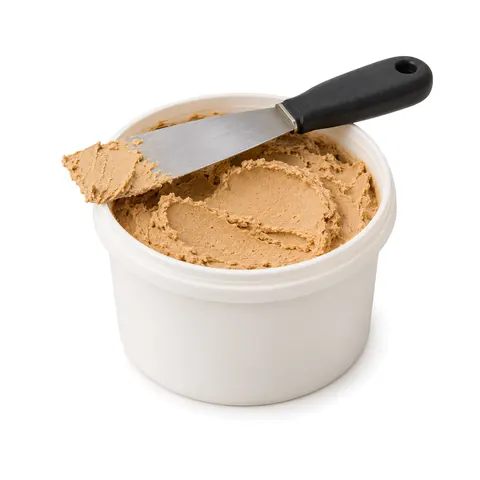
Water-Based Stainable Wood Filler, Natural, Oak or Walnut
Water-based wood filler that sands smooth and takes stain, for old tack and staple holes, dents in seat frames and small chips along a spline groove.
From $10.99 · 4 options
-
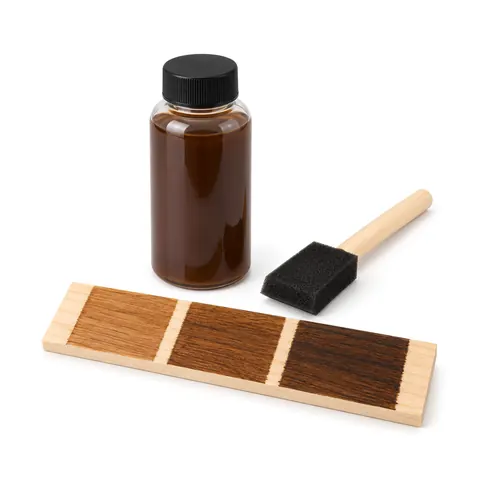
Water-Based Wood Stain for Chair Frames and Cane, 8.5 fl oz
Water-based wood stain in an 8.5 fl oz bottle, for refinishing chair frames and toning new natural cane to sit with an older frame. Five colors.
$9.99 · 5 options
-
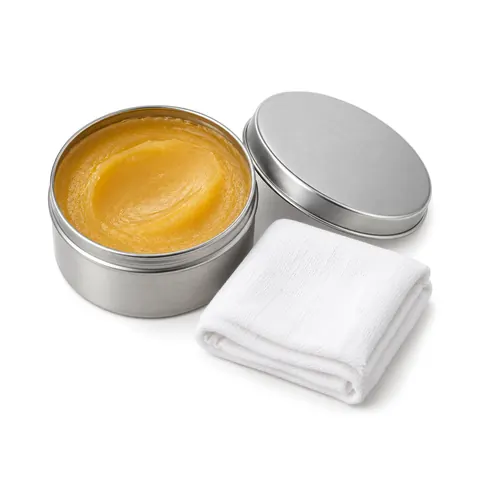
Furniture Paste Wax, Beeswax and Carnauba, 3.5 oz or 8 oz Tin
Solvent-free paste wax made with beeswax and carnauba, for protecting and polishing the wood frames of cane and rush chairs after cleaning or refinishing.
From $12.99 · 2 options