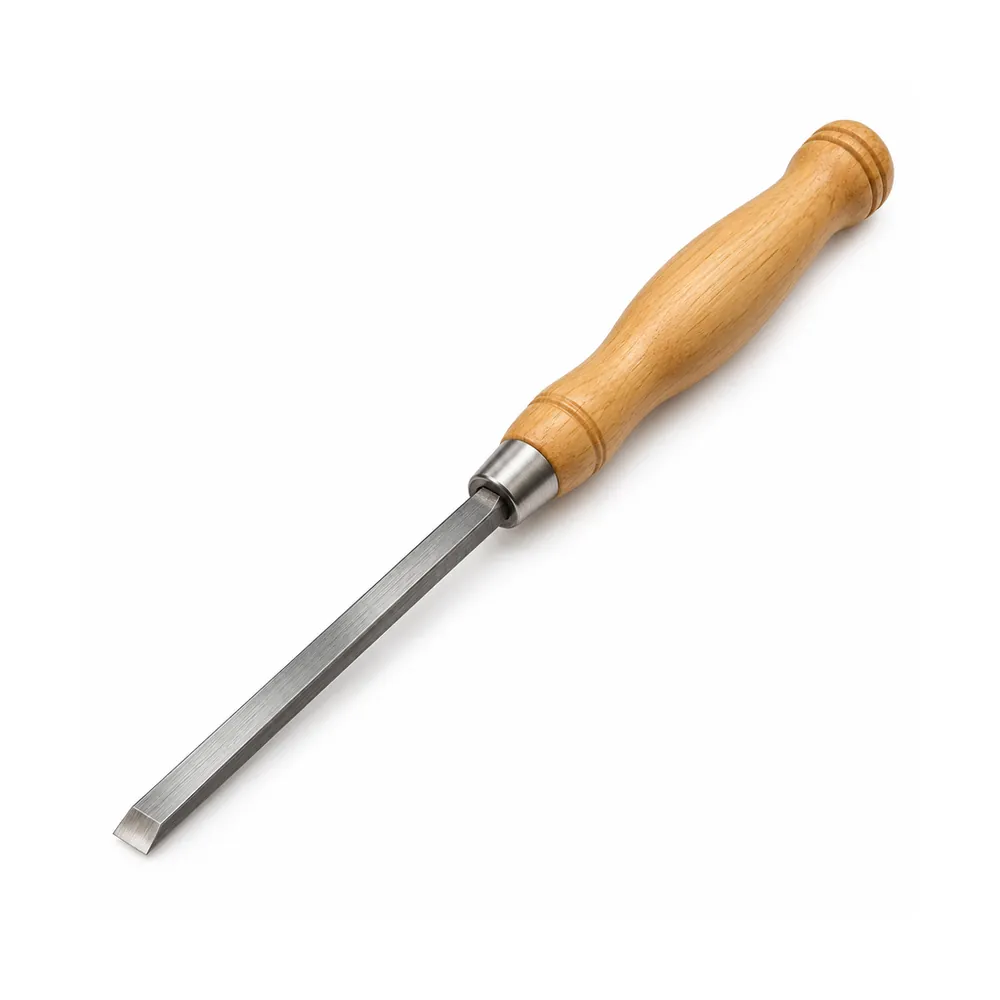
Photos illustrate the product type.
Tools for Caning and Upholstery
Caning Chisel for Removing Old Spline, 1/8 or 3/16 in Blade
A narrow steel chisel with a wooden handle, ground to fit the spline groove and lift out old spline and cane without widening it; 1/8 or 3/16 in blade.
Getting the old seat out is the slowest part of re-caning a pressed cane chair, and it is where grooves get damaged. A screwdriver or an ordinary wood chisel pries against the groove walls and chips them, and a chipped groove will not grip new spline.
This chisel is narrow steel with a wooden handle, about 8 in long overall, ground to slip down into the groove and lift the old spline and cane out without widening it.
How to use it:
- Soften the old glue first. Cut away the cane in the middle of the seat, then wet the spline with warm water or white vinegar and give it time to soak in. Repeat if the glue is stubborn.
- Set the blade in the groove along the edge of the spline and work it along with hand pressure or light mallet taps, levering the spline up as it comes loose.
- With the spline out, run the chisel along the groove to scrape out the old cane ends and glue. A clean groove with straight walls is what lets the new spline lock tight.
Pick the blade that matches your groove width or one size smaller: 1/8 in for #7 grooves, 3/16 in for #8 and larger. A blade wider than the groove cuts into its walls.
Work safely:
- Push the blade away from you, and keep your other hand behind it, never in front.
- Wear safety glasses. Dry spline and old glue can snap and fly.
- Clamp the chair or brace it against a bench so it cannot shift while you work.
How to choose
Check the width of the groove beside the old spline, or of the old spline itself, before you order. A #7 groove (1/8 in) takes the 1/8 in blade, and so does a #7.5 groove (5/32 in), since the 3/16 in blade is wider than that. A #8 groove (3/16 in) or anything wider takes the 3/16 in blade.
If you restore chairs from different makers, the set of both covers grooves from 1/8 in up and saves guessing each time. When unsure about a single chair, the 1/8 in blade is the safer pick: a narrow blade still works in a wider groove, but a wide blade will not go into a narrow one.
Questions
Which blade do I need for a #8 groove?
The 3/16 in blade. Use the 1/8 in blade for #7 grooves; for half sizes, pick the blade that is as wide as the groove or narrower.
Can I use a regular wood chisel instead?
A standard chisel is usually too wide and pries against the groove walls, which chips and widens them. A caning chisel is narrow enough to work down inside the groove.
The old spline will not budge. What now?
Wet it again with warm water or vinegar and give the glue more time to soften. Forcing dry, glued spline is how grooves get chipped.
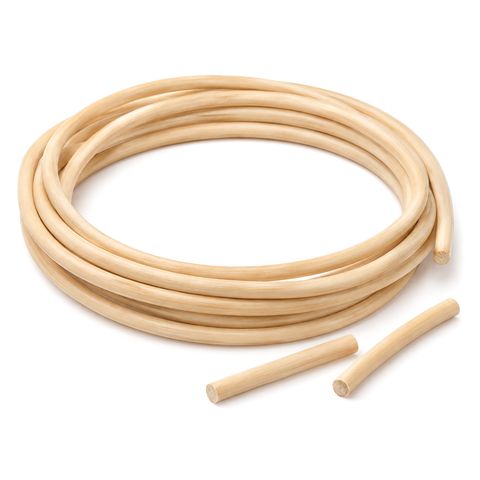 Reed Spline for Chair Caning
Does it need sharpening?
Now and then. Hone the edge on a sharpening stone as you would any chisel, keeping the angle it came with.
You may also need
-
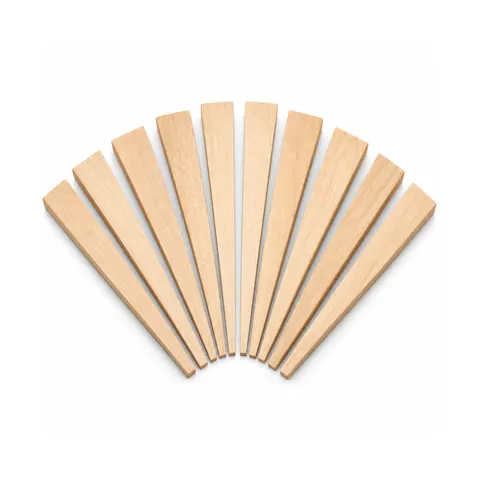
Caning Wedges, Hardwood, 3.9 in, Packs of 10, 20 or 40
Smooth hardwood wedges with a thin edge for tapping pressed cane into the groove and holding it while you work round the seat; packs of 10, 20 or 40.
From $11.99 · 3 options
-
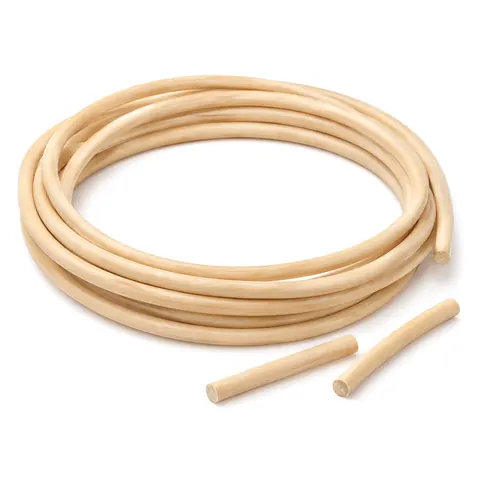
Reed Spline for Chair Caning, 6 ft Coil, Sizes #6.5 to #11
Reed spline that locks pressed cane into a chair seat groove, in nine sizes from #6.5 to #11: #7 fits 1/8 in, #8 fits 3/16 in, #9 fits 1/4 in grooves.
From $7.99 · 9 options
-
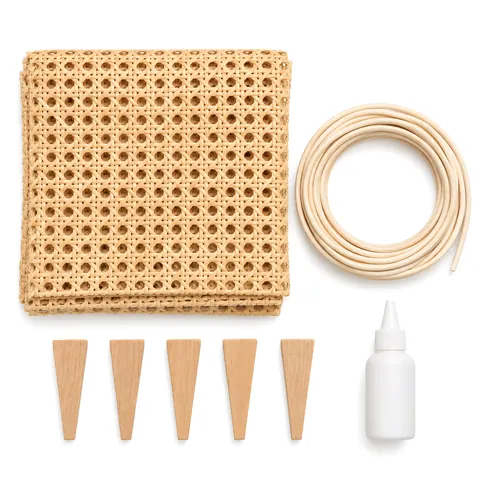
Chair Seat Caning Kit for Pressed Cane, with Spline and Wedges
Replace one pressed cane chair seat: a sheet of open weave cane, 6 ft of reed spline in your groove size, 5 hardwood wedges and wood glue.
From $27.99 · 12 options